

Before Mounting Your Microwave, Make Sure You Know This Crucial Detail
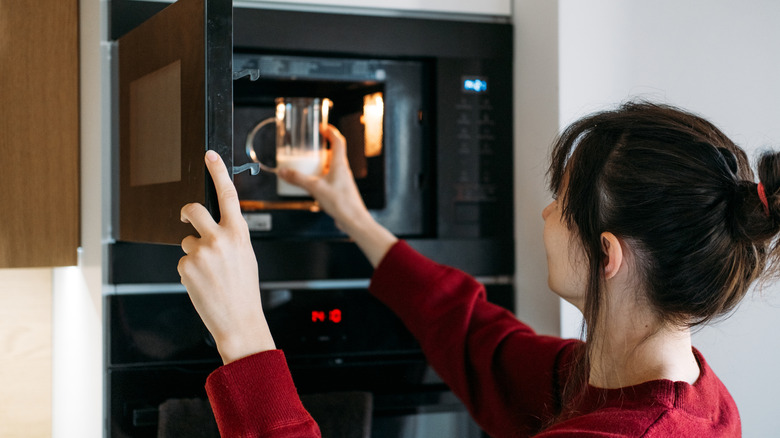
Once-standard over-the-range-microwaves have fallen to the wayside in many modern kitchens. But, countless workspaces still retain the traditional layout of microwaves installed into the upper cabinetry — which serve quadruple-duty by ventilating and recirculating air over kitchen stoves, as well as providing nostalgia and light. Still, aesthetics should always come second to functionality, and to determine the ideal height for a mounted microwave, the height of the user should be considered.
The ideal microwave placement varies depending on the average height of the people living in the household. As a general rule, the bottom of the microwave should sit three inches below the user's shoulder, but no more than 54 inches above the floor. Foodies should also be able to comfortably reach into the microwave, but if it's too high above eye level, it can be easy to slosh hot liquids onto the hands or body when reaching upward and suffer a burn. Beyond heating food, easy reaching also means easier microwave cleaning between uses.
According to the London Fire Brigade, roughly 60% of all house fires start in the kitchen, making local building code requirements, manufacturer guidelines, and kitchen cabinet layouts equally as important factors to consider when you're shopping for and installing a microwave.
Keep the microwave at eye-level, but no taller than 54 inches off the ground
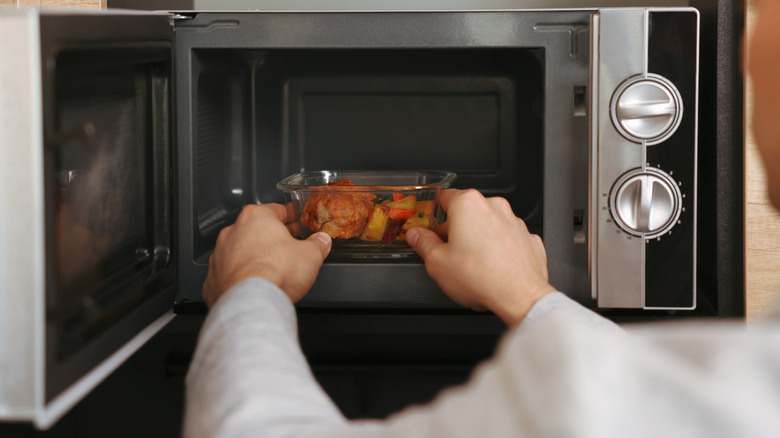
Clearance needs can vary from one microwave to the next. Some over-the-range microwaves may require 24 inches of space above the oven, for instance, while other models may require 30 inches or more. The appliance's manufacturer will indicate these requirements. Also, keep in mind that microwaves designed for over-the-range placement cannot safely be installed on a countertop, on a shelf, or inside of an enclosed cabinet. These models are typically equipped with a vent fan on the underside (which can pose a fire hazard if obstructed).
In many contemporary kitchenscapes, it has become popular to mount the microwave at waist-height level, tucking it into a kitchen island or lower shelf to obscure the appliance from view. Rather than opening via a swinging door, these lower-cabinetry microwaves open via a sliding door (not unlike a drawer or a tilting oven door). In these cases, says the NKBA, the bottom of the microwave must sit at least 15 inches off of the floor to allot enough space to prevent overheating. In fact, correct placement impacts overall kitchen layout and functionality. Stashing a microwave against an unprotected wall can damage your paint, drywall, or cabinets. Worse, placing a microwave beside a window can crack the pane as the appliance emits heat. Ensuring adequate clearance prevents these accidents — and also allows room to account for a landing space above or adjacent to the microwave for comfortably setting down hot dishes.