

Why Chain Buffets Rarely Serve Alcohol
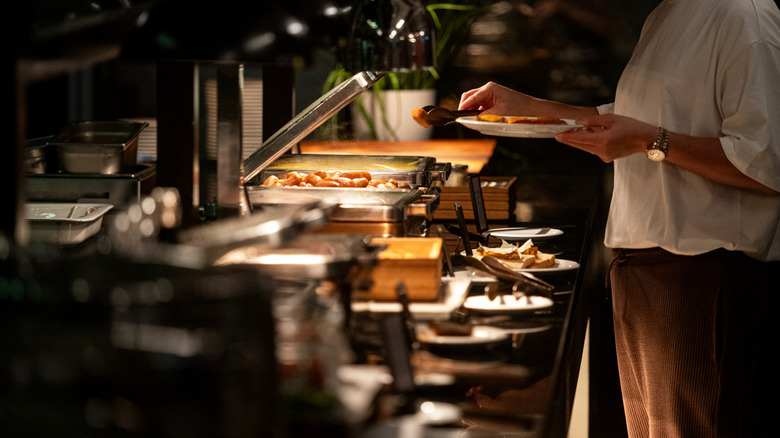
The idea of a "booze buffet" evokes saturated flashbacks of Applebee's infamous "Dollaritas" (which harmed employees). Perhaps this is why chain buffets rarely serve alcohol. Indeed, it would be neither profitable nor safe for buffets to include alcohol in their "drink as much as you can — after all, you've already paid for it" model, right? This maximum-possible-quantity-confined-to-a-time-limit motif is the reason why bar "happy hours" are banned in several U.S. states. But what about the chic, fashionable concept of "bottomless brunch?" Here, foodies can (and are arguably encouraged to) pay a higher premium for a brunch entree on the grounds that their meal will come with as many mimosas or Bloody Marys as they care to drink.
Some buffets — like the iconic spread at The Wynn Casino in Las Vegas — have worked this spirited concept into their all-you-can-eat dining experiences. The Wynn's brunch buffet features an "Endless Pour" package that can be purchased as an add-on to a regular brunch buffet ticket. When the buffet switches to dinner, those unlimited mimosas switch to wine, beer, and cocktails. Similarly, in a Reddit thread dedicated to the "booze at buffets" conversation, multiple commenters note that their local, less-premium buffets also sell alcohol, but that those drinks are sold separately from the all-you-can-eat food offerings (and, as one Redditor writes, "They really push the drinks as that is where the best profits are from"). So, why don't more chain buffets offer anything stronger than Sprite?
Pricey permits don't gel with the cost-effective dining concept
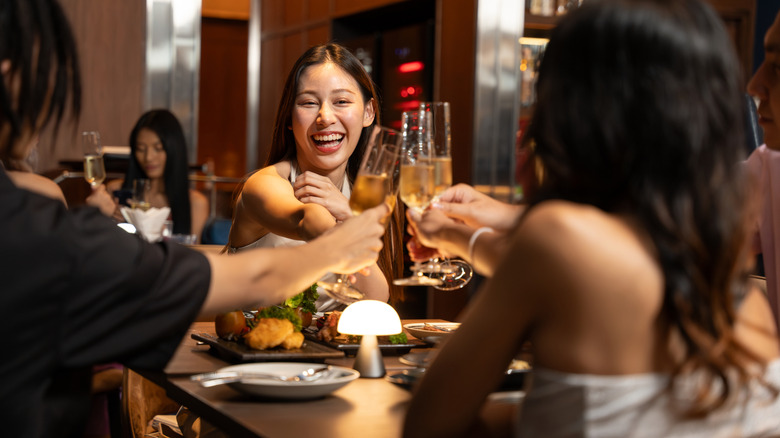
From a strategic business standpoint, offering alcohol might get customers through the door who wouldn't otherwise feel inclined to choose a buffet for dinner. According to a National Restaurant Association report, "70% of beer drinkers, 69% of wine drinkers, and 67% of cocktail drinkers are more likely to say the availability of alcohol beverages makes them more likely to choose one restaurant over another." Still, costs and local regulations can make it tough for businesses to gain a full or partial liquor license. In the state of Pennsylvania, for instance, obtaining a license costs tens of thousands of dollars, and upgrading a beer-only license to a wine and spirits license comes at a $30,000 fee. Moreover, in 675 of Pennsylvania's 2,560 municipalities that are "dry," restaurants cannot sell alcohol even with a license.
Various rules and fees pose two substantial obstacles for businesses, further complicated for chain buffets, as different regions pose different restrictions. A 2024 Facebook post by the Golden Corral Buffet & Grill location in Tinley Park, Illinois announces, "We're now serving Margaritas, Mimosas, Beer & Wine! [...] Only at the Tinley Park, IL location." No comment on this particular Golden Corral's 1.7 out of 5-star Yelp rating. While exceptions exist, spirits-serving buffets often cost more for patrons, somewhat negating the cost-effectiveness that attracts many guests to buffets over traditional sit-down restaurants in the first place.
Enjoying a leisurely drink slows down crucial table turnover
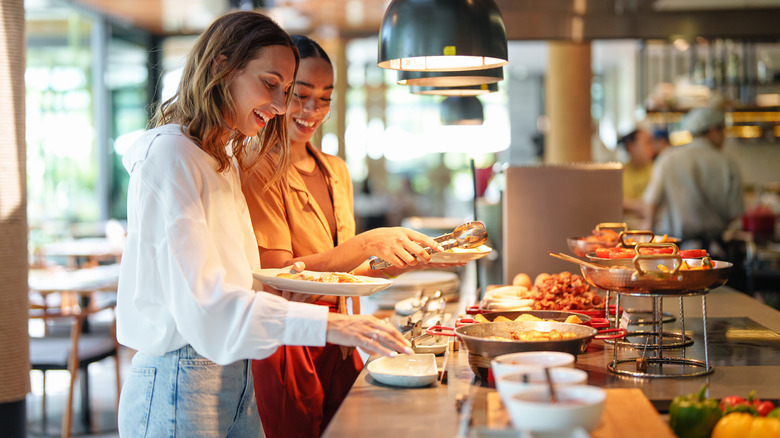
Chain buffets' teetotalism hinges on the broader economics of an all-you-can-eat establishment. Rather than a price-per-plate based on individual food cost (i.e., "I'll have the Delmonico steak, which is more expensive than the filet mignon"), buffets charge a one-time entrance fee to access a wide array of different foods, each available in any portion desired. The concept becomes profitable only with high-volume customer foot traffic. Also, padding buffet profit margins is their minimal staffing demands. Buffet servers seldom need to touch tables beyond refilling drinks, and in the back-of-house, line cooks do more prep-style work than cooking timed meals to order.
"At a typical restaurant, a cook can service 25 customers per hour — and that's at best," Joe Ericsson, a managing partner at Restaurant Owner food consultancy firm, tells The Hustle. "In the same amount of time, a single buffet cook might be able to prep enough food for 200 people." Of those 200 people, some are going to fill five plates, while others will have two plates. The same logic applies to our old reliable "pizza ordering rule" — some foodies will have just one slice, while others might have three. But, at a buffet, every guest pays the same fixed price, so in order to turn a profit, those guests need to be abundant, and they need to come and go fairly quickly. Buffets make money by encouraging fast turnover, and in direct contrast, selling alcohol invites guests to post up.