

10 Myths About Trader Joe's You Can Stop Believing
Trader Joe's is massively popular, thanks to its creative snacks you can't find elsewhere, its frozen foods that make ordering takeout a thing of the past, and its cozy, friendly-feeling stores that seem to make grocery shopping a more pleasant experience (unless you go when it's particularly busy, that is). But even if you're someone who shops at Trader Joe's multiple times a week, there's a chance that you're still believing some of the most common myths about the grocery chain — and by believing those myths, you might just be missing out on some of the best benefits the store has to offer.
We've outlined these myths below to set the record straight once and for all. The next time you visit your local TJ's, you'll be a little bit more informed about where you're shopping. And who knows? You may even be able to clear up a myth for your cashier.
Trader Joe's and Aldi are run by the same company
If you shop at both Aldi and Trader Joe's, you might have noticed some similarities between the two stores. They're both relatively smaller than other grocery stores, and they mainly carry their own brands. It might make you wonder whether the two stores are somehow related. Well, there's a myth that's been going around for ages that Trader Joe's and Aldi are run by the same company. That's not technically true, but it's understandable why some may think it is.
In reality, the companies now known as Aldi Sud and Aldi Nord used to be one company (Aldi) owned by two brothers. However, in the 1960s, the brothers split the business into two separate companies. Aldi Sud now owns Aldi locations in the United States, while Aldi Nord owns Trader Joe's. So, are Trader Joe's and Aldi from the same company? No. But they're definitely related, which is why you can see so many similarities between the two chains.
The fact that Trader Joe's carries mostly store-brand products means the food is lower quality
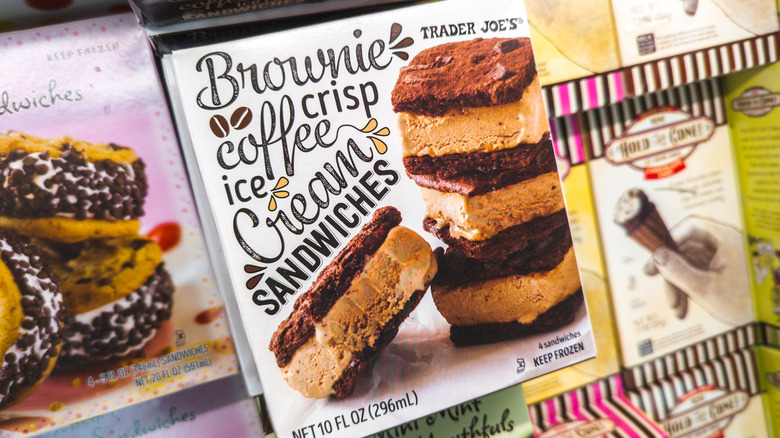
When you go to a standard grocery store, you may notice a pattern between name-brand and store-brand products. Most of the time, name-brand products will be more expensive than their store-brand counterparts. While this doesn't always reflect quality, it sometimes does, which leads many to believe that store-brand products are generally lower quality.
So, when you go to Trader Joe's for the first time, and you realize that nearly everything in the store is from Trader Joe's own private brand, you may get the idea that most of the products are pretty low-quality. But we've found that this absolutely isn't the case. On the contrary, Trader Joe's is known for having a ton of innovative, creative products that we haven't seen elsewhere. Generally, we regard the quality of the products at Trader Joe's to be very solid, especially considering the relatively affordable price points (in high-cost-of-living cities, at least). Don't let the store-brand status scare you away from trying out Trader Joe's products.
You can only buy food at Trader Joe's
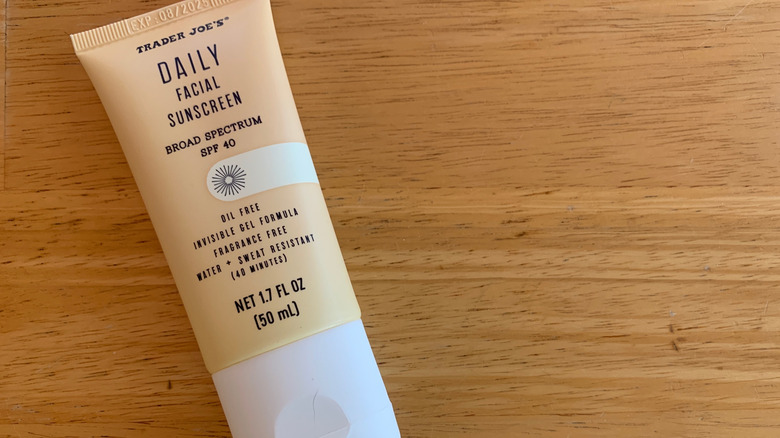
It's true that Trader Joe's doesn't have a huge cosmetics or home goods section. You're not going to find aisles upon aisles of specialty shampoos or 20 different types of candles, and it's not the kind of store you should visit if you're trying to buy makeup or hair accessories. That being said, it's a myth that Trader Joe's only sells food and nothing else. Although the store's body and home care sections are quite small — generally comprising only a small portion of the store's footprint — they actually pack a ton of incredible products.
For example, the dry shampoo at Trader Joe's has a lot of fans, and its daily facial sunscreen is a widely beloved product. The laundry detergent is absolutely worth checking out, as is the dish soap. There may not be enough TJ's beauty and home products to make it your go-to spot for these types of items, but you may just find a few go-to products there that you come back to again and again.
Everything at Trader Joe's is healthy
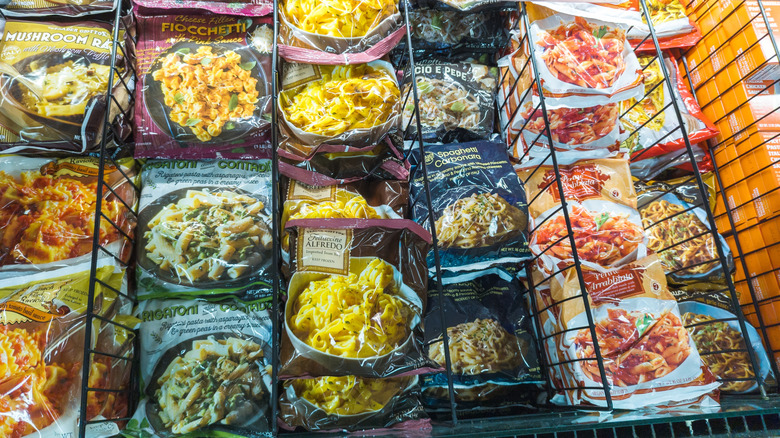
These days, it's important to understand how marketing affects the way you think. Really good marketing can make us believe ideas about products that don't really reflect reality, and Trader Joe's is an excellent example. Because of the way a lot of Trader Joe's food is packaged — in well-designed containers that seem to allude to products' wholesomeness — it's understandable to think that most, if not all, Trader Joe's food is pretty healthy. However, that's not always the case. Just like any grocery store, Trader Joe's offers more and less nutritious foods, and it's up to you to look at a product's nutrition information to figure out which is which.
For a simpler frame of reference when it comes to picking healthier foods at the grocery store, many experts recommend sticking to the perimeter of the store, which is generally where you'll find whole foods like fruits, vegetables, various proteins, and dairy products. That doesn't mean that everything in Trader Joe's frozen section is unhealthy or that there aren't better-for-you snacks in the snack aisle. But just keep in mind that a product isn't necessarily healthy just because it's packaged in natural-looking wrappers.
Trader Joe's is super sustainable
It's no secret to most of us that in 2026, most big corporations aren't as ethical as they might seem. If you're a big Trader Joe's fan, you might want to believe that the chain is super sustainable. In reality, though, that's not always the case. Some of the Trader Joe's products you love might actually be made by huge corporations that peddle some of the least sustainable products out there, like PepsiCo and Nestlé. The store also uses refrigeration practices that were found to leak harmful gases into the atmosphere. Plus, it's likely that the chocolate you're buying from TJ's comes from sources with deeply unethical labor practices, like child labor.
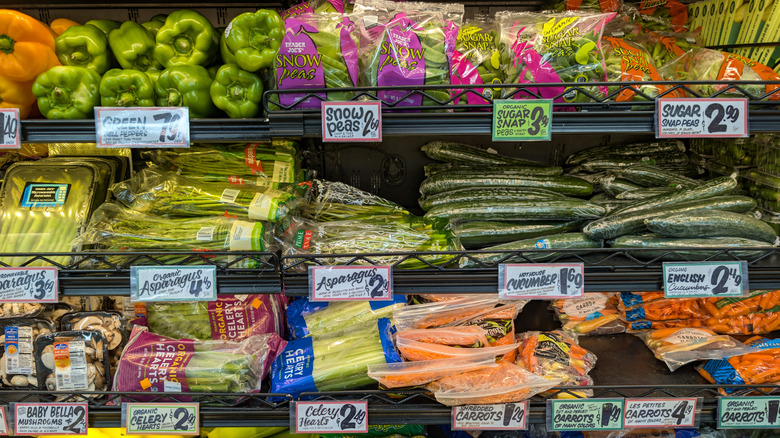
But you don't even have to do any research to understand that Trader Joe's could do a lot more in terms of sustainability. Just head to the produce section, where you'll find tons of fruits and vegetables that are needlessly packaged in plastic. Trader Joe's is guilty of greenwashing on many fronts, and those who care about the sustainability of their food should be wary of what they're purchasing at the chain.
You can't try products before you buy them
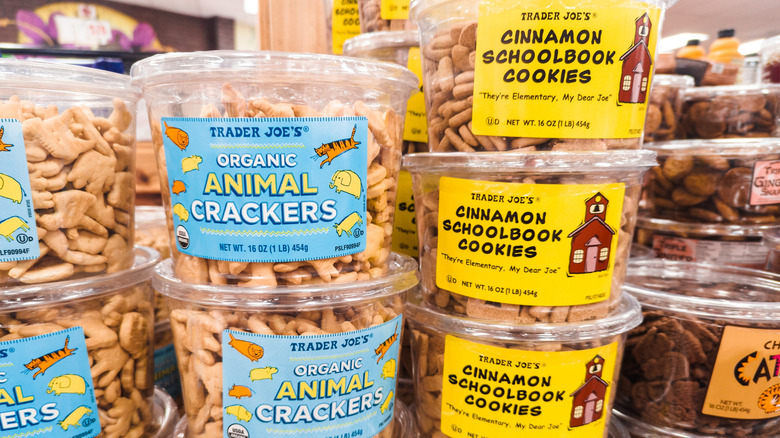
Have you ever seen a new, interesting-looking Trader Joe's product, wondered what it tasted like, but ultimately decided not to buy it because you were worried that you wouldn't actually like it? We've been there before. It turns out, though, that that thought process is largely unnecessary, as Trader Joe's actually lets you try most of its products before you buy them.
Just ask a staff member to try any product you're interested in. There are some exceptions, though. The policy doesn't apply to alcohol, of course, and baking mixes and frozen foods are also off limits, for obvious reasons. And don't worry — apparently, the extras aren't going to waste. According to a poster on Reddit, the staff often gets to snack on the leftovers in the break room anyway. Of course, you shouldn't abuse this policy and ask someone who works at your local Trader Joe's to open several products for you all at once, but it's good to know that this is an option when you're unsure about whether you should commit to a new snack or not.
You always have to bring a product back to get a refund
At a lot of grocery stores, if you're trying to get your money back for a defective product, you usually have to bring the product back. But it's a myth to assume that Trader Joe's works that way, too. Sometimes, you may be able to get a refund without even returning the product. According to someone who once worked for Trader Joe's, most staff members will believe you if you say that your avocado was too soft or that the package of bacon you purchased was already opened when you got it home.
This is another policy you don't want to abuse. Do it too often, and the staff might get suspicious. But when you actually have a problem with something you bought from the grocery store, getting your money back may be easier than you'd expect. They'll be able to give you your money back in cash or simply make sure you get your money back on your card.
It's possible to shop at Trader Joe's online
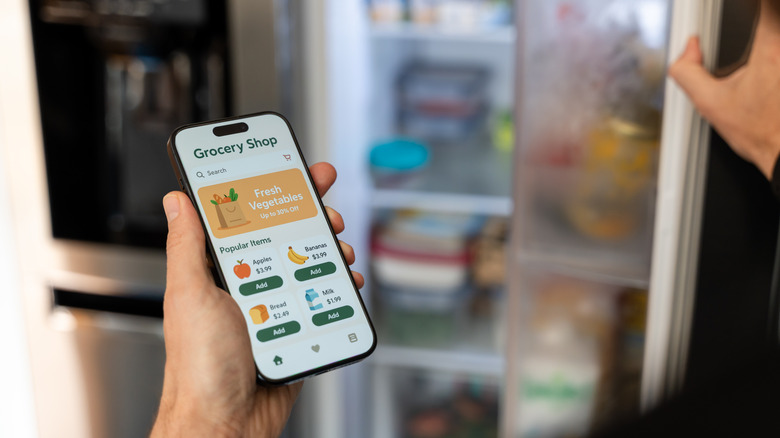
COVID marked the beginning of a serious e-commerce boom in the grocery scene. Many grocery store chains started offering expanded delivery and pickup options, and some customers turned to Instacart and other grocery delivery services. In the midst of this transition in the grocery market, Trader Joe's remained staunchly anti-e-commerce. Throughout the pandemic, customers still lined up outside the chain's locations, waiting to shop for their favorite TJ's snacks in a more socially distanced way. The chain has maintained that it intends to remain a brick-and-mortar business only.
It's true that you can use the Trader Joe's website to check out new products that will be hitting store shelves soon, especially during seasonal transitions, and add things to a shopping list. But once you find what you're looking for online, you'll actually need to go seek it out in person at your local Trader Joe's. You can always call ahead to ensure that the nearest location has the product you're looking for in stock.
Two-buck chuck is actually $2
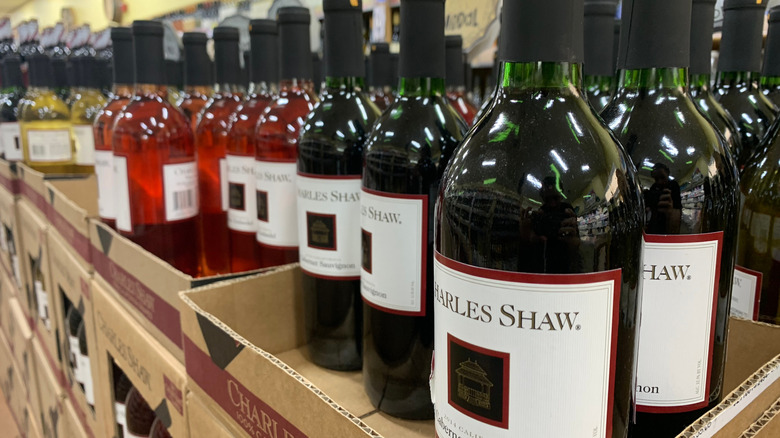
A lot of people think of wine as a more expensive option when it comes to alcohol, but that's not always true — certainly not when it comes to Trader Joe's two-buck chuck. That's the nickname for Charles Shaw wines, which are exclusively sold at Trader Joe's. At one point, they were literally $1.99 per 750-milliliter bottle, making them some of the absolute cheapest wines on the market. But it's a myth to assume that after all these years, two-buck chuck is still only $2.
It was all the way back in 2013 that the popular wines started to become more expensive. In the years since, Trader Joe's fans online have complained that the price has jumped in their local stores. But there's still hope that customers may once again see the original price tag: In 2020, California Trader Joe's locations brought the price back down to $1.99.
All of Trader Joe's products are original creations
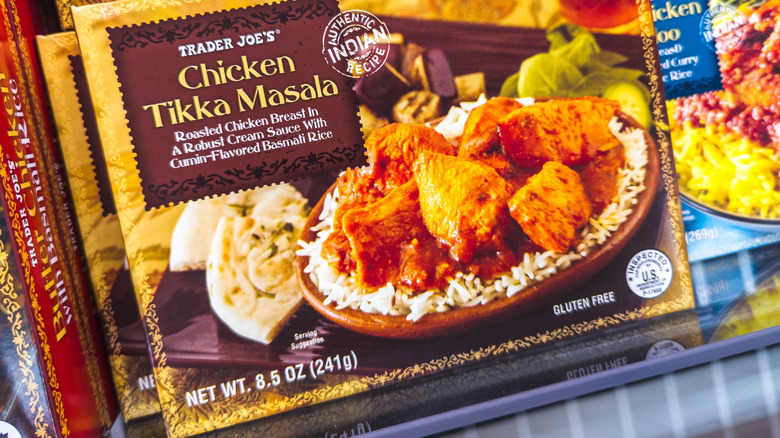
It was late in 2025 when the company behind Smucker's Uncrustables sued Trader Joe's for a product that the store had rolled out that appeared to be, essentially, a TJ's-branded Uncrustable. But this isn't the first time that Trader Joe's has ripped off another brand's products. While the J.M. Smucker Company is a large operation, the chain has also been accused of copying the products of much smaller producers. Some of these producers say that they've been cut out of deals, with Trader Joe's essentially just screwing them over.
Not only is Trader Joe's copying some of these products, but it's even marketing them in similar ways. This is after Trader Joe's will speak with a producer about their product and process — then ghost them, according to some accounts. Unfortunately, it's a myth that all of Trader Joe's products are original creations. Sometimes, they're copycats from small businesses just trying to get by.