

5 Items That Don't Belong On Your Kitchen Countertops — And 5 That Do
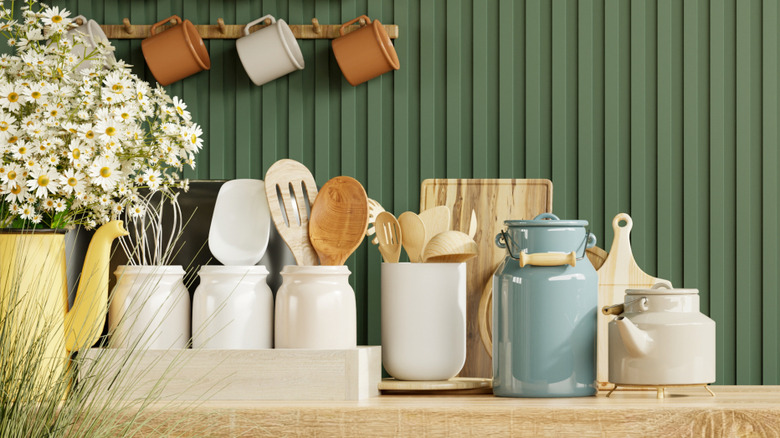
In theory, countertops were created to offer usable workspace for aiding everyday tasks in the kitchen. However, with the passage of time, their role has evolved to serve as a handy storage zone. From school homework to bulk groceries, countertops become an indiscriminate landing spot for all the bric-a-brac of everyday life.
While certain organization hacks can help you create more countertop space, it is also necessary to get intentional with how they are used. The crucial mindset shift to make is to start viewing your countertops as an aid for daily cooking tasks, rather than storage. Anything that supports or enhances your everyday workflow in the kitchen stays. Anything that doesn't is simply eating up precious inches without offering anything in return. Once you have prioritized what needs to stay, it helps to adopt solutions for visual containment, from caddies to trays, which can bring some order to this space. To help you get started, we turned to Kerrie Kelly, CEO and creative director of Kerrie Kelly Studio, for answers. Ahead, she lists the most common clutter culprits that are silently shrinking your prep space and creating mental fatigue and the everyday essentials that deserve a spot on your countertops instead.
Avoid: Duplicate condiments
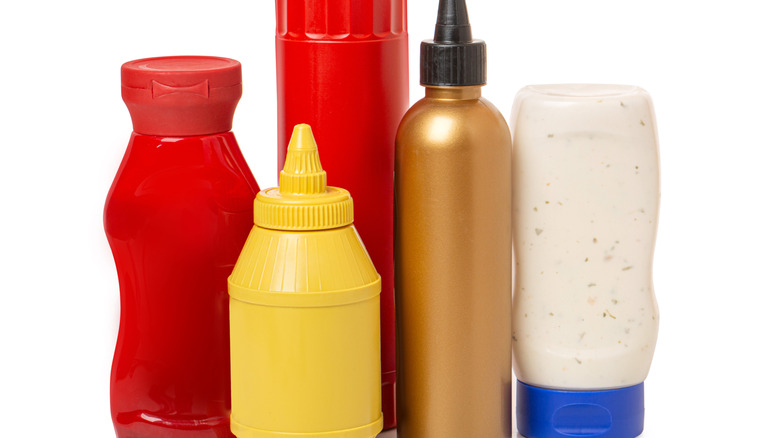
When it comes to stocking your culinary arsenal with condiments, more can certainly feel merrier — especially once you get an eyeful of these tempting international condiment options worth trying. However, once duplicates of the same item start piling up, you could be opening the door to a host of functional and aesthetic problems.
"Limiting visible condiments creates a calmer, more intentional kitchen while also improving efficiency," Kerrie Kelly observes. And there is wisdom behind her words. When your workspace is crowded, you'll have to interrupt your tasks frequently to shuffle things around and create more space — this staccato rhythm can prevent you from getting into an enjoyable flow while cooking. Duplicates of the same item also mean that one bottle will become your go-to, and the other option will slowly creep past its expiry date.
To streamline your countertops and avoid waste, Kelly recommends removing everything to take an inventory of what you own. Half-used bottles of the same condiment can be combined and expired options can be discarded. A restrained choice of essentials can then be corralled together in a shallow tray — a helpful trick is to add a cupcake liner under any bottles that are prone to drips and messes. "This approach keeps essentials within reach while maintaining a clean, edited look that feels purposeful rather than cluttered," she says.
Keep: Small tray for oils and salt
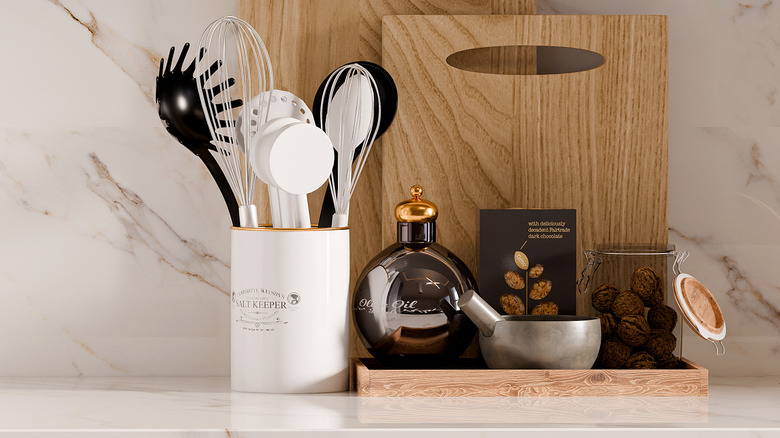
Salt and cooking oils are the lifeblood of any functional kitchen. But if left to their own devices, they can soon take over your countertop and leave a messy trail of spills and drips in their wake. To ensure easy access to these cooking staples without compromising your countertops, Kerrie Kelly recommends grouping essentials together into a tray. "Without a defined boundary, these items tend to spread, quickly looking messy. A tray establishes intention and makes cleaning easier," she says.
For turning this corner into the focal spot of your countertop, it helps to get creative with your choice of trays. Materials like stone, wood, and ceramic all score highly in Kelly's book. Adding a vase with fresh flowers can add some vibrance to this spot. Just remember to store this tray away from the stove as high heat can affect the flavor of certain oils.
Once you have found the right tray, she recommends opting for a disciplined approach. Only your ride-or-die essentials belong here: Think salt and pepper grinders, a cooking oil, and a finishing oil. To keep your tray looking aesthetic at all times, nightly cleaning with a kitchen towel will keep greasy residue from building up.
Avoid: Overflowing utensil jars
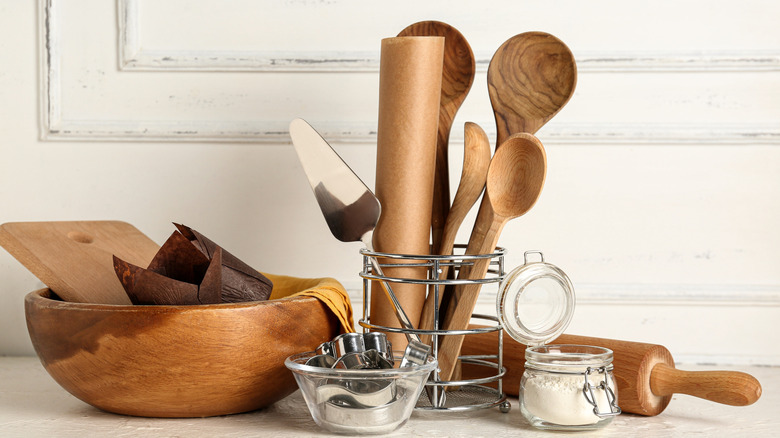
Nobody ever intends to overstuff utensil jars — but life happens, and one silicone spatula quickly becomes seven. Suddenly, you have a motley collection of ladles, whisks, and spoons that create visual noise and overwhelm your daily cooking process. "When too many tools compete for space, it becomes harder to quickly grab what you need," Kerrie Kelly points out.
For a more intentional approach towards organizing your utensil jar, she finds that five to seven frequently used tools is the golden number. Specialty tongs and whisks that aren't used as often can be relegated to drawers. Installing under-cabinet hooks for hanging excess options is another genius trick for organizing utensils.
Once you have the extras out of the way, it is time to turn your attention to the staples you need everyday. When choosing a utensil jar for corralling everything together, it is essential to balance form with function. Mood-enhancing hues can always infuse a welcome pop of color to the kitchen, while handcrafted ceramic options can add an artisanal touch to the space. Don't be swayed by mere aesthetics, though — Kelly recommends opting for options with sufficient height and weight to keep your tools from tipping over. "The goal is function first, with a streamlined silhouette that supports both ease and aesthetics," she says.
Keep: Cutting boards
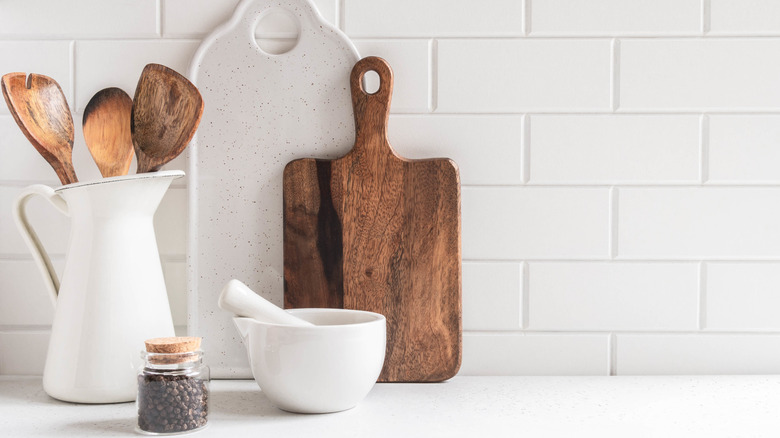
Unlike other decorative or seldom-used items, cutting boards justify every inch of space they are given on the countertop in terms of everyday utility. With an array of boards stashed conveniently against the backsplash, you can speed up prep work. "When stored vertically against a backsplash or wall, they double as functional decor, adding warmth and texture. This positioning breaks up hard surfaces and introduces a layered, collected look," Kerrie Kelly elaborates. You can also choose to store yours in a wire basket or a slim crate for a rustic touch.
When it comes to materials, you'll find yourself spoiled for choice. You have wooden boards, ranging from deep walnut to honeyed hues of cherry that can infuse a sense of opulence. When shopping for one, look for boards featuring natural and food-safe finishes, such as beeswax or mineral oil. These are safer than artificial varnishes that can contaminate food with the passage of time. If you are feeling particularly creative, you can also choose to add a marble or slate option among all your wooden choices to create some visual contrast. "Choose boards with sculptural shapes or subtle detailing so they feel intentional rather than utilitarian," she says.
Avoid: Bulk groceries
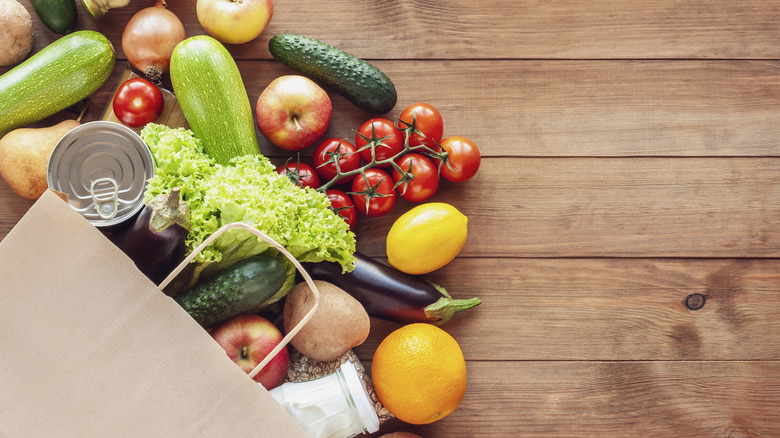
When you are running late after a long day of work, sorting and organizing your groceries into Instagram-perfect containers might seem like an unnecessary chore. The countertop then becomes a tempting landing zone for your haul — after all, having everything you need for the week within arm's reach will speed up prep work, right? Despite the apparent convenience, stashing bulk groceries on the countertops is also the fastest route to a cluttered and chaotic kitchen. "Large tins, branded bags, and excess packaging interrupt clean sightlines and distract from the overall design," Kerrie Kelly cautions.
Instead, she wants you to start by prioritizing your groceries. High-traffic items, such as salt, oils, and everyday grains, can be emptied into uniform canisters. "Decanting bulk items into uniform containers not only reduces visual clutter but also improves organization, making it easier to see what you have and avoid overbuying," she explains. Everything that doesn't belong within this category needs to be ruthlessly transferred to cabinets or your pantry. The first-in, first-out system will ensure that older options are used quickly rather than being relegated to the back of the shelf. Adding a dry-erase board is another pantry organization hack that will help you keep the essentials well stocked.
Keep: A fruit bowl
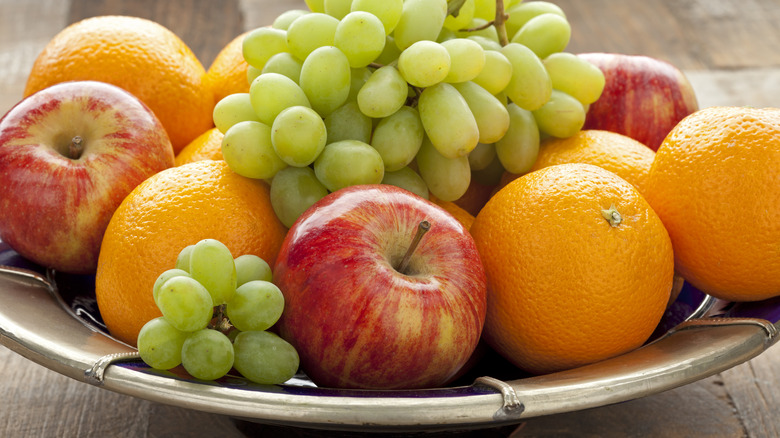
Instead of having fresh fruits scattered all over the countertop, it helps to curate them into a controlled drop zone. "A thoughtfully chosen fruit bowl adds warmth, color, and life to a kitchen while reinforcing a sense of everyday abundance," Kerrie Kelly explains. However, there are more than just decorative benefits. Having fresh, seasonal options styled temptingly within your line of sight can help you and your family make smarter snacking choices. Keeping everything organized in a dedicated spot can also ensure that produce isn't lying forgotten at the back of a refrigerator shelf.
When choosing a fruit bowl, size matters. Kelly wants you to opt for an option that is proportional to the size of the counter: Spacious enough to house your daily produce, but not bulky enough to overpower the space. Minimalists will gravitate towards classic white options, but those looking to create a striking display will lose their heart to the charms of a pedestal bowl. "Position it near an island corner or along a perimeter counter where it's visible but not disruptive to prep," Kelly suggests.
To keep the display balanced, it helps to layer larger fruits at the bottom and to add smaller ones in contrasting colors — such as berries, figs, or lychees — as you work your way to the top. Any blemishes or indentations will be tucked towards the inside, so that your fruit bowl looks presentable from every angle.
Avoid: Junk mail

That RSVP you meant to respond to, the bills that need to be cleared, and those fuel receipts that they're always badgering you to hold on to — the deal-with-it-later mindset can easily tempt you into stashing paper mail on your countertop before you rush off to prepare dinner. But this clutter is likely disrupting your everyday workflow in the kitchen. "Paper clutter quickly turns countertops into catch-alls, undermining both function and design," Kerrie Kelly warns. The close proximity to spills and splatters also makes countertops an unworthy spot for storing paper mail.
Unsurprisingly, junk mail is also among the most common clutter culprits making your dining table always look messy, so where should it go? The only way to conquer the junk mail trap is to create a designated drop area located away from functional areas. "This can be a slim wall-mounted organizer, a drawer near the entry, or a small desk area adjacent to the kitchen," she suggests.
But beyond mere organization, it is also essential to develop a system to deal with junk mail as it shows up on your door. The simple habit of sorting mail as soon as it comes and relegating it to an action pile — depending on whether it needs to be addressed immediately, discarded, or held on to for now — can prevent clutter from piling up. "A simple, clearly defined system prevents overflow and keeps countertops reserved for cooking, gathering, and daily rituals rather than paperwork," Kelly emphasizes.
Keep: Soap caddy by the sink
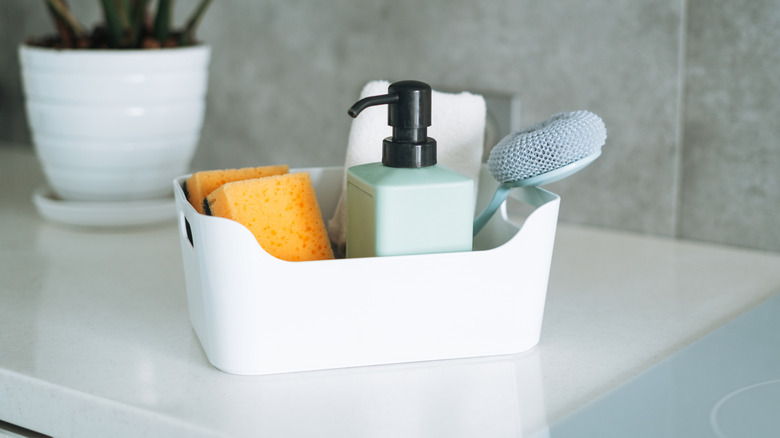
Given all the spills and splatters that occur daily, you likely need quick access to an arsenal of sponges, scrubs, and dish soap to keep your kitchen hygienic. Instead of having your cleaning go-tos sprawled haphazardly next to the sink, a dedicated storage solution can house all your essentials within arm's reach. Sinkside caddies are available in an array of trendy designs, but make no mistake — this is not merely a decorative flourish. "A soap caddy creates a dedicated home for sink essentials, preventing bottles and sponges from spreading across the counter. By containing these items, it instantly makes the sink area feel more polished and intentional," Kerrie Kelly says.
If you are looking to bring some polished flair to a messy sink station, she recommends opting for materials like stone, stainless steel, or ceramic. Options with integrated drainage holes or detachable base trays will keep water from accumulating within. While strategic design choices can help, only diligent maintenance schedules can ultimately keep this corner looking presentable. Set aside some time every fortnight to clean any drips and residue around the dispensers and ensure that worn-out sponges are discarded promptly. "A well-maintained caddy supports both hygiene and design, turning a utilitarian zone into a cohesive moment," Kelly says.
Avoid: Rarely used appliances
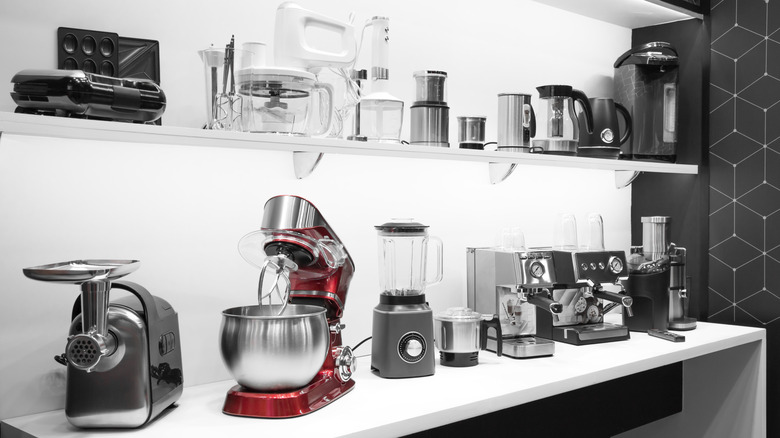
You may have left certain kitchen appliances on the countertop in the hopes that you'll use them more often if they are within your line of sight. These probably include things like that sandwich maker you purchased on a whim and the waffle iron you thought would be an indispensable part of weekend brunches. Though you may think it's convenient to have them there, these appliances could be affecting your efficiency in the kitchen.
For starters, rarely used appliances can interrupt the space you have available for essential chores, like chopping and cleaning, forcing you to hop around from one free spot to another mid-task. Kerrie Kelly also finds that such appliances generate visual clutter that can burden your mind. "When countertops are crowded, even simple tasks like chopping or plating become less efficient, which ultimately impacts how enjoyable the kitchen feels to use," she rues.
If you aren't sure what qualifies as a rarely used appliance, she recommends examining the frequency of usage. Have you used it in the past week? If the answer is no, the gadget can likely be relocated to the cabinet or pantry. The higher shelves work best for storing seldom used or seasonal appliances, while storage space at eye level can be reserved for gadgets that are used more often. Your countertop can then play host to the essentials that you use daily, such as a coffee maker, kettle, and toaster. "Everything else should earn its place through consistent, practical use," she reiterates.
Keep: One decorative element
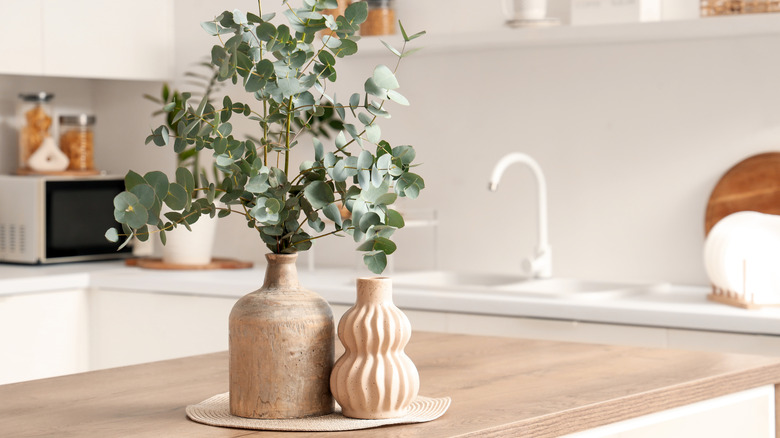
Once you have browsed through all the unexpected places to score affordable kitchen decor, your mind will likely be buzzing with ideas. However, there is one golden principle that can make or break your space: "Countertops function best when decoration is restrained," Kerrie Kelly declares. While kitchen counters can serve as an easy canvas for displaying decor, they also need to house a wide array of functional items. By creating a single focal point with your decor choices, you can ensure that you aren't compromising your everyday workflow. "This approach respects the kitchen as a working space while still allowing for personality," she adds.
The choice of this decorative element can be as fuss-free or elaborate as you'd like it to be. While sculptural bowls and ceramic vessels make for a stop-and-stare moment, Kelly finds that even a strategically placed potted herb can serve as a focal point without disrupting the functionality of your countertop. To keep ennui at bay, she recommends updating your decorations seasonally. Think citrus-themed tea towels for spring and autumnal wreaths for fall. "The goal is balance: A moment of beauty that enhances the kitchen rather than distracting from how it's used," she signs off.