

Why Cleaning Stainless Steel With Paper Towels Is An Unwise Choice
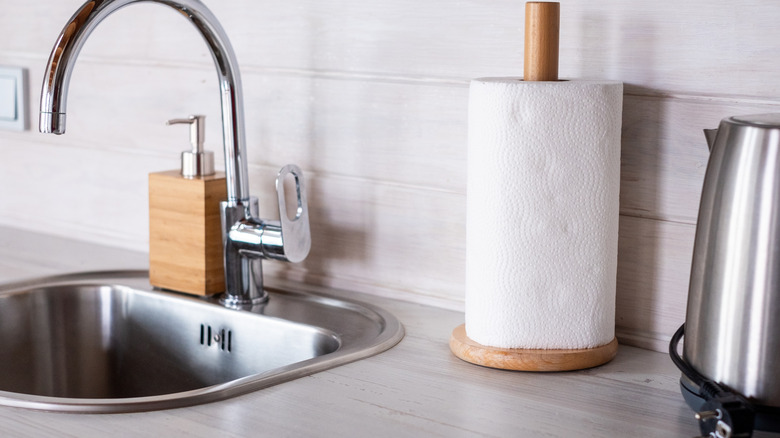
Stainless steel is known for its shiny look and incredible durability, which makes it a great choice in your kitchen, whether we're talking stainless steel appliances or cookware. But when cleaning cooking residue and grease from pans or polishing off your stainless-steel fridge, it's important you don't reach for the paper towels since they can leave scratches and leftover fibers on the surface of the material. Paper towels have a comparatively rough touch compared to softer alternatives like microfiber cloths or 100% cotton dish towels, which are known to be gentler and help keep stainless steel flawlessly shiny and smooth.
While the scratches paper towels leave are often tiny, over time they can impact your stainless-steel pot's quality, including factors like heat conduction and removal of tiny dirt particles. Plus, those inevitable, little specks of paper towel residue are frustrating and hinder the shiny appearance. In contrast, a good microfiber cloth softly cleans the metal's surface without leftover scratches, fibers, or particles. Cotton or microfiber cloths are super absorbent, so they leave minimal streaks and instead give your stainless-steel fridge surface or cookware that extra sheen. Further, paper towels might be doing more harm than good anyway, since they are disposable, require significant natural resources to manufacture, and can cost you a pretty penny at the grocery store when used constantly. For a wiser choice, use a soft microfiber cloth or other reusable rag to clean your stainless steel instead.
How to clean stainless steel properly

To maintain stainless steel for longevity, gentle cleaning methods are key. In addition to avoiding wiping your stainless steel with abrasive paper towels, you'll also want to avoid harsh cleaning agents and chemicals. If you're working with a stainless-steel pan, handwash it with mild soap and warm water and avoid exposing the surface to the rough edge of the sponge or other tough cleaning tools like steel wool. It also helps to soak the pot or pan first to reduce stuck-on debris and the possibility of scratching stainless steel via heavy scrubbing. For baked-on food or residue, let your stainless-steel pan sit with a paste of baking soda and water for up to 30 minutes or spray it with vinegar before rinsing your pan and cleaning as normal. Once the pan is clean, use your microfiber or soft cotton cloth to dry and polish the stainless steel until shiny.
To gently clean stainless-steel appliances and kitchen surfaces, a couple of simple items will work. Lightly spray them with vinegar or club soda to clean pesky fingerprints off stainless steel. Then, use your microfiber cloth to wipe down the surface without any annoying lint or remnants that paper towels usually leave. For even more shine, after the stainless-steel surface is dry, wipe it down again with a small amount of food-grade mineral oil. Lemon juice works great, too, for getting rid of water spots.