

How To Stop An Over‑hard Fried Egg From Browning Before The Yolk Sets
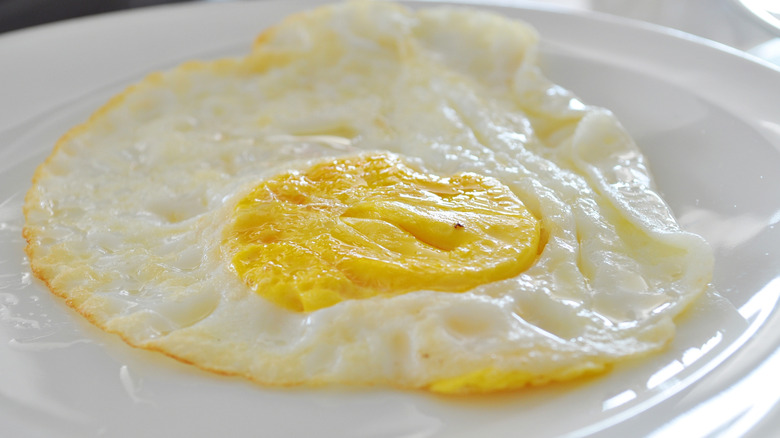
If you're a fan of over-hard eggs, you might not realize that you're in the minority. When it comes to making fried eggs, Americans overwhelmingly opt to cook them over easy or over medium, according to Pantry and Larder. But if the thought of any runny yolk is off putting, then over hard (also known as over well) is the only way to go.
In the quest for a solid yolk, you might find that the bottom of the egg browns before the inside is cooked. Don't be tempted to crank up the heat on your eggs, but instead add a splash of water to the pan. This creates steam in the pan that will help the yolk cook more quickly. Simply add the water before flipping so that you can keep an eye on the progress. Once the yolk reaches over-medium doneness, flipping the egg will then finish it off. If you want a sunny-side-up egg without a runny yolk, put a lid on the pan after adding the water and the egg will steam all the way through.
Over-hard eggs might not be the most popular way to cook eggs, but they do have their place. An over-hard egg can be the best option for a tasty breakfast sandwich that doesn't drip, or if you want to take an egg sandwich for lunch (runny yolk left at room temperature is not ideal). They are also great for chopping and adding to stir fries or salads. And, of course, cooking eggs over hard is the safest option if you want to enjoy a fried egg during pregnancy.
Tips for the best fried eggs
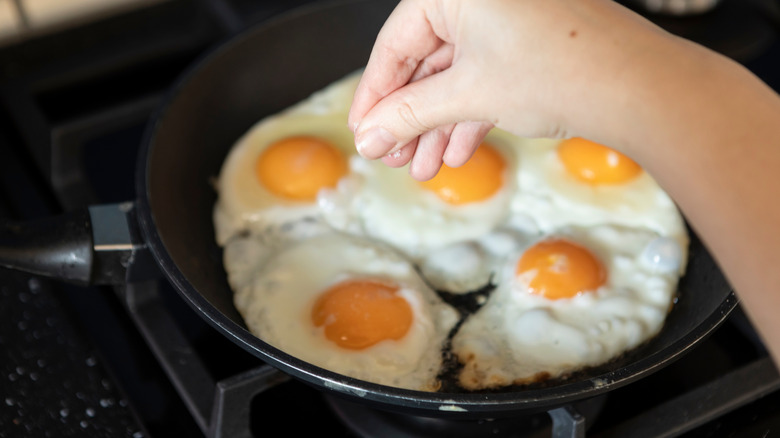
Over-hard, over-medium, over-easy, and sunny-side-up eggs all start out the same way. The difference between these eggs is in how long you cook them, and whether you flip them. For the most part, the best strategies for perfect fried eggs will depend on whether you like them runny or not. But, there are some other tips worth remembering.
A good fried egg begins with the selection of the pan. If you're confident with the seasoning on your favorite cast iron skillet, you can get a good result, but a non-stick frying pan is the safest option if you want to keep the egg intact. Once you've set the pan over medium heat, it's time to add a little fat. Butter gives you flavor but can be prone to burning, which is where olive oil has the advantage — even if some people consider the only true fried eggs to be cooked in bacon fat.
One of the biggest mistakes people make with eggs is frying them straight from the fridge, resulting in eggs that are unevenly cooked. Although this is less important for over-hard preparations, you don't want to end up with any rogue soft patches.