

This Rice Red Flag At A Taqueria Should Make You Turn Around And Leave
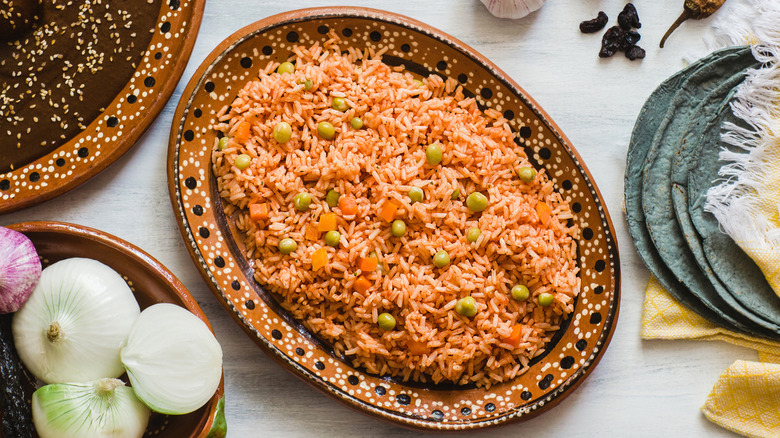
Rice has been a staple in Mexican cuisine since its introduction to the country through the Spanish conquest in the 16th century. Because it grows remarkably well in Mexico's climate, and thanks to its neutral nature and ability to absorb flavors, rice became a culinary canvas which Mexican cooks turned into a wide variety of dishes. Almost every region of Mexico has developed its own rice dishes, contributing to the richness and diversity of Mexican cuisine. And while this nutritious grain is enjoyed in every Mexican household, there is a kind of rice that you will not see in traditional cooking: instant or parboiled rice.
Rene Valenzuela, chef and owner of Rene's Mexican Kitchen in Tampa, Florida, told Tasting Table that seeing instant or parboiled rice at a taqueria is a major red flag that indicates poor quality and lack of attention to detail. This shortcut rice will be missing the flavor, texture, and character of conventionally prepared Mexican rice. Valenzuela states that seeing this rice at a Mexican restaurant would cast doubt on the quality of the rest of the menu.
This is not because parboiled rice is bad, but because the process used to make it shortens its cooking time and changes its texture, making it firmer and less sticky so it doesn't absorb flavors as Mexico's prized thick long-grain rice does. Parboiled rice will cook in about 10 to 12 minutes, and instant rice, which is a subset of parboiled rice, will cook in only 5 minutes. Using these shortcuts is exactly why Valenzuela distrusts restaurants that forego the traditional way, since making Mexican rice requires a longer cooking time and a few steps beyond simply boiling.
The right way to make proper Mexican rice
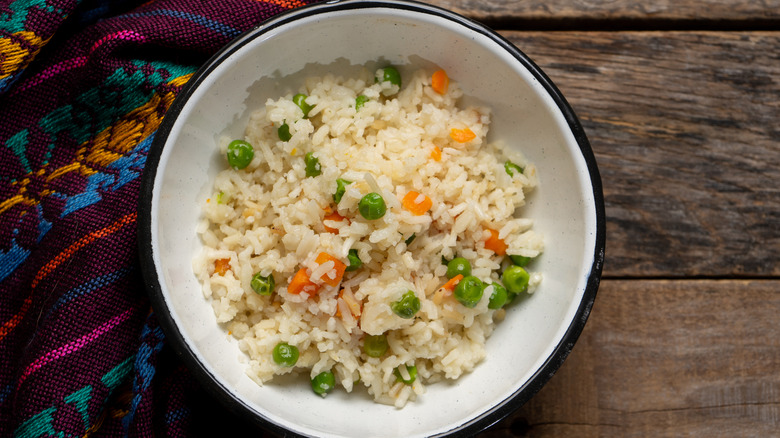
To make proper Mexican rice, you first need to lightly toast long-grain rice in oil, until it turns transparent but doesn't brown. When making arroz rojo (aka Mexican rice) or arroz verde (green rice) the cooking sauce (tomato-based for red, poblano-based for green) is added first to let it fry briefly with the rice. Liquid comes afterwards — whether it's water or broth — with any other seasonings, typically just salt or chicken bouillon powder or sometimes tomato-chicken bouillon for red rice. In the U.S., adding cumin or chili powder to Mexican or Spanish rice is common, however, this is not the case in traditional Mexican cooking.
The next step is important. The saucepan is covered and the rice left over low heat, undisturbed, until it's cooked through in around 25 minutes. This yields a tender, fluffy, slightly sticky and imperfect grain which has slowly absorbed all the flavors. My abuelita added a sprig of fresh parsley and a whole chile serrano to her rice, which adds flavor but not heat. You may add diced carrots and green peas, or even fresh corn kernels or diced zucchini, to make it more substantial. We call this arroz a la jardinera, meaning garden-style rice.
Fun fact: In Mexico, rice is considered a soup, whether it's dry or soupy, and it's usually served as its own course before the main dish. That's why in restaurants you'll see it listed in the soup and salad section of the menu as sopa de arroz.