

Should You Refrigerate Zucchini To Make It Last Longer?
While there's nothing prettier than a big bowl of fresh fruit and veggies, storing them at room temperature won't extend their shelf life. So, if you want to make sure the zucchini you brought home for the store stays fresh for longer, the refrigerator is your best friend. We spoke with Reyna Graves, director of merchandising at Sprouts Farmers Market about the best refrigerated storage methods for zucchinis.
With most vegetables, moisture hastens spoilage, so the key to storing zucchini is to avoid moisture from seeping in. Consequently, says Graves, "we suggest storing whole zucchini unwashed and refrigerated. The best way to prevent excess moisture is by placing the zucchini in a paper bag with holes." Washing dirt off of zucchini is a step you take when you're ready to cook with it. Holes in the paper bag provide air circulation, thus keeping the zucchini as dry as possible. Store zucchini in the vegetable crisper to further prevent excess moisture. Whole zucchinis will maintain peak freshness with this storage method for a week.
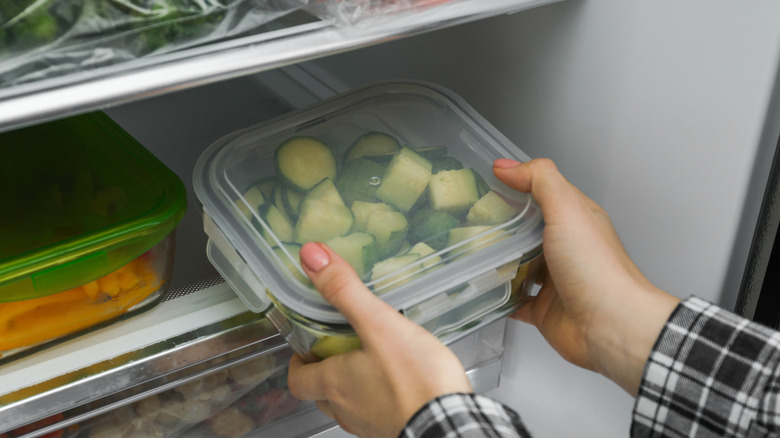
If you aren't using a whole zucchini, the storage method changes. "The moment a zucchini is cut, its shelf life is shortened up to three days," says Graves. So, for sliced zucchini, she recommends "placing chopped zucchini in an airtight container in the refrigerator. It's important to place a paper towel alongside the zucchini in the container to absorb excess moisture." Of course, you can also blanch and freeze zucchini for up to 3 months.
Tips for cooking and softening zucchini
When choosing a zucchini, you might opt for a hard, pale squash as an under-ripe variety that'll ripen over the week. However, according to Reyna Graves, "once zucchini is harvested, it will no longer ripen." In this case, storing hard zucchini in the fridge from the get-go isn't the right move. Graves recommends "leaving it outside of the refrigerator in a cool, dry spot without sunlight for a day or two to help soften it." Another way to soften zucchini is to place it near fruits like apples, bananas, and tomatoes. These fruits emit a hormone known as ethylene, which triggers ripening processes and will therefore help soften hard zucchinis.
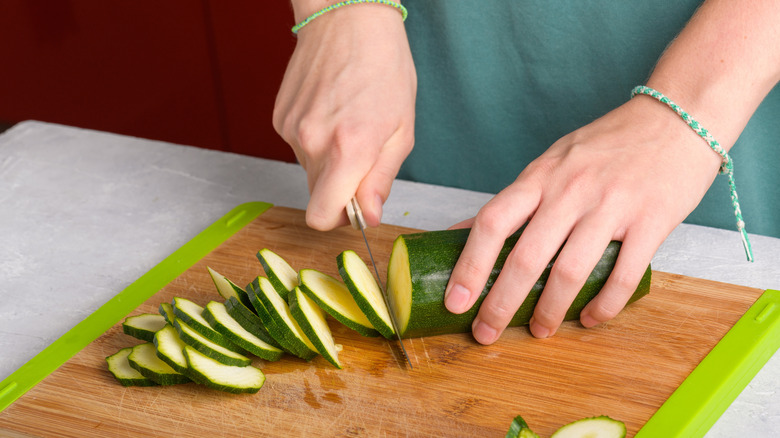
At the other end of the spectrum, you might've forgotten about that pair of zucchinis sitting at the bottom of the crisper drawer. If a zucchini appears to be overripe, you will need to process it by prepping and cooking it. "If it'll be used in soups or stews," says Graves, "the zucchini should be cut, blanched and frozen. If it'll be used for baking, remove the seeds, grate the flesh and squeeze out any moisture before freezing." You can also check out our tips for buying and prepping zucchini for the perfect zucchini bread. If you'd rather not wait, we've got plenty of zucchini recipes to use up those overripe zucchinis right out of their paper bag. If your zucchini is already ripe, you should use high-heat cooking to avoid mushiness.