

10 Essential Tips For Grilling During Winter

It's the dead of winter, but you're still craving food that's been cooked on the grill. That smoky flavor, the crispy, almost-burnt texture, and that signature sizzle just can't be recreated in the kitchen. But let's be honest: Grilling during the winter is a lot different than grilling during the summer. The cold temps mean that it's a lot less pleasant to be standing outside for extended periods of time, and they can make it harder to ensure that your food gets as hot as you need it to be.
Don't worry, though. We've consulted some grilling experts to give you the most essential tips for grilling during the winter. We've spoken to Josef Thorsen, executive chef at Katsubo in Charleston, South Carolina; Chef Gavin Pinto, recipe developer for the Certified Angus Beef brand; Chef John Asbaty, co-owner of Ox Bar & Hearth in Chicago's Lincoln Park neighborhood; Chef Christian J. Houston, executive chef of Rio Piedra Plantation in Camilla, Georgia; and Chef Bruce Kalman, "Top Chef" alum and owner of SoulBelly BBQ in downtown Las Vegas, who all gave us top-notch advice about how to grill whatever you're craving during the coldest months of the year. No more waiting for warmer temps to bring out the grill.
1. Expect the grill to take longer to heat up
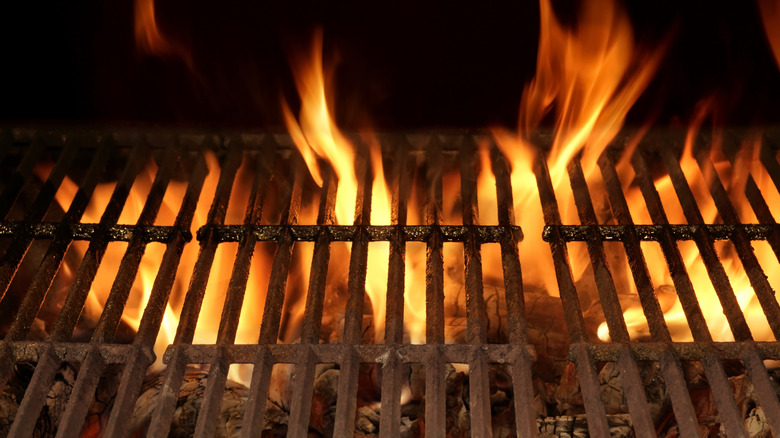
When the weather is nice and warm out, you'll probably find that your grill doesn't take that long to heat up. However, when the temperature is colder during the winter months, your grill is likely to take a lot longer than normal to come up to the proper temperature. In the summer, a gas grill might take around 10 to 15 minutes to get as hot as you need it to be, while a charcoal grill will heat up in 20 to 30 minutes. Depending how cold it is in the winter, though, those times are likely to be extended.
Why is there such a time difference when it comes to preheating in the winter versus the summer? According to Chef Josef Thorsen of Katsubo, "The colder it is outside, the colder your grill." Therefore, you're going to want to plan ahead and be patient while the grill comes to temperatures. "Give it some more time to heat up, and expect to use more fuel. Propane grills will also not burn as hot as they would when it is hot out. The gas output will decrease noticeably in the cold." Make sure you dress warmly while you wait for the grill to heat up so you're not freezing in the cold temps.
2. Choose live wood fire over gas if possible
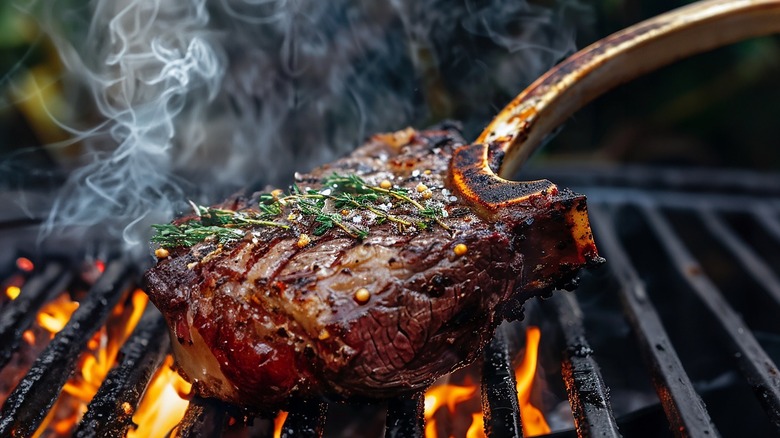
One of the main reasons you might want to avoid grilling in the wintertime is the fact that you know you're going to be pretty cold if you're standing outside for any length of time. In the summer, it can be really nice to grab yourself a drink, throw some food on the grill, and enjoy the outdoors while your food cooks. During the winter, the proposition of standing outside for any length of time waiting for your food to cook isn't quite as appealing. But there's a solution if you want to stay as warm as possible when you're grilling: Choose to use charcoal instead of a gas grill.
"I realize this isn't practical for everyone," says Chef John Asbaty of Ox Bar & Hearth, "but not only does grilling over wood fire taste (and smell) better, but it keeps you warmer while cooking." There are other benefits to cooking charcoal, for example, over gas as well. Charcoal grills are cheaper, they're easy to transport, and gas leaks will never be a problem. Consider investing in a small charcoal grill for wintertime grilling if you want to stay nice and toasty from the warmth of the fire. Just make sure you're using the right kind of charcoal.
3. Use a meat thermometer instead of the grill's thermometer
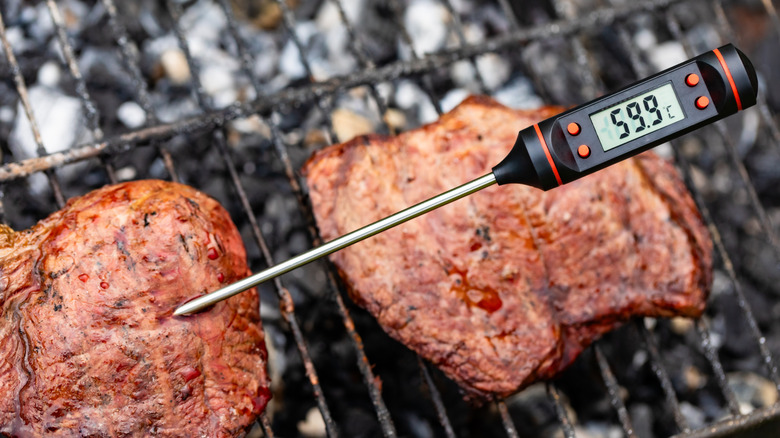
When you're grilling in the winter, the weather outside is directly working against you. You're trying to achieve a high heat with which to cook your food, but the temperature outside is quite low. This means that reaching that ideal temperature for grilling is especially tricky. And when you're working with types of food that need to be grilled at a specific temperature — like most meats — you'll want to do your due diligence to ensure that the grill stays hot enough.
According to Chef Gavin Pinto of Certified Angus Beef, "Maintaining grill temperature can be a challenge." So, how can you ensure that the grill (and your food) is reaching the correct temperature? Per Pinto, you should "rely on a meat thermometer rather than the grill's built-in thermometer." If you don't already have a meat thermometer, you're in luck — we've compiled a list of the best meat thermometers according to reviews, so you can snag one that'll get the job done every time, whether you're grilling in the winter or cooking your food on the stove in the summer.
4. Remember to let the meat come to room temperature before grilling
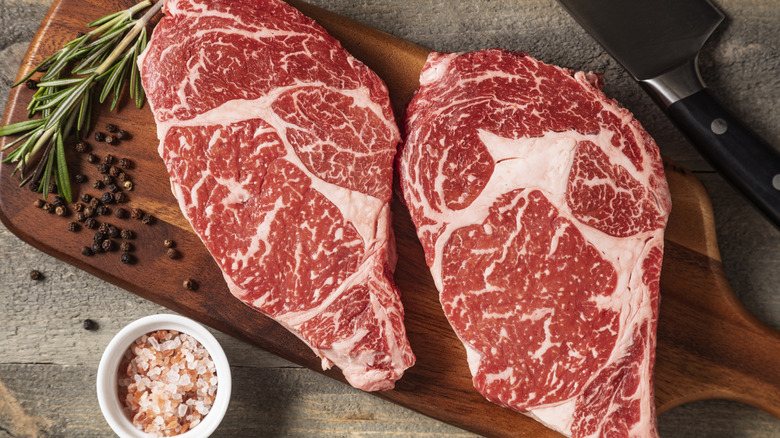
When it comes to grilling, you generally don't want to start cold. That means that it's best to avoid a cold grill, of course, but you also don't want to start with a cold steak or other cut of meat. "This leads to uneven doneness, with the outside cooking faster than the center," explains Chef Christian J. Houston of Rio Piedra Plantation. He says that this is an important step no matter when you're cooking your meat, but it's especially important in the winter, when the outdoor temperature isn't going to warm your meat up at all.
"I always let my steaks sit at room temperature for about 30 minutes before cooking (in winter, this step is critical)," Houston explains. "This simple step helps the steak cook evenly and allows the seasoning to better penetrate the meat." Just make sure you don't keep your steak out for too long. According to the USDA, keeping any food — including meat — at a temperature of 40 to 140 degrees Fahrenheit for more than two hours puts you at risk for bacterial growth that can potentially cause food poisoning.
5. Sous vide your food before grilling for quicker cook times
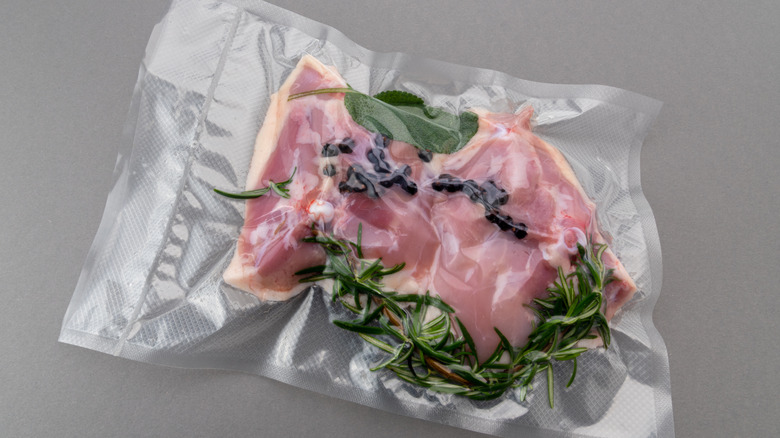
Even if you are willing to brave the cold to get that just-cooked-on-the-grill flavor, you still probably don't want to stay outside any longer than you strictly have to. If you're trying to cut down on the amount of time that you're standing shivering over a grill, then consider sous vide-ing your food before you take it out to the grill. This method, according to Chef John Asbaty, has a few benefits.
First of all, you won't have to stay outside for quite as long, since the food will already be partially cooked before it even reaches the grill. Additionally, says Asbaty, "This lets you control precise time and temperature and cook some tougher cuts of meat utilizing idle time (think set it and forget it)." Admittedly, you are going to have to plan more in advance if you choose to cook this way, but it's a great option when you're looking for that fresh-off-the-grill taste without staying out in the cold for too long. And the best part? This method works for both meat and vegetables. Just make sure you don't make some of the most common sous vide mistakes.
6. Choose bigger, thicker cuts of meat
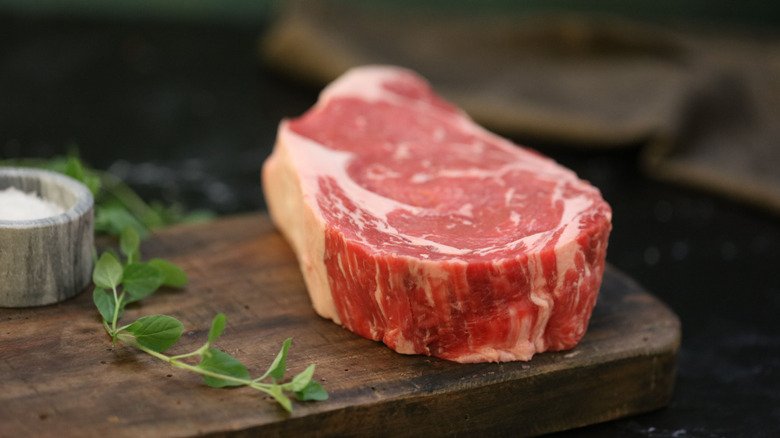
When you're desperate to get your food cooked on the grill and get back inside where it's warm, you may think that choosing smaller, thinner cuts of meat is the best possible idea. After all, those types of meats will cook more quickly, so the grilling process will take a shorter amount of time. But this may not be the best strategy if you want grilled food that actually tastes as good as it can during the winter months.
Instead, says Chef Josef Thorsen, "Focus on choosing bigger, thicker cuts." Are they going to take longer to cook than smaller cuts? Sure. But Thorsen says that this is actually a good thing in colder temperatures. "The lower temperature of your grill will be optimal for cooking larger cuts without them burning," he explains. "They will also hold their heat more effectively, meaning that if you need to rest them outside, they won't get as cold as fast."
7. Only bring out the plate out to hold your food once you're ready to take it off the grill
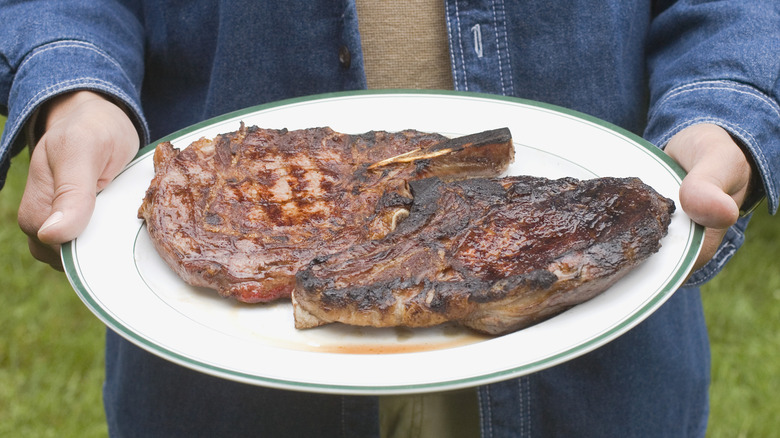
Once you're done grilling the food that you're cooking, you're going to need a place to put those just-cooked vegetables or chunks of meat. Generally, you might keep a plate ready to go right next to the stove for whenever you're ready to take the food off the grill. But in the winter, that may not be a great idea. After just a few minutes, your plate could get ice-cold.
That's why, Chef Gavin Pinto says, you should "bring your serving plate out to the grill just before removing the beef — you don't want hot steaks or burgers placed on a cold plate." This will cool down the food that you just got searing hot on the grill, bringing their temperature down immediately. Instead, your best bet is to have a plate ready to go inside at the closest door to the grill. That way, you can grab it right as your food is ready to come off the grill.
8. Consider grilling seafood or vegetables instead of meat
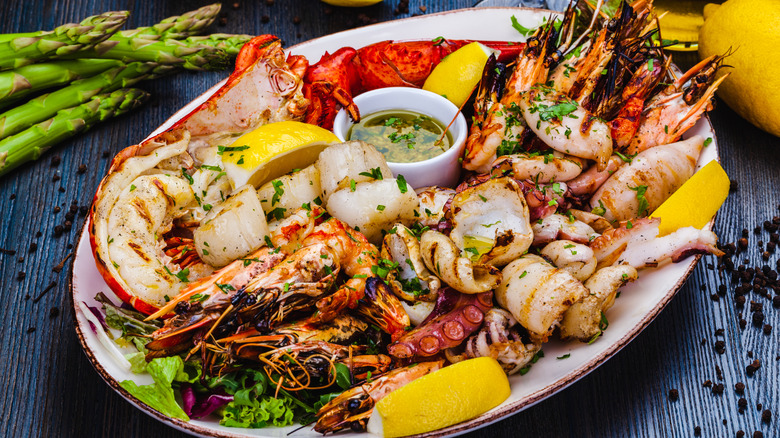
When a lot of people think about grilling, they immediately think about meat. But steaks and burgers aren't the only thing you can cook on the grill. During the winter months, you may want to consider working with some quicker-cooking types of food so you don't have to stay out in the cold for quite as long as you would with, say, a thick steak. That's why Chef John Asbaty says that "grilling seafood in the winter is perfect." According to Asbaty, many varieties of ocean fish are freshest during the winter months. Some great options include ocean perch and haddock.
Many vegetables can also be cooked for shorter periods of time and make an excellent side dish or centerpiece to your grilled meal. Asbaty suggests winter vegetables, including "cruciferous and root vegetables like cabbage, turnips, beets and kale." The chef explains that they "typically get sweeter in the colder months and respond really well to grilling. They can be treated like proteins with marinades, glazes, etc. to make them even more delicious." Doesn't seafood and a side of well-cooked vegetables sound like a perfect light meal during the coldest months of the year?
9. Keep the lid of the grill shut
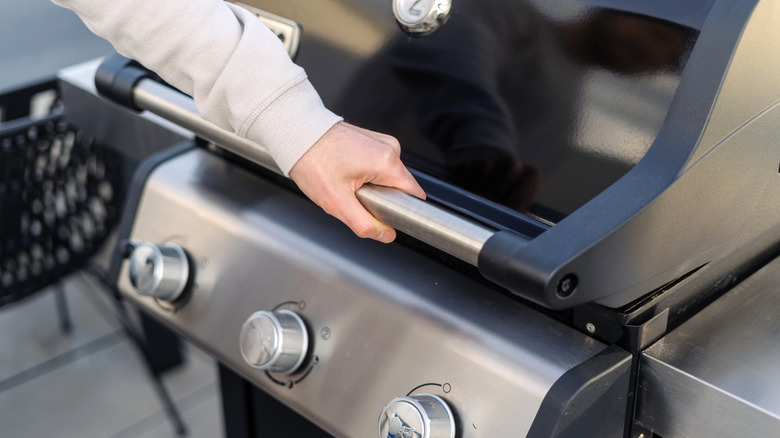
Chef Josef Thorsen has one simple piece of advice for anyone who's grilling outside in the winter: "Keep the lid shut!" The explanation is simple: Every time you open the lid of your grill, you're exposing your food and the grill itself to cold air. This air cools the grill down, extending cook times. That just means you have to spend longer standing in the cold. Therefore, you really only want to open the lid to flip your food or to check its temperature. Try to do this as infrequently as possible for the best results.
And yes, this advice even applies when you're searing. If you don't know how long you should be cooking something, consult a recipe to get a better idea of when you should flip your food or remove it from the heat altogether. That way, you'll have at least a rough estimate for when you should open the lid. Whatever you do, don't stand there with the grill agape for too long simply watching your meat, seafood, or vegetables.
10. Don't keep moving your meat around the grill
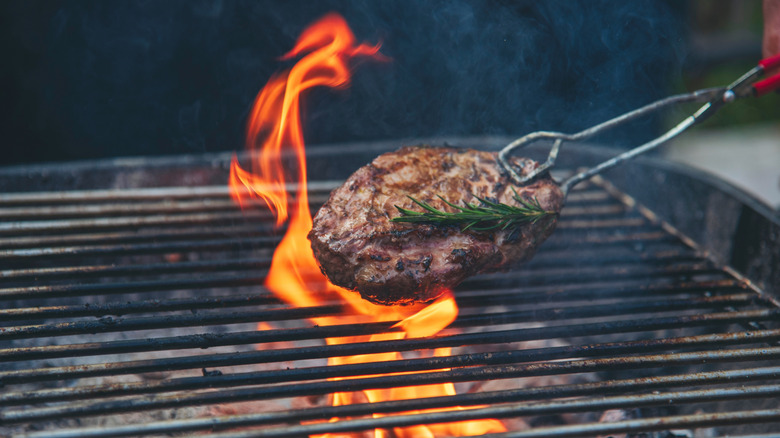
Generally, you're probably pretty excited to eat whatever it is that you're grilling. That may lead you to want to handle the meat a little more than you should, moving it around the grill in an attempt to cook it to perfection. But this, Chef Bruce Kalman says, is a mistake. "The tendency is to move the meat around, to be restless and impatient when cooking," he says. "If you move your food, it won't caramelize or char, so just let your food cook. Every time the meat is moved, it cools slightly and needs to be brought back up to temp, and when the temperature bounces up and down, it negatively affects the final cooked product."
However, there are exceptions, he says. If there's a fire on the grill from fat dripping off a piece of meat, then you can move it. Otherwise, try to keep your food in one place (which should be easy if you are, in fact, keeping the lid of the grill closed).