

9 Mistakes Everyone Makes With Chicken Enchiladas
We may receive a commission on purchases made from links.
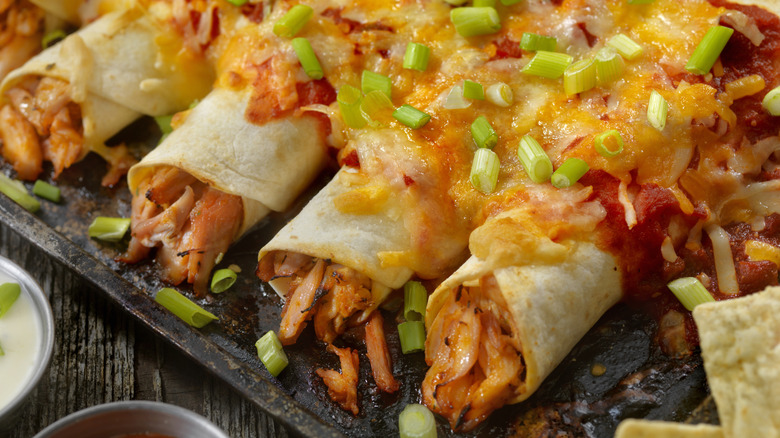
There are few dishes more comforting — or more delicious — than enchiladas. Even though they can be filled with a variety of different ingredients, we like using chicken for them. Chicken is, first of all, one of the more affordable types of meat you can use, but it also has a rather neutral flavor profile that really allows the seasonings, sauce, and other fillings to shine. Chicken enchiladas make for a super versatile meal that your whole family is likely to love.
But if you're a newbie to making chicken enchiladas, you might be making some mistakes in the cooking process. No worries — we've consulted with chefs and recipe developers, including Megan Keno, creator of the blog Homemade Home and author of "Cast Iron Gourmet"; Christina Musgrave, recipe developer and founder of Tasting with Tina; and chef Anthony Lamas of Seviche in Louisville, KY, to take a closer look at some of the most common mistakes that home cooks make with chicken enchiladas. You may just find that you've made a few of them yourself. Avoiding them in the future will surely result in even tastier chicken enchiladas.
Not using warmed tortillas during the rolling process
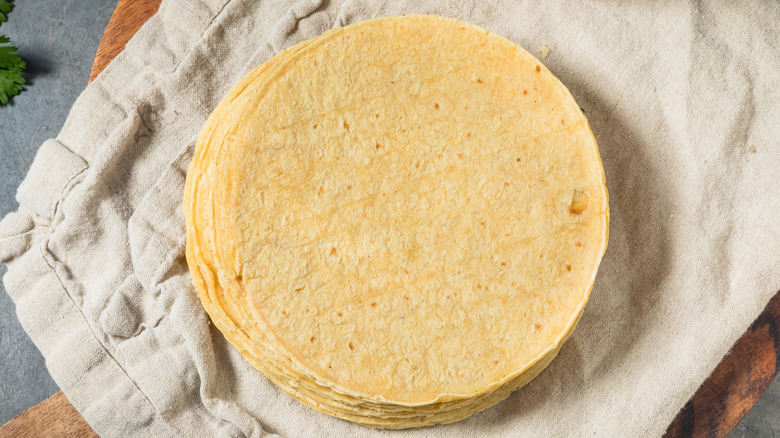
Do you find that your tortillas break and crack when you make chicken enchiladas? You're not alone; this is a common problem that cooks discover when they make this popular dish. It can especially be an issue if you're working with corn tortillas (which you should, since this is how enchiladas are traditionally made). But you don't have to deal with broken, leaky tortillas that cause your fillings to spill out— you're probably just making what Megan Keno, creator of Homemade Home, says is one of the biggest mistakes home cooks can make with chicken enchiladas: "not using warmed tortillas during the rolling process."
Why do you want to use warm tortillas as opposed to those that are simply kept at room temperature? According to Keno, warming them up helps to get them more pliant, which prevents them from cracking as easily. She also suggests rolling them through oil, which will make them even softer and easier to work with.
Using canned enchilada sauce
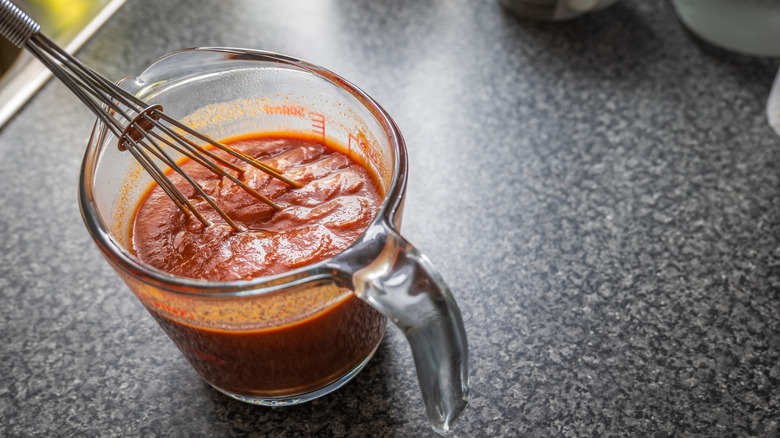
If you're trying to make a quick and easy dinner, you may consider using canned enchilada sauce. But opting for a canned sauce over a homemade version is a mistake that may make your dish less delicious. That's because the sauce is such an important part of the dish, offering not just moisture but also a bold pop of flavor. Therefore, you'll want that sauce to be as fresh as possible. We get it — you don't always want to have to take that extra step, but it pays dividends if you're trying to make a dish that'll really wow everyone around the table.
One of our favorite enchilada sauce recipes calls for guajillo chilies, ancho chilies, an onion, garlic, tomatoes, and chicken broth, in addition to a variety of other spices and ingredients that up the flavor ante significantly. It takes about 30 minutes to prep but only 10 to actually cook.
Utilizing only chicken breast instead of a whole chicken
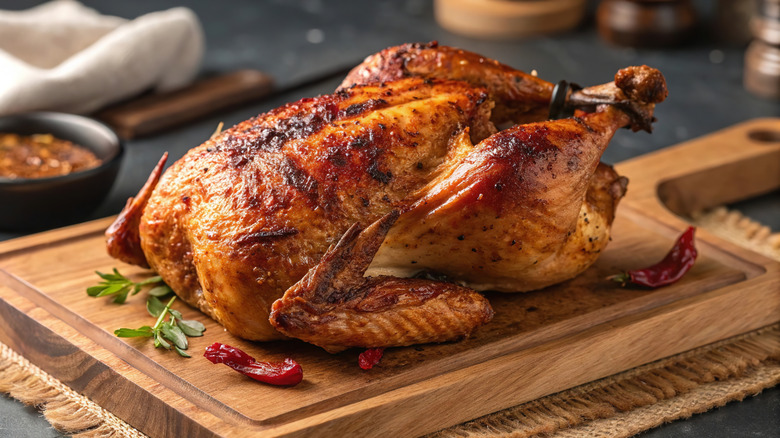
If you prefer white meat over dark meat, then chicken breast is probably your go-to choice when you're shopping for your chicken enchiladas. But if you're trying to make the most flavorful meal possible, you're going to want to skip the breasts and opt for a whole chicken instead (which comes with a ton of surprising benefits). Yes, you'll have to cook it whole and break it down, but the improved texture is so worth the extra work. Of course, if you don't want to go through all the work of cooking a whole bird from scratch, you can always use a pre-cooked rotisserie chicken from the grocery store.
According to chef Anthony Lamas, one of the biggest mistakes home cooks make when it comes to chicken enchiladas is both using chicken breast and shredding it. Per Lamas, "[The chicken] becomes dry, and the shredding causes a stringy texture." This is why he recommends opting for a whole chicken instead; this will give you a good mixture of white and dark meat and more flavor in every bite. Instead of shredding the chicken, he suggests picking it apart instead, which will give the chicken filling a more tender texture.
Forgetting to properly season the enchilada filling
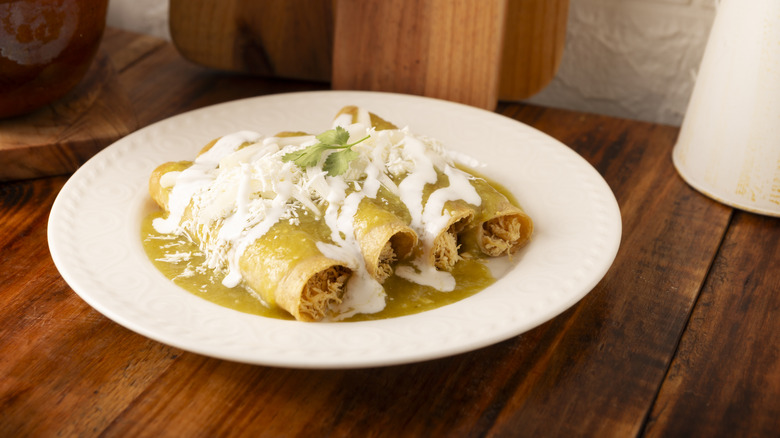
At their best, chicken enchiladas are deeply flavorful. But if you've ever made chicken enchiladas before and found that they didn't pack as much of a flavor punch as you would've wanted, you're not alone. Christina Musgrave of Tasting with Tina says that one major mistake that people make with chicken enchiladas is not properly seasoning the filling. "Home cooks might rely only on the enchilada sauce for flavor, but the chicken filling needs attention too," she says. Even if you use the most flavorful homemade sauce, bland chicken is still going to result in a bland dish.
"Make sure the filling is seasoned appropriately with salt and spices for the best tasting dish," Musgrave says. Salt is especially important. As a flavor enhancer, it makes all of the other ingredients you're working with taste better. Garlic powder, onion powder, and even some paprika are a good place to start.
Overfilling your tortillas
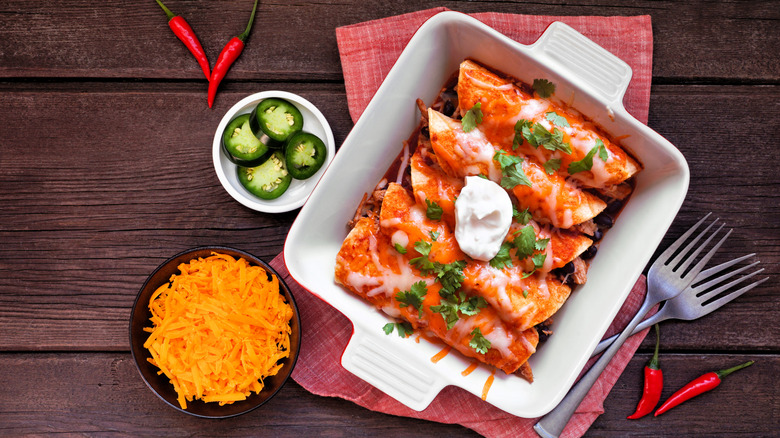
The last thing you want to do is make a big mess in your baking dish when you're just trying to make some chicken enchiladas. But a mess is likely to occur if you make one critical mistake in the enchilada-making process: overfilling your tortillas. Yes, you want them to be packed with a healthy amount of chicken and cheese so that you don't feel like you're getting mostly tortilla with every bite. But at the same time, you don't want them to be busting at the seams, spilling chicken out all onto the bottom of your baking dish or pan.
According to Megan Keno, "[The enchiladas] should be able to stay in their shape when plating them from the baking dish to the plate." Make sure that the tortilla closes with some overlap before putting them in the pan. That way, you can feel confident that you have a good enough seal to prevent a mess. Worried about moving each individual enchilada from the pan to the plate? Keno suggests using a fish spatula.
Not using enough enchilada sauce
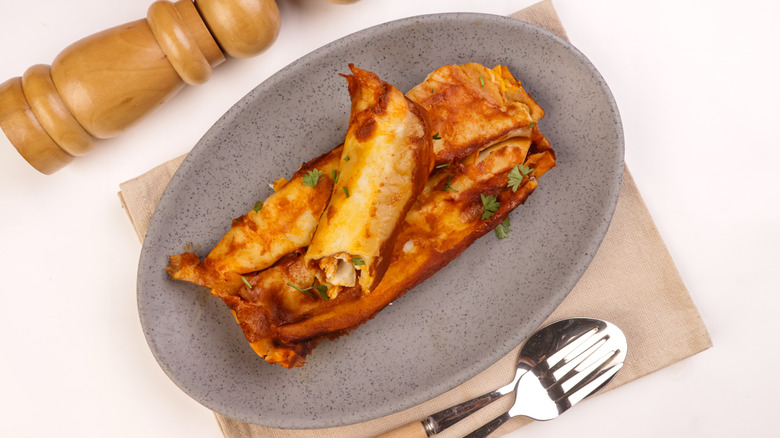
When you're using some types of sauce — like really spicy hot sauce, for example — you won't want to use much of it. Otherwise, it could easily overpower whatever you're putting it on. However, when it comes to enchilada sauce, you'll want to add a substantial amount to the recipe. In fact, Christina Musgrave says that not using enough sauce is a common mistake made with chicken enchiladas.
"Enchiladas should be saucy, not dry," Musgrave says. "Many home cooks don't use enough sauce — so once you think you have enough, add a bit more." There are a few different ways to ensure that you're using enough sauce for your enchiladas. Before you even start to arrange them in the pan, add a thin coat of enchilada sauce to the bottom, spreading it out so it'll come into contact with every enchilada. Then, layer in the filled tortillas, which you should also dredge in sauce, according to Musgrave. Finally, add even more enchilada sauce on top. Doing so ensures that every bite is super tender.
Using too much enchilada sauce
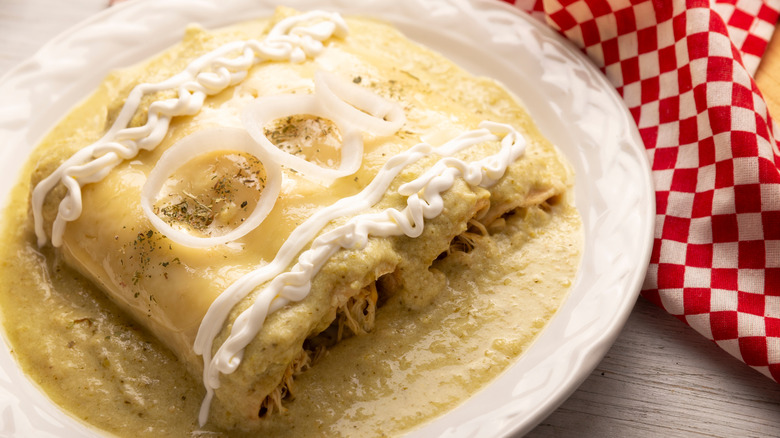
Yes, not using enough sauce is a bad thing, as it'll result in dry and brittle enchiladas. But at the same time, there's still such a thing as too much sauce, which should also be avoided. That sauce packs a lot of flavor, which is an important element of the dish. However, it also offers a lot of moisture, which can easily make your chicken enchiladas too soggy. This isn't a soup, after all, so the enchiladas shouldn't exactly be swimming in that sauce. When in doubt, use a little less, then keep an eye on them as they're cooking. You can always use a bit of leftover sauce if things are starting to look dry.
Another way to keep your chicken enchiladas from getting too soggy? Fry the tortillas ahead of time. This prevents them from soaking up too much of that sauce and guarantees a better texture throughout the entire dish.
Only using chicken and cheese as fillings
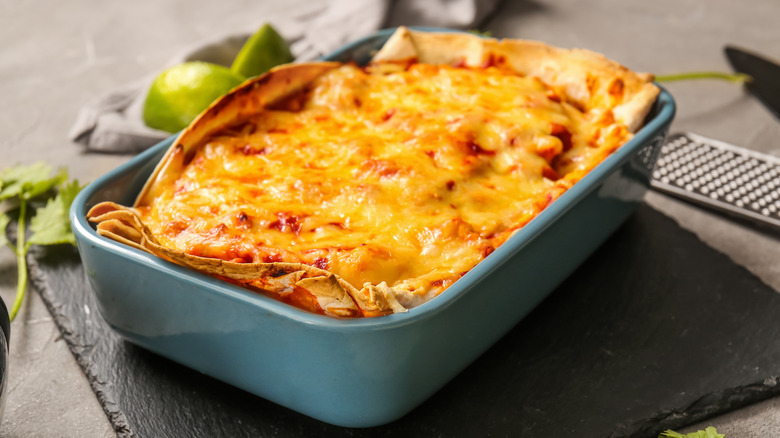
Some basic chicken enchilada recipes will call for a simple filling of chicken and some sort of cheese. This is a delicious combo; after all, who doesn't love fresh, well-cooked chicken with gooey, satisfying cheese? But that doesn't mean that you only want to use chicken and cheese in your enchilada filling. Per Megan Keno, it's a mistake to always stick to these basic ingredients instead of trying other additions that can infuse the recipe with more flavor.
"Branch out beyond just filling your enchiladas with chicken and cheese," she says. "Add in sauteed veggies, a corn and bean medley, or other fillings to boost your vegetable intake." Not only does this add more complexity to the dish, but it can also make it more nutritious in the process. However, she cautions that you should always think about how those additional flavors will work with the enchilada sauce you're using. If you are incorporating spicy ingredients into the filling, for example, you may want to pair it with a milder sauce.
Baking the chicken enchiladas uncovered
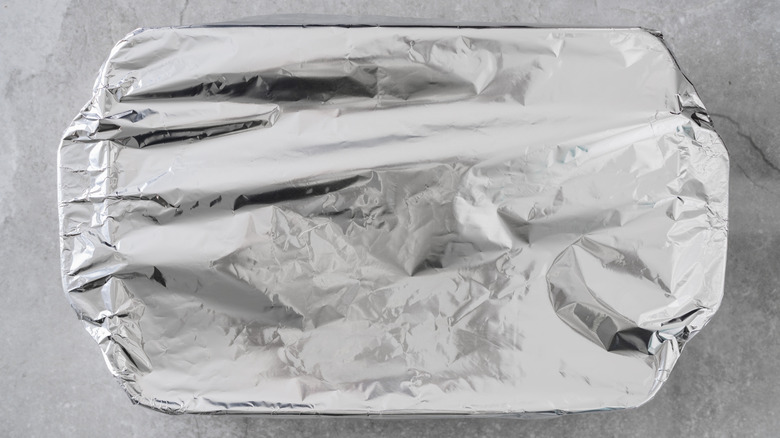
Enchiladas are one of those dishes that is really all about texture. If you fail to get the sauce and cook time just right, you can easily get chicken enchiladas that are either too soggy or all dried out. Another factor that can result in dry, overbaked enchiladas? "Baking enchiladas uncovered can dry them out," says Christina Musgrave.
Luckily, the solution to this issue is pretty simple, as long as you have some aluminum foil in your kitchen. "Cover [the enchiladas] loosely with foil while baking, and uncover at the end to allow the cheese to melt," Musgrave says. Doing this traps moisture and prevents the sauce from drying out and the tortillas from breaking. Don't have any aluminum foil lying around? You can always use a cookie sheet to cover the top of the dish instead.