

Why You Should Wait Until Beef Bourguignon Is Almost Done Before Adding Mushrooms
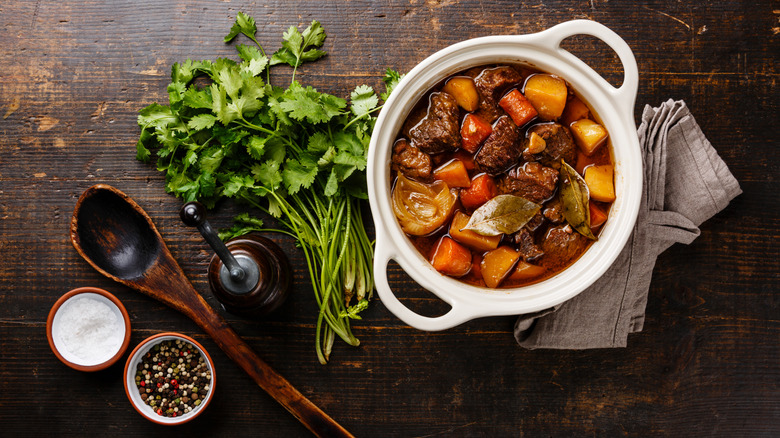
By the time mushrooms enter the conversation in a beef bourguignon recipe, the heavy lifting of layering the dish's flavors is mostly done. The beef has browned and braised, the veg has caramelized and come together, the wine has reduced, and the meat's collagen has melted into the sauce. It's a long, gentle cook, in which mushrooms are lost if they're added too early.
It's good to familiarize yourself with mushrooms and the mistakes to avoid when cooking them. While they're a wonderful ingredient that can truly level up your dish, they do act a bit differently than other, denser vegetables. Mushrooms are mostly water, and culinarily, they act like sponges. When they're dropped into a simmering stew, the heat causes them to release their own moisture, and they then soak up whatever liquid surrounds them. In beef bourguignon, that means absorbing the melange of wine, stock, and rendered fat. However, when mushrooms swim for too long in the broth, they get pale, slippery, rubbery, and taste vague. They can also slightly thin the concentrated sauce you worked so hard to build; not hugely, but it's still not optimal.
This is particularly noticeable in beef bourguignon because the final result of the dish is a reduction of all the components that were added sequentially, at their exact right moment. The reduction sauce is meant to tighten and deepen as it cooks, not be diluted late in the process. Adding mushrooms early interrupts the balance. Rather than contributing something distinct, they dissolve into the background, texturally and flavor-wise.
A sequence of careful steps
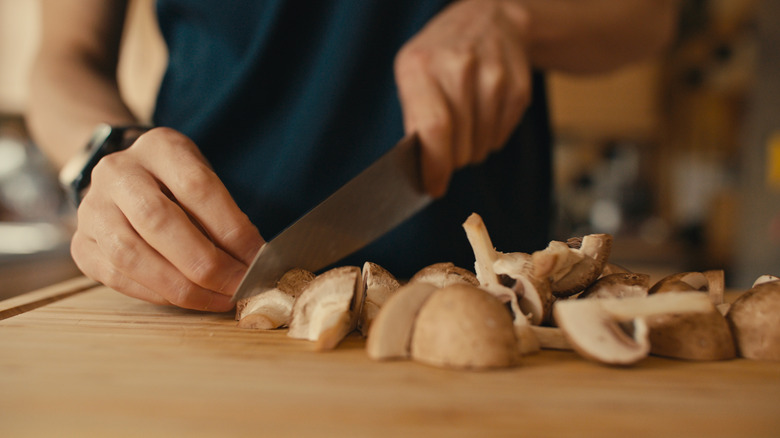
Cooking mushrooms separately solves all of these problems at once. A hot pan and a little fat give mushrooms the conditions they actually need, which is just heat and time to release their water before browning. Instead of steaming and disintegrating, they sear and the magic of the Maillard reaction ensues. Their sugars caramelize, their edges turn crisply golden, and their flavor matures and concentrates instead of dispersing uselessly into the broth. When you add these mushrooms to beef bourguignon near the end, you let them bring their best selves to your dish: a meaty, savory contrast to the silky sauce of the stew. Ideally, mushrooms add textural intrigue and subtle, grounded umami. Incorporated gently just before serving, or spooned on top as a substantive garnish, they hold their own and add to the dish.
This approach reflects a broader principle of classic French cooking: Different ingredients have different needs, meaning prep, timing, and technique. It's why beef bourguignon is beef bourguignon and not a scummy, incoherent tea of boiled meat and unattended vegetables. Beef just gets better after browning and hours of gentle heat; aromatic vegetables must be caramelized, followed by a strategic scorching with tomato paste and flour to mature their flavor before they start thickening the liquid; the red wine broth needs reduction to become what it is; and the mushrooms, like the rest of the dish's ingredients, are optimized by high heat and a short cook. By waiting to add the mushrooms, you protect the integrity and structure of the dish, and end up with a beef bourguignon that tastes as complex, layered, and finished as it should.