

Don't Throw Out Those Plastic Fruit Containers — Use Them To Start An Herb Garden Instead
We may receive a commission on purchases made from links.
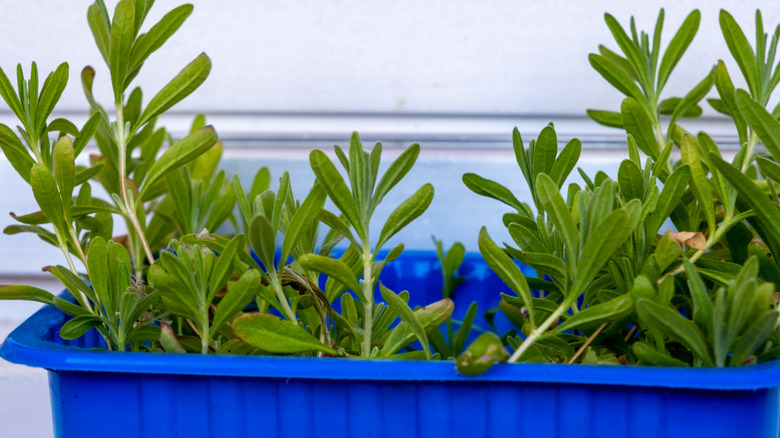
Herbs are one of the simplest ways to spruce up your cooking, and starting your very own indoor herb garden couldn't be easier. Instead of running to the store every time you need a handful of fresh basil (and inevitably letting the rest go to waste in your fridge), having an herb garden of your own allows you to only take what you need. While this in itself is a great sustainable practice, try taking it a step further by starting an herb garden in old plastic fruit containers. You'll be keeping one extra piece of plastic out of the landfills — and you'll save yourself trips to the store mid-cooking project. Plus, if you'd rather grow your plants outside, you can also use plastic fruit containers as a way to start your seeds before transferring them outside.
You may have never considered using plastic fruit containers for anything other than storing fruit. They've got slits all along the bottom, and they're fairly flimsy compared to more heavy-duty plastic, but this is actually what makes them the perfect receptacle for growing herbs and other small plants. Instead of being a means for spillage, those slits act as perfect drainage holes for plants. However, you should always water your fruit container herb gardens over a plate or in the sink, since they're prone to dripping immediately after watering.
The best starter plants for your fruit container herb garden
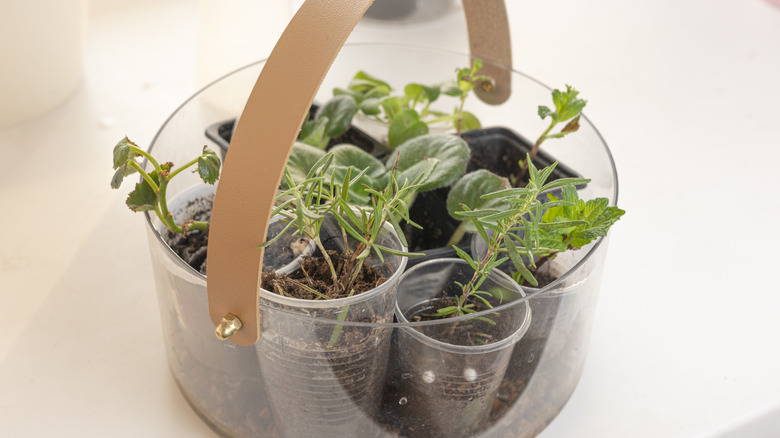
If you're new to gardening, plastic fruit container herb gardens are also a super affordable way to give it a shot without spending money on materials. To prepare them, all you need to do is cut off the top portion of a plastic container, wash any residue out, and fill it with potting soil, like this Espoma Organic Potting Soil Mix. Then, you're ready to add seeds to start your soon-to-be flourishing herb garden.
Deeper plastic fruit containers, like those typically used for strawberries, are the best choice due to their size. If you have some that are smaller in width but still have a bit of depth, those will work, too. Regardless, you need to prioritize growing plants that are shallow-rooted. If you plant something with deep roots in a container that's too small, it will likely suffer due to stress and lack of room to grow. Herbs that do well in shallower spaces include dill, parsley, cilantro, oregano, and catmint, and each of these would be a perfect addition to a fruitful little herb garden.
If there's a particular herb you want to grow but that you know has deeper roots, you can always look for the dwarf variety. Basil, for example, is an essential, chef-approved herb that belongs in your herb garden, and it's available in dwarf varieties. Rosemary and sage are also common dwarf variety herbs, and both are beautifully fragrant additions.