

The Dishwasher Setting That Can Give You Spot-Free Glassware

We may receive a commission on purchases made from links.
If you're fortunate enough to own a dishwasher, you have probably gotten used to how quick and easy it is to make all of your dishes sparkling clean, even after a big dinner party or holiday meal. But even high-end dishwashers can sometimes leave you with spotted glassware. Glasses get spots when water droplets on the surface don't dry quickly enough after the wash cycle is complete. If you have hard water, these spots could contain crystallized minerals and soap residue that is hard to get off.
Luckily, there is a simple dishwasher step that makes cloudy glassware look like new. Using the heat-dry setting on your dishwasher will dry glasses before they can develop water spots. Unlike the air dry setting which automatically opens the door of the dishwasher when the cycle is complete so that the dishes can dry naturally, the heat dry setting combines high heat with powerful fans to dry dishes incredibly quickly.
Not only will this make it easier to unload your dishwasher, but it can also be more hygienic. The temperature of the heated air can reduce the risk of harmful bacteria growing on dishes. While you might not want to use the heat dry setting for every load as it uses a lot more energy, you should choose it for large loads, when you're short on time, and on days that are very cold or humid.
Other ways to get rid of spots on glassware
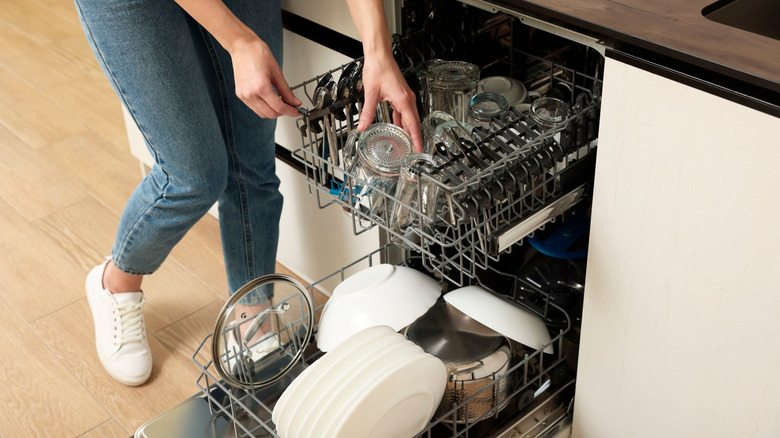
Some dishwashers only have an air dry setting, while certain models may not allow you to use heated dry in combination with other cycles or settings, like Eco settings or rinse cycles. The heat dry setting also might not work on all dishes. One of the reasons that plastic doesn't dry as well in the dishwasher is because plastic doesn't conduct heat very well, and plastic cups and bowls cool faster, leaving water spots behind. But even if your dishwasher settings don't include heat dry, there are a few things you can do to prevent your glasses from getting spotty or remove spots from glassware.
Placing glasses in between, not over, your dishwasher tines in the upper rack of the appliance can reduce the risk of spotty or clouded glassware. This can improve cleaning performance and prevent glasses from getting water spots or streaks. Using a rinse aid like Cascade Power Dry or Finish Hard Water Quantum can prevent or remove hard water stains, water spots, and cloudiness.
If you take wine glasses out of the dishwasher and notice they are cloudy or have spots, you can clean them with vinegar to keep them crystal clear. You can also re-wash the glassware with a degreasing dish soap like Dawn. If the spots don't come off, they could actually be mineral deposits from your hard water.