

What Makes Navigating Trader Joe's So Unexpectedly Tricky
Whether you're on vacation or passing through a different neighborhood, chances are that if you walk into a Target or Walmart for the first time, you'll know your way around. Shoppers can quickly acclimate to the store's idiosyncratic, uniform layouts, even if they've never been to that exact location before; the dollar section leads into the clothes, which leads into the produce, and on and on. At Trader Joe's, however, it's a very different story (cue Creedence Clearwater Revival's "Run Through the Jungle").
Like a beautiful, burdensome snowflake, no two layouts are the same from one Trader Joe's to the next. TJ's stores are inconsistent by design, never following quite the same floor plan, not marked with aisle numbers, and famously subjected to frequent inventory changes. At many Trader Joe's locations, especially in urban areas where footprint space is at a premium, the aisles aren't even arranged in parallel lines, diverting into haphazard zigzags. All in all, navigating the selection at TJ's can be, well, annoying, to say the least — especially during high-traffic hours when that freewheelin' "organization" is compounded by a thick crowd. So, why does the chain permit and perpetuate these tricky aspects of the shopping experience?
Trader Joe's boasts more than 600 stores across the U.S., but its national presence is the biggest thing about it. The average TJ's encompasses roughly 15,000 square feet, over 700% smaller than the average Walmart at 106,000 square feet.
No two TJ's follow quite the same layout
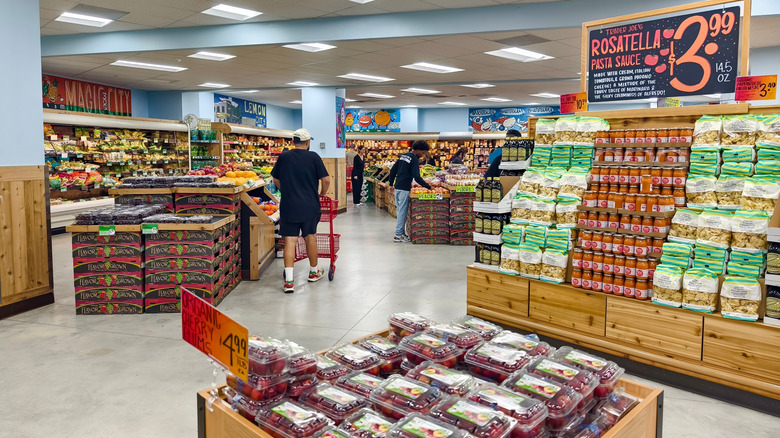
These physically smaller stores require subsequently less floor space than big box supermarkets, and TJ's retention of layout flexibility from one space to the next can help the store optimize its inventory displays. In fact, that highly-curated, somewhat-limited inventory is actually how Trader Joe's influences shoppers to buy more than what's on their shopping lists (that, and the fact that the garlic naan crackers are just too good to pass up on your way to the brown sugar oat milk creamer). According to a 2011 deep-dive published by Forbes, Trader Joe's stores are designed to be modular: "[T]hey rotate product shelves and placement," and "will literally change the schematic and traffic flow of their stores 180 degrees." The organic grocer saw revenue of $13.3 billion in 2024 alone (per Zippia), so clearly something's working.
Still, the acid jazz composition that is a Trader Joe's aisle can pose some utility challenges for customers. One Reddit thread bluntly asks, "Are Trader Joes specifically designed to be chaotic? [...] I have a theory that there's a deliberate strategy behind the layout of these stores. Angled aisles and a seemingly inefficient use of space often create a chaotic experience, with people weaving through the crowd to find what they need. Then there's the puzzling placement of items – crackers in the freezer aisle?" Commenters agree, writing "I like Trader Joe's prices and products; but absolutely hate shopping there," and "More bizarre than bazaar."
Densely-packed inventory of house brands creates a down-to-earth feel and encourages more buying
On the flip side, it could also be argued that sterile, neat aisles would fundamentally oppose Trader Joe's down-to-earth zeitgeist. That experimental artistry works to perpetuate TJ's subjective brand, creating an "organic," local feel, furthered by the store's iconic font and handwritten signage for a personalized, bohemian shopping experience. Perhaps even more than their products (or at least in tandem with the inventory), Trader Joe's has effectively created a unique shopping experience that has inspired fans to make memes calling the chain their "therapist" and winking at the store's permeating charisma factor. Crew Member Azaria Daniel tells The Tattler, student news outlet of Maryland's Bethesda-Chevy Chase High School, "It is such a welcoming workforce. There are employees from many ages, so there are no dull days. I believe we are mostly just expected to make sure the customer feels welcome and leaves happy."
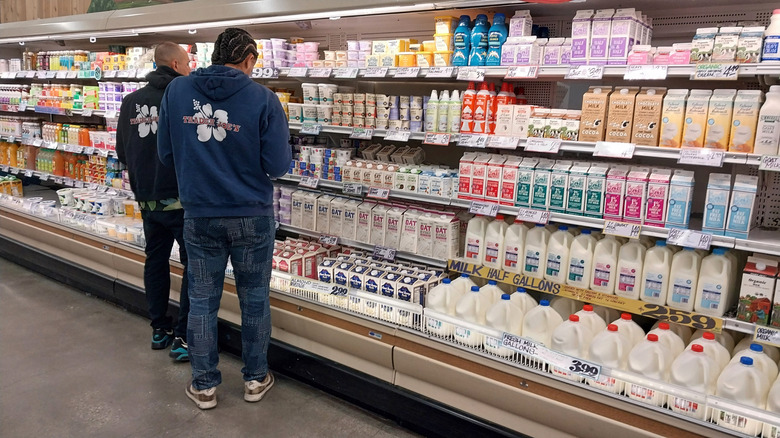
Those aisles may be tricky to navigate, but they're also compact and cost-effective, cramped yet charming. Staff clad in friendly Hawaiian plumeria flowers peddle house brands, constructing a psychological atmosphere of intimacy and familiarity (density be damned). TJ's invests in the individual shopper's experience, and keeps it engaging by rotating and updating store inventory on a regular basis. Still, we've rounded up a few tips for Trader Joe's shoppers to help navigate that unconventional layout like a pro and avoid overwhelm.