

Radishes Actually Grow Faster Indoors During The Winter Than You'd Expect
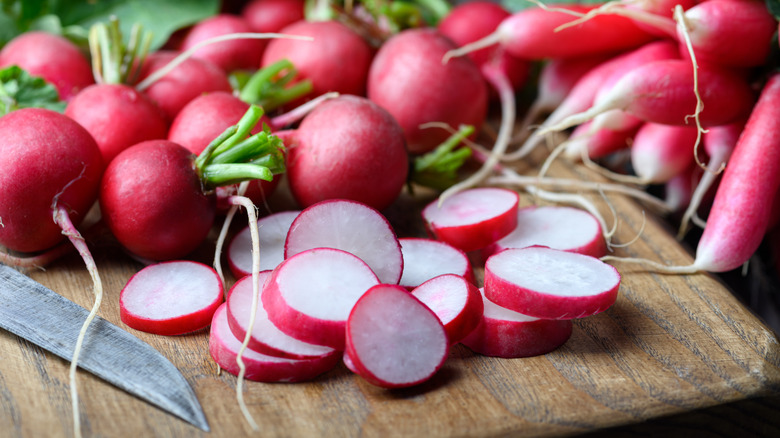
Growing your own vegetables is a fun and rewarding activity. Not only will you ensure they are at their freshest when you eat them, but you will also know how they are grown, especially if you care about pesticides and other harmful chemicals found in commercially grown produce. If you don't have an outdoor garden space, you can still grow some tasty veggies indoors — and some of the simplest (and fastest-growing) are radishes.
Radishes are a great vegetable for aspiring gardeners, as they sprout quickly and are among the fastest vegetables to grow. They require only around six hours of sun a day, so a sunny windowsill will do just fine if you don't want to spend money on grow lights. The plants themselves are small, so you need very little space to grow a nice crop. Outdoors, radishes prefer cool weather conditions for optimal growth — they don't thrive in the harshest heat of summer — so they are great as an indoor winter crop when outdoor conditions are not garden-friendly. They are also perfect in a countertop kitchen garden, which you can build from upcycled containers or using regular planting pots. You'll only need about six inches of depth, good loose soil, and regular watering.
For growing radishes indoors, fast-maturing, smaller varieties like Cherry Belle (your classic grocery store red radish,) French Breakfast, Sparkler, and Easter Egg are recommended. For best results, follow the instructions in your seed packet for planting depth, spacing, and thinning. If all goes well, you'll have radishes in as little as 24 days, depending on the variety you sow. Spring radishes are the fastest growing varieties, but most are ready to harvest and eat within 30 to 40 days, except for stunning watermelon radishes which can take up to 65 days.
Harvesting and using your indoor winter radishes
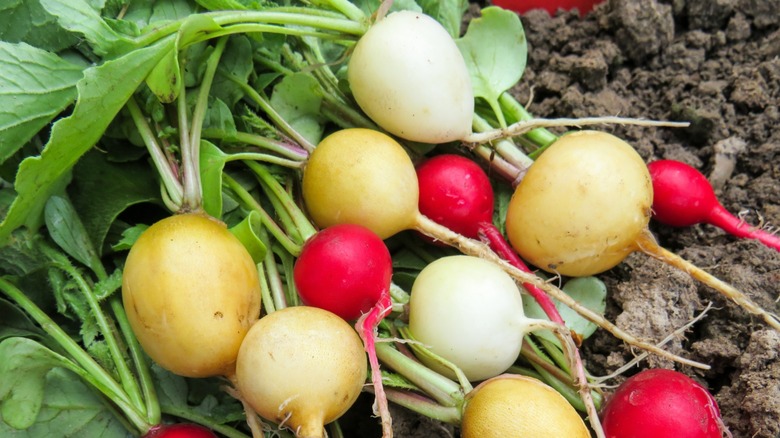
Since different radish varieties have different maturing times, you need to keep an eye on your indoor radishes to see when they are ready to harvest. In general, you want the leafy greens to be six to eight inches tall, and if you can either feel or see their "shoulders," the part that pushes up against the topsoil, they are ready to go. You don't want to let them grow for too long, as they eventually become starchy and tough. Because radishes grow so quickly, you can harvest and replant successive crops, so you will always have a consistent supply of delicious, fresh radishes. They are also stellar to grow as micgrogreens.
Aside from being tasty and nutritious, radishes are an incredibly versatile (some might say underutilized) vegetable that shines outside the salad bowl. Throw a few slices into your next stir fry for a spicy crunch or dice them into a root vegetable stew. They are fantastic pickled or turned into kimchi, can be quick and easy garnishes for any dish, and even work in cocktails like a Bloody Mary.
Don't overlook the leaves, either. Make radish leaf pesto, or cook them in place of or added to your favorite greens, simply sautéed with some olive oil, garlic, and a splash of lemon. Or leave the little radishes whole, leaves and all, and grill them or braise them for a show stopping side dish. If you don't consume them immediately or if you find yourself inundated with spicy little globes, store them properly to keep them fresh until you're ready to eat them.