

The Pie Recipes That Turn Out Better With Hot‑water Crust (And Why)
We may receive a commission on purchases made from links.
Between flaky phyllo dough, complex pâte à choux, and a humble crumb crust, there are a number of different types of pie crust to consider when planning your next bake. Fruit and cream pies tend to do better with crusts made using cold ingredients, including both butter and water to create a delicate and flaky housing. On the other hand, a hot-water crust is the unsung hero that will hold up to heartier standalone pie fillings.
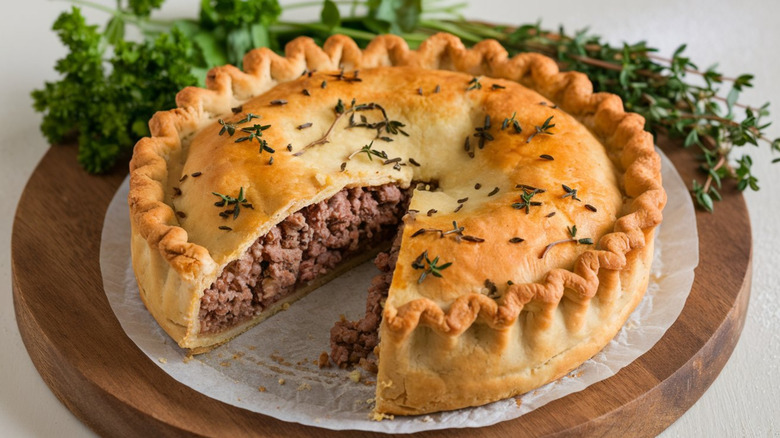
The lesser-known hot-water crust is an absolute must when baking a variety of savory-style pies such as Cornish pasties, pot pies, and meat pies. It also works astoundingly well to contain hand pies without the risk of them falling apart. Unlike its flaky crust cousin, hot-water crust is made using hot instead of cold water. Whereas the cold water lends itself to a more tender texture, hot water helps the starches in flour to pre-gelatinize, making for a crust with considerably better structural integrity.
Typically, a hot-water crust recipe calls for a mixture of boiling water, all-purpose flour, salt, and either butter, shortening, suet, or lard. Once the dough is properly mixed, turn it onto a floured surface to knead lightly. Roll it out and add your choice of fillings before covering it with an egg wash, if desired, and baking in the oven. Though usually intended for savory pies, there are many creative ways to use this hot-water crust.
Different ways to enjoy a hot-water crust pie
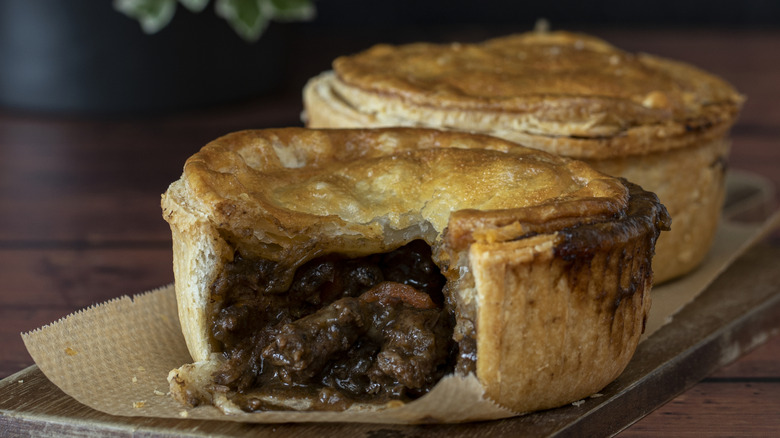
When it comes to using your hot-water crust, think big. As long as you've created a crust that can properly hold the weight, there's no limit to the kind of fillings you can add inside. Consider the possibilities for a batch of chicken pot pie pockets or a similar pie. Try buffalo chicken filling, beef stew, or even a vegetarian variety. As a note, for vegetarian or vegan pies, you'll need to use a plant-based version of shortening in your hot-water crust recipe.
Though most traditional hot-water crust pies contain beef or pork in a rich gravy, there's plenty of room to play with mushrooms, lentils, root vegetables, potatoes, and more. Hot-water crust really lends itself to a thick and heavy type of filling, given its sturdiness. Use thickening agents such as cornstarch or arrowroot powder to bulk up your filling.
In the realm of desserts, try using your hot-water crust to make your own version of Hostess fruit pies using your favorite sweet fillings. This can include apple, cherry, pineapple, or even pecan and pumpkin. A thick and creamy custard or pudding would also fit well into a hand pie made using a hot-water crust. Try a batch of a few mini hand pies using a variety of different fillings — provided you've clearly separated the different flavors in a way that they will be easily recognizable out of the oven.