

The 4 Coffee Bean Types, Explained
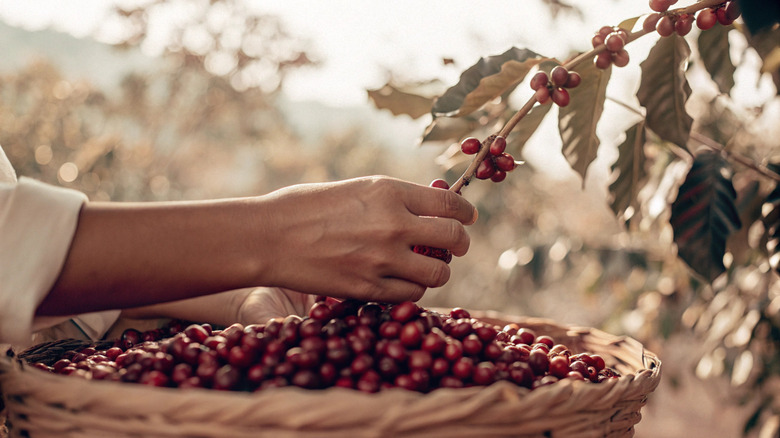
Walking down the aisle of the grocery store, or stopping into a coffeeshop for a quick cup, it might seem like there aren't a whole lot of decisions to be made about different varieties of coffee beans. For a lot of consumers, this is true. The shelves of your local market are stocked with bags of different types of coffee roasts, and any café you frequent likely has a long list of different types of coffee drinks that you can order, but for the most part the actual species of coffee that you buy is not part of the equation. In fact, it's a good bet that many people who drink a hot cup of joe or two every morning likely don't know what species it is in that brew, or that there are well over 100 different species of coffee in the world.
Despite the many different species in the Coffea genus, just four main species make up the grand majority of coffee cultivation, with one owning the bulk of the coffee-sphere worldwide. For coffee connoisseurs, however, these four different types of beans each offer a unique niche both in terms of cultivation as well as the taste and aroma that they lend to a morning macchiato.
Arabica (Coffea arabica)
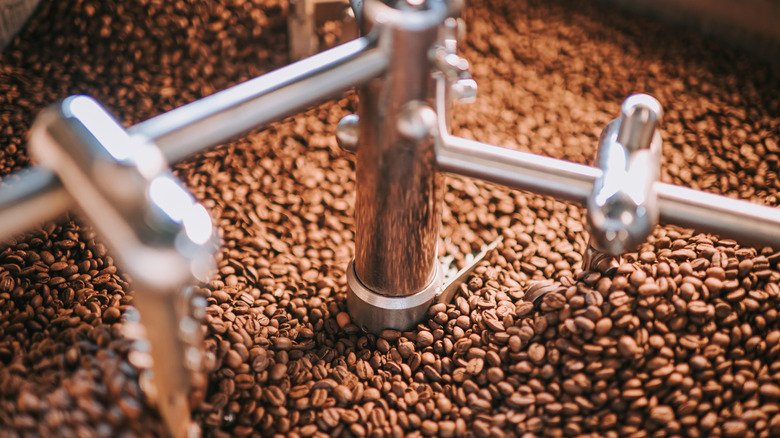
This is the coffee that you are most familiar with. No matter whether we are talking about a cup from a single-serving coffee machine, a carefully-made pour-over in your home kitchen, or the artistically-topped latte served up by your favorite barista at the shop on the corner, odds are it is made with Arabica coffee beans.
Arabica accounts for around 60-70% of all coffee produced and consumed globally, and is generally thought to be the best go-to variety on the market. Believed to have originated in Ethiopia, It is the first variety of coffee that was cultivated, and prefers a high-elevation environment with plenty of rain and shade. These days there are many variants of Arabica coffee, and it is cultivated throughout the world, with Brazil notably being the world's largest exporter of this variety of coffee.
As for what to expect from the coffee itself, Arabica coffee is sweet and aromatic, with low acidity and reduced caffeine compared to some other varieties. Again, this is the coffee that dominates the world market, so any regular café customer has likely sampled it in many forms.
Robusta (Coffea canephora)
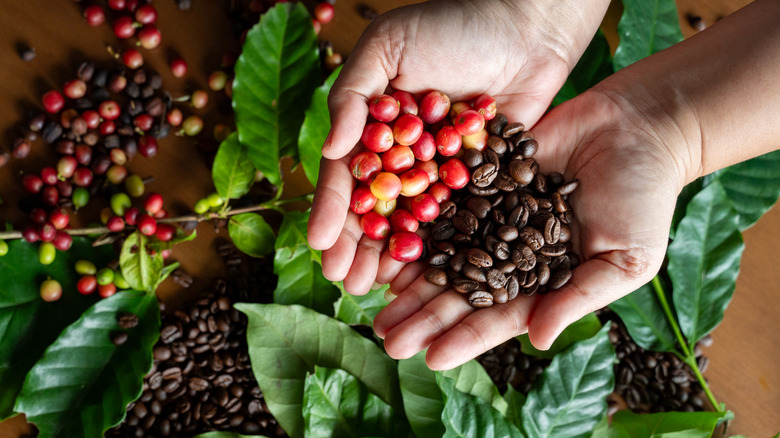
Second to Arabica is Robusta coffee, which makes up most of the rest of the coffee market around the world. A fitting name, Robusta coffee differs from Arabica by a variety of metrics that emphasize a robust nature from cultivation to cup. Robusta coffee has a strong, bitter flavor, as well as nearly twice as much caffeine as Arabica. In addition to giving this coffee variety an extra strong kick, the higher level of caffeine is also responsible for the plant's robust nature in the field, as it acts as a natural deterrent for insects, which are a significant threat to coffee production. This sturdier crop is primarily grown in parts of Africa and Southeast Asia.
A significant portion of the Robusta coffee grown each year ends up being used to produce instant coffee, but there are parts of the world where it is also commonly consumed in a more standard preparation. If you have ever had the pleasure of tasting the strong, sweet, and bitter nectar that is a Vietnamese coffee made with condensed milk, it was likely Robusta coffee in that cup — especially if you tasted it in situ at a Vietnamese café. Robusta beans are also sometimes mixed with Arabica to add an extra kick of caffeine and strengthen the blend's flavor. Interestingly, another regular use for this high-caffeine coffee variety is to make decaf, as the process to strip the caffeine also dampens the flavor of the beans, and Robusta's strength stands up well to the process.
Liberica (Coffea liberica)
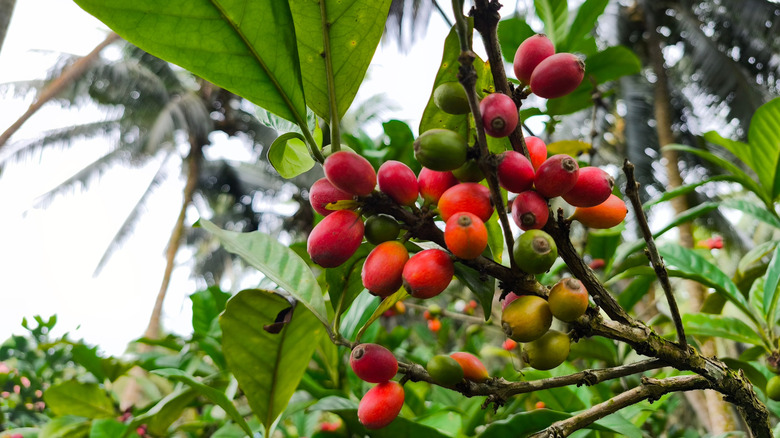
Originating in Liberia, Liberica coffee commands a much smaller proportion of the global market than either of the preceding variants, accounting for only around 2% of the world's coffee supply. Liberica coffee is a highly sought-after variety, featuring large, irregularly-shaped beans, though production is difficult. This species is, however, tolerant of warm temperatures and humid climates, making it an ideal fit for production in countries like Malaysia and the Philippines.
What makes Liberica coffee unique is a bold, smoky flavor profile that is sometimes described as woody or nutty, but which also contains delicate floral aromas. Unfortunately, given how little of the overall global coffee production it makes up, it is not an easy variety to find. In many cases, the precious beans are mixed with other coffee varieties to allow the unique flavor of these rare beans to be spread to a wider audience. For curious palates, however, a bag of Artisans Philippine Coffee 100% Liberica Beans can be picked up for a little over $20 on Amazon.
Excelsa (Coffea liberica var. dewevrei)
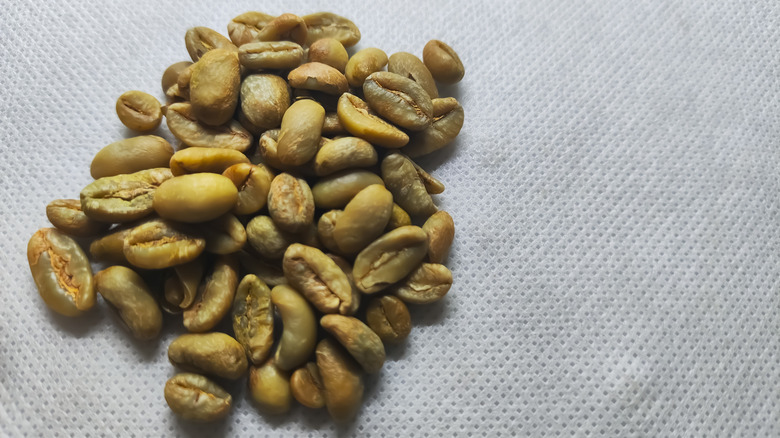
Excelsa coffee is similar in many ways to Liberica. This variety also originated in Africa, and was once considered to be its own distinct species, but has since been redesignated as a variant of the Coffea liberica plant. Given the similarity of the plant, this coffee variant is also grown these days primarily in Southeast Asia, a portion of the world with a climate well-suited to its production.
Brewed, Excelsa coffee is considered special thanks to its unique flavor that connoisseurs consider to have elements of both dark and light roast coffees as well as a strong element of fruit. Light, delicate notes of citrus can be found in this cup, but they are beautifully balanced with tart, dark fruit touches. While the flavor of Excelsa coffee is highly-prized, the aroma is not considered to be particularly pleasant. This hurts the commercial success of this variety, particularly for coffeeshops, where the aroma of the brew is a significant portion of the customer experience. Similar to Liberica — and Robusta to a lesser extent — this variety may be difficult to track down at your local market, but a 12-ounce bag of 100% Excelsa Medium Roast Coffee can be found online for around $20.
For coffee drinkers with an exploratory palate, there is plenty of adventure to be found beyond the various forms of Arabica coffee that fill most morning mugs, from the powerful Robusta to the smoky, nutty Liberica, and the complexly fruity Excelsa. These varieties might be a touch harder to track down, and may come with a slightly higher price tag, but they are worth every penny.