

You Can Use Ketchup To Polish Your Tarnished Silverware. Here's How
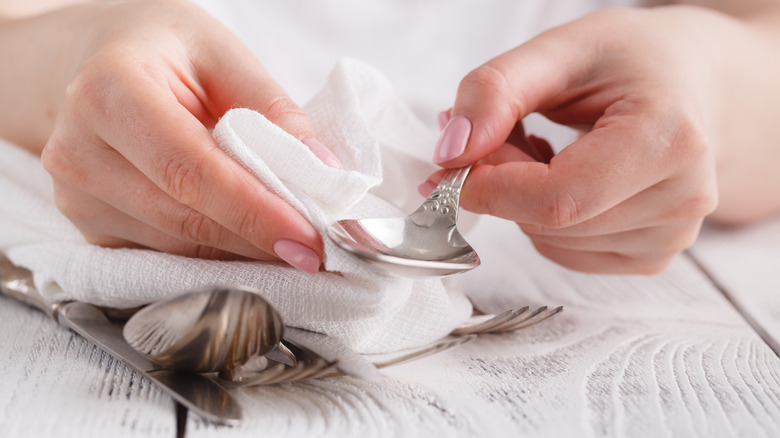
Polishing the silverware seems like an entirely old-fashioned household chore, but if you want to eat off that antique cutlery at any point, it's something that has to be done. If it's a long time between uses, you might not have a bottle of silver polish to hand, or it could be that you prefer not to use harsh chemicals. In either case, you'll want to turn to more natural options, one of which could be ketchup. It might seem counterintuitive to clean anything with your go-to French fry dipping sauce, but it's not as weird as it sounds.
The acid from both the tomatoes and the vinegar in ketchup helps to break down the oxidation on the silver that we know as tarnish. For items with a light tarnish, simply squeeze ketchup onto a cloth or paper towel and rub it into the silver. If you have heavier tarnish, you can apply the ketchup directly to the silver and let it sit for 15 minutes. A toothbrush can be helpful to get in between any fine details or crevices. Finish by rinsing with water, then buff with a microfiber cloth to restore the shine.
While ketchup will certainly work in a pinch, it's not without its drawbacks. It's messy to start with, and not efficient if you have a lot of silverware to polish. More importantly, acids should not be used on silverware that might be valuable. Some ketchup can also contain sulfites, which will make the tarnish worse. So if you do choose this method, be sure to check the label.
Alternative methods for polishing silverware
Your kitchen holds the key to many more natural methods for cleaning silver, most of which are just as useful as ketchup — if not more so. When it comes to using acid, vinegar or lemon juice will work in the same way that ketchup does, but without the mess. And if you happen to have milk that's past its best before date, sour milk makes a surprisingly good tarnish remover too.
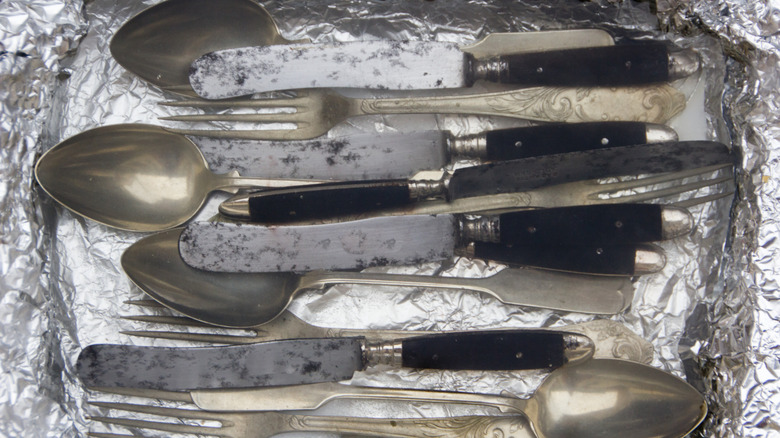
Mild abrasives such as toothpaste, baking soda, or cornstarch can be used to clean silver without acid, but be aware that abrasives may damage the surface of silver-plated items. This technique is best used for spot cleaning or just a few items, as each piece will need to be polished separately. To clean a whole lot of silverware at once, the most efficient and effective option is the aluminum foil and baking soda trick.
Start with an aluminum tray or lining a glass dish with aluminum foil, then add a solution of hot water, baking soda, and salt. As the silverware sits in this bath, an electro-chemical reaction takes place, transferring the sulfur atoms from the tarnish to the foil but leaving behind the silver atoms — no acid or abrasives required.