

The Absolute Easiest Tomato Variety To Grow In Your Garden
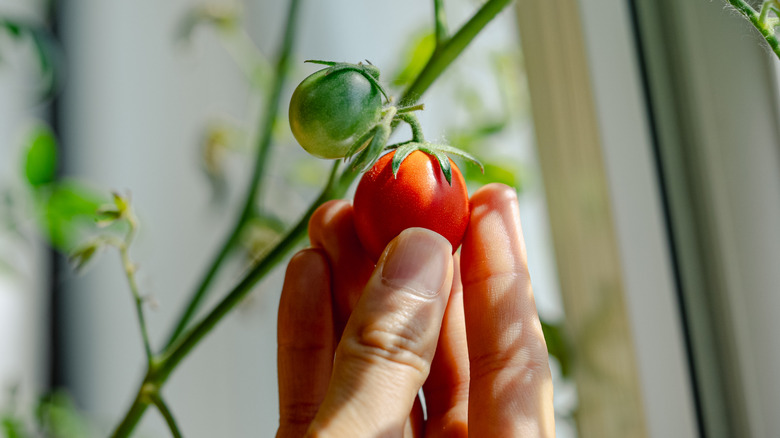
Tomatoes have a reputation for being a temperamental garden crop. They're thirsty, both fragile and heavy, and can be prone to disease. But those issues mainly occur when growing large-fruited tomatoes, which demand steady watering and pruning. Cherry tomatoes, on the other hand, are widely considered among the easiest tomato variety to grow because of how efficiently (and abundantly) they go from flower to fruit. They ripen within about two months of planting and replenish themselves constantly. For anyone who wants a high return with low maintenance, cherry tomatoes are the right variety for you.
Their small size means each tomato requires less energy, water, and structural support from the plant. Instead of pouring resources into a handful of heavy fruits, the plant produces many smaller ones quickly and repeatedly. Most cherry tomato varieties flower earlier than their larger counterparts and begin setting fruit soon after transplanting, which shortens the window where things can go wrong, like a very hungry caterpillar or a rainstorm that splits the skin.
That smaller size also makes cherry tomatoes more forgiving in general. Large tomatoes are more prone to blossom end rot, splitting, and stress fractures caused by inconsistent watering and calcium uptake issues. Cherry tomatoes, by contrast, have thicker skins and faster ripening cycles, which means fluctuations in heat or moisture are less likely to ruin an entire crop. Miss a watering or forget to prune the suckers for a week, and the plant exists just fine. Many cherry tomato plants are indeterminate, meaning they grow and produce continuously rather than all at once. That steady output spreads risk over time. Instead of one make-or-break harvest, you get a rolling supply of fruit throughout the season.
Tiny toms
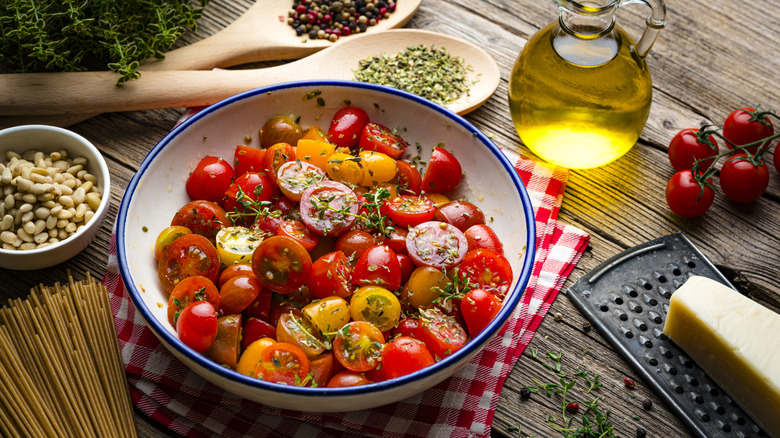
Cherry tomatoes are also adaptable and equally productive across backyards and balconies. You will collect handfuls. They pile up in bowls on the counter, or else they get eaten straight from the vine, before even making it to the bowl. Their low-key abundance and guaranteed bright flavor become their defining features. They're excellent raw, tossed into salads, or split and scattered over toast. They're so pretty that, in addition to great flavor, they take on the roles of visual intrigue, garnish, and tangy seasoning all in one. A quick blister in a hot pan or a short roast in the oven concentrate their sweetness without much fuss. Their bright acidity and natural sugars make them perfect finishers for eggs, pasta, grain bowls, and anything that needs a tart-sweet, juicy contrast.
There is a reason, though, that cherry tomatoes aren't the best choice for every job. Their thick skins and a high proportion of seeds make them less than ideal for long-cooked sauces. Paste tomatoes and Romas are bred for that, because they break down smoothly and yield dense pulp. Cherry tomatoes can do the job in a pinch, if you're willing and able to thoroughly blend the sauce before cooking down, but they're better suited to preparations that respect their structure rather than trying to deal with and overcome it.
During peak season, that limitation will hardly cross your mind. When cherry tomatoes are produced at full tilt, they just insinuate themselves into everything. A spoonful of ricotta, a handful of tomatoes, a drizzle of fig balsamic reserva, flaky salt, and good olive oil is a treat without becoming a project. Even better, there are several cherry tomato recipes out there worthy of this delicious homegrown produce.