

15 Interesting Facts You Need To Know About Whole Foods
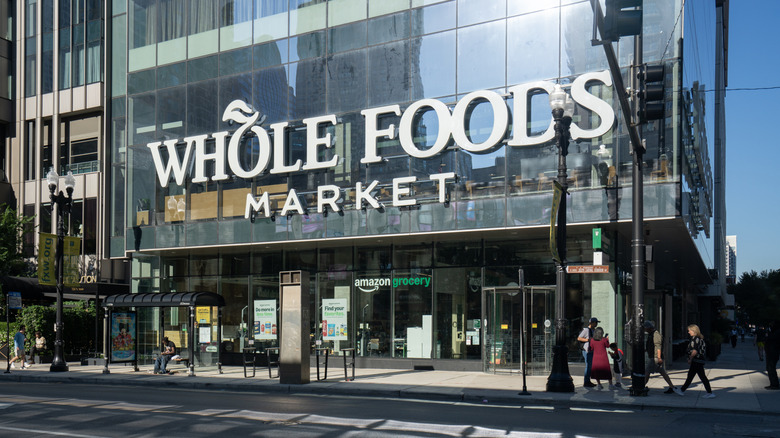
If you like to prioritize natural and organic foods in your diet — and you don't mind spending some of your extra cash on groceries — then Whole Foods might just be your go-to grocery store. These days, it seems like there's a Whole Foods on every corner selling a variety of specialty products, such as gourmet canned bean brands, and sometimes even strange and overpriced items you may not know exactly what to do with (yes, we're talking about 2015's viral $6 asparagus water).
Even if you go to Whole Foods on a regular basis, there's a good chance there's a lot you don't know about the brand. By learning more about what Whole Foods is all about, you can optimize your shopping there and maybe even get some better deals in the process. Or, once you know more about what the company stands for, you may decide to take your business elsewhere. Regardless, here are some interesting facts you need to know about Whole Foods (check out some of the most annoying things about shopping from the store next).
The first Whole Foods store was actually called SaferWay
Whole Foods didn't start out as the behemoth, Jeff Bezos-backed grocery store it is today. When it first got its start, it was just a single store and it wasn't called Whole Foods at all. Rather, the first Whole Foods was actually SaferWay and was located in Austin, Texas. Like Whole Foods today, SaferWay focused on natural foods. Unlike today, it started off as a small and relatively humble situation. It was so humble, in fact, that the founders actually lived there for some time after getting kicked out of their apartment for storing food there.
Although Whole Foods has retained some of its health food origins, it's a lot more lax than the original SaferWay. This first store didn't sell alcohol, coffee, or even sugar, instead opting to focus specifically on products that were purportedly healthier. These days, you can grab a bottle of wine at a lot of Whole Foods locations, and you can easily find a bag of coffee or a sleeve of cookies. That's probably for the best since the audience for a sugar-free grocery store is probably small.
The first location suffered a terrible flood

A lot of businesses have their share of problems in the early years of their operations, and Whole Foods (then SaferWay) is no exception. One of the biggest challenges the company faced early in its history was a massive flood. In 1981, just three years after opening the original SaferWay and a year after opening the first official Whole Foods, a storm hit Austin. This wasn't just a normal storm — it resulted in the worst flooding the area had seen in decades.
That Whole Foods store was not spared in the flood. The store quickly filled with water, and the business's inventory was largely ruined. To make matters worse, the company didn't even have insurance at that point, so the damages weren't covered. Luckily, friends and neighbors helped the employees clean up the mess, and less than a month later, the store was open once again.
Amazon bought Whole Foods in 2017 and shopping became more autonomous
Once upon a time, Whole Foods was a small store focused on healthy and organic products. By 2017, the identity of the brand changed significantly thanks to Amazon's acquisition of the grocery chain. Do the ethos of an organic health food store and a company known for causing massive environmental destruction seem incompatible? Sure, but there was money to be made in the deal, so Whole Foods became a little brother to Amazon's towering empire.
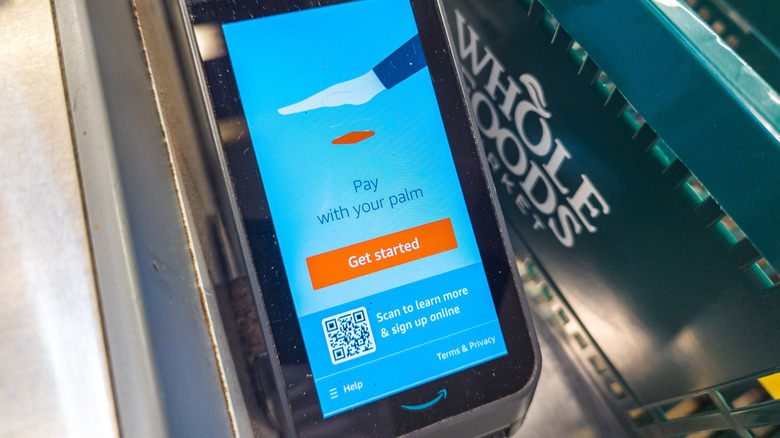
One of the biggest changes to come from Amazon's acquisition of the brand was increased customer autonomy in the shopping experience. Where you would once take your groceries up to the cashier to check out, you can now check out by simply scanning your palm at one of the self-service checkout kiosks. That may not be a bad thing when you're trying to rush through the grocery store, but it definitely offers a very different vision of what a health store is generally considered to be.
Some locations have been known to union-bust their employees
It's no secret that it's not a great time to be a worker in the United States. Stagnating wages and various labor violations across industries have made it hard to keep up in a rapidly changing economy. It only makes sense, then, that more and more workers are trying to unionize in the hopes of achieving better, fairer conditions. It's not just manual laborers and factory workers attempting to unionize their workplaces — food service workers, including grocery store employees at some Whole Foods locations, are trying to do so as well.
It shouldn't come as too much of a surprise that Whole Foods really, really doesn't want its workers to unionize. At one Philadelphia Whole Foods that was attempting to unionize, the company started distributing anti-union propaganda, part of a process known as union-busting. For now, it looks like Whole Foods employees have to continue to push the higher-ups at the company to give them the labor protections (and wages) they deserve.
The chain has been known to habitually overcharge customers
Whole Foods doesn't just screw over its own employees — it sometimes does the same to its own customers, the people keeping the business afloat in the first place. The chain has been known to overcharge customers on a habitual basis. Foods priced based on weight are often mislabeled, causing them to ring up for a price higher than they should be. In fact, inspectors claimed it was the "worst case of mislabeling" they'd seen (via Equity CRE).
The worst part? This doesn't seem to be some random mistake — it's happened repeatedly at Whole Foods stores, leading the former CEO, John Mackey, to actually admit that the company was overcharging its own customers. Although he admitted these were significant mistakes, it still gives us pause when we consider shopping at Whole Foods. How can we be sure this Amazon-backed company isn't finding other, less-obvious ways of overcharging?
The chain is trying to add more smaller-format stores
Despite Whole Foods' problems with its own employees and its customers, it's now trying to expand even more than it already has. But, instead of building more large-format stores that pack in just about any product you could ever want, it's now focusing on smaller-format locations that offer a more limited range of products. These stores are designed for urban areas, where customers are more likely to pop in for a few items instead of doing a huge weekly grocery trip in one go. The first location opened in the Upper East Side of Manhattan, but now, other NYC locations are starting to open, as well as one in Arlington, Virginia.
These smaller stores are called Whole Foods Market Daily Shop, ostensibly hinting at the fact that it's a grocery store you can visit on a daily basis. It's nice to have a small, convenient store to pop into when you don't want to wander through endless aisles of products, but we're hoping these stores don't put small mom-and-pop grocers out of business in the process. After all, those small, independent stores are part of what makes city life feel richer and more connected than, say, living in a more suburban area predominantly filled with chains.
Whole Foods is known for making organic food mainstream in the U.S.
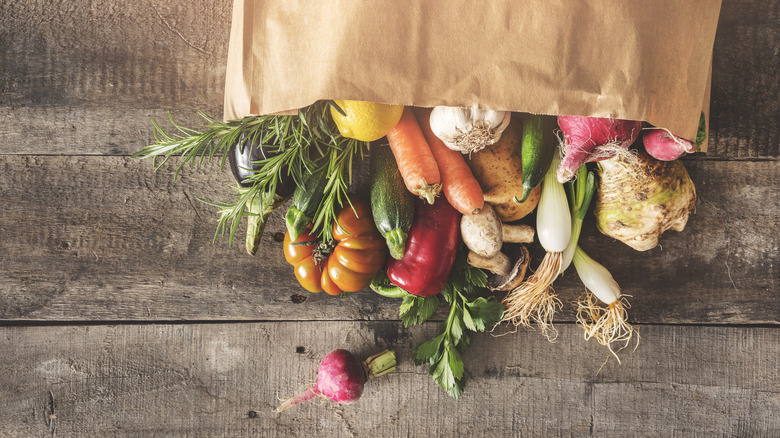
If you're old enough, you may remember a time when nobody talked much about organic food. These days, organic food has become more popular than ever; you can't go into a grocery store without seeing the word "organic" plastered onto half of the products. This phenomenon is largely thanks to Whole Foods. Before Whole Foods worked its way into the American grocery landscape in the late '70s, there wasn't much talk about organics at all — in fact, it could be actively difficult to find organic food.
Whole Foods recognized there was a market for healthy, organic produce that stretched beyond a limited, crunchy customer base. By targeting consumers who wanted to push back against the packaged food craze of previous decades, Whole Foods built a loyal customer base that liked the idea of smaller-production organic produce.
Some Whole Foods products are apparently made with prison labor
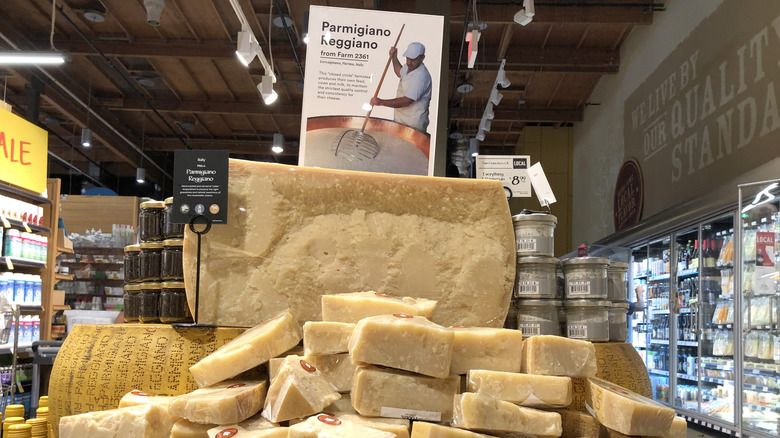
This focus on organic produce and the idea of partnering with local farmers makes it even more shocking for some that Whole Foods has some deeply questionable (read: arguably evil) business practices. One of the most egregious examples of this questionable behavior is the use of prison labor to produce some of the chain's products, such as tilapia and goat cheese. These people were paid a tiny fraction of what even the lowest-paid workers at the grocery chain were making (which was already decidedly too low anyway).
Even though these foods are produced for incredibly cheap, the chain was still charging high prices for the products, leading many to question what seems like unbridled greed from the brand. These aren't just old reports — more recent reporting shows Whole Foods (along with many other grocery chains) is still selling products made with prison labor.
The original CEO tried to build stores in more educated areas
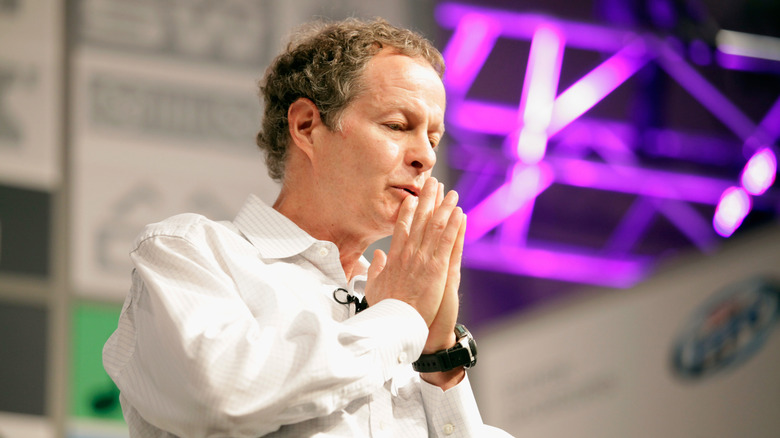
John Mackey, Whole Foods' founder and original CEO, had a specific consumer in mind when he was building out the chain. This is part of how he decided where to build Whole Foods locations. One of the main factors he looked at when determining where a new location would pop up? Education level. In fact, he said the most important factor he considered was how many college-educated people were within a 16-minute drive from the proposed location.
According to Mackey in 2009 (via Reason), about 80% of the store's customer base had a college education, which he conflated with being "better informed" (which he supposed led to healthier food choices). However, he admitted that income was another factor he considered when determining where to open a new Whole Foods, which almost certainly plays a role in education level. After all, not everyone can afford Whole Foods prices for everyday grocery shopping.
There are over 300 ingredients banned from Whole Foods stores
Let's be honest: There are a lot of questionable ingredients in our food these days, especially if you're eating a lot of processed, packaged food. Whole Foods aims to limit those questionable ingredients from its stores. In fact, there are a staggering 300-plus ingredients banned from Whole Foods in an attempt to provide healthier, less-processed products to customers. Some of these ingredients include artificial sweeteners, such as aspartame, as well as hydrogenated fats and high-fructose corn syrup. This is why you may see slightly different brands at Whole Foods than you would at a different grocery chain.
Admittedly, Whole Foods has become more lax from its alcohol-, coffee-, and sugar-free days. However, knowing the chain is a bit more selective with its food standards may put some particularly health-conscious shoppers at a bit more ease when they're picking out products to feed themselves and their families.
The chain banned plastic bags in 2008

These days, it seems it's becoming more and more common to leave the grocery store with a paper bag rather than a plastic one. Once upon a time, it was more than standard for grocery stores to primarily offer plastic bags. These, of course, are bad for the environment, and there were many who encouraged consumers not to take plastic bags.
Whole Foods straight out banned plastic bags all the way back in 2008. In late January that year, the chain pledged to rid all 270 locations it then had of plastic bags by April. Go into a Whole Foods today and you still notice the absence of plastic bags. You can snag a paper bag if you don't have your own, but we encourage you to bring your own reusable bags with you to the grocery store whenever possible.
John Mackey, the chain's first CEO, believed in 'conscious capitalism'
John Mackey, the founder of Whole Foods and its first CEO, believed in what he called "conscious capitalism," or the idea that a company's business practices should reflect more holistic values. It shouldn't just aim to make money, but rather to have a positive social impact. In fact, Mackey felt so strongly about this belief that he authored a whole book about it. This makes sense — after all, Mackey was running a health food store that originally eschewed less-healthy products in favor of organic, more-local products.
The idea of conscious capitalism that Mackey so ardently peddled, say some researchers, is an attempt to bring a sense of morality to neoliberal capitalism, partially as a reaction to the 2008 financial crisis. But, in 2025, Whole Foods is owned by Amazon — a company famed for its labor violations. The whole idea of conscious capitalism kind of rings hollow, if you ask us.
Whole Foods has been known to spy on employees
When you're at work, you're expected to show up, do the job you say you're going to do, and work hard. At the same time, workers should be able to expect certain rights in the workplace. Some Whole Foods warehouse workers discovered that their rights may have been violated.
See, the company started using technology meant to record how productive workers were. To gather this information, employees were required to speak into a machine that recorded their voices. However, some Whole Foods workers in Illinois claimed that the storage of these voice recordings went against their rights to privacy in the workplace. Ultimately, Whole Foods had to make a payment of almost $300,000 to settle the dispute. This money went to employees that still worked at the Whole Foods warehouse, as well as those who had worked there in the past. Ultimately, each worker affected by this policy took home just under $550 from the settlement.
There was once an additional discount given to employees under a certain BMI
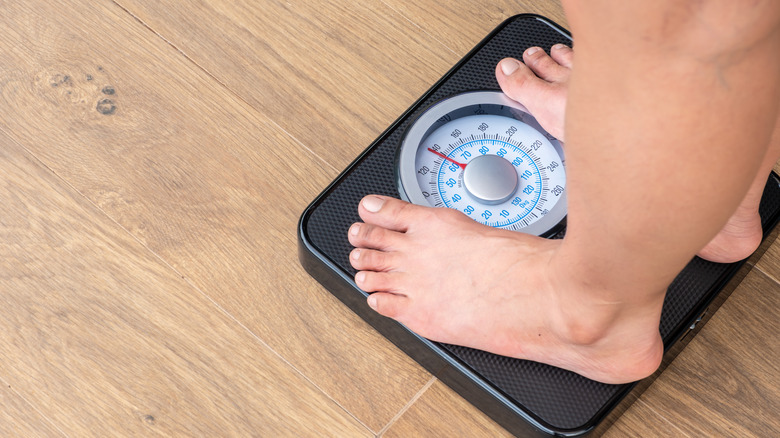
At a lot of companies, employees get some kind of discount that lets them take advantage of the store's offerings. In 2010, this was certainly the case at Whole Foods — the company offered employees 20% off products at the store. However, there was a way to bump up your discount to a generous 30%: Just have a low-enough BMI, along with a few other health markers.
BMI wasn't the only factor accounted for in Whole Foods' Team Member Healthy Discount Incentive Program: It also looked at blood pressure, cholesterol levels, and whether employees used any kind of nicotine. If an employee had some health conditions, such as diabetes, they would likely not be a candidate for this higher-discount incentive program. While it may seem like a good thing to encourage employees to be as healthy as possible, measuring metrics that people may have limited control over for a wealth of reasons seems pretty unfair. Considering BMI is now considered an inaccurate measure of health anyway, it's an even worse policy.
It's faced accusations of racial discrimination
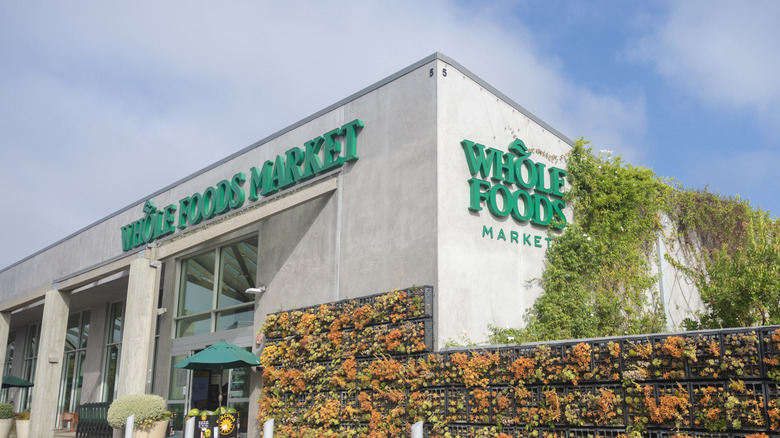
Whole Foods has been accused of racial discrimination at some points in its recent history. In April 2025, a man went viral after claiming Whole Foods employees accused him of stealing $200 worth of groceries. Why did they allegedly think he was stealing? Because he was using his own bags. However, many agree it's common practice to use one's own bags at the grocery store — especially at a store like Whole Foods, which, as we previously mentioned, banned plastic bags all the way back in 2008.
The grocery chain also reportedly illegally retaliated against a worker who protested outside of her store in 2020. She was protesting because the company told workers they couldn't wear face masks in support of the Black Lives Matter movement in the wake of the death of George Floyd — even though this company policy had allegedly been unenforced when employees wore Black Lives Matter apparel before.