

Which Types Of Fish Have Edible Bones?
Chomping down on bones may give you some pause, but if you're a tinned fish head, it's a regular occurrence. If you're new to the tinned fish life, you'll be glad to know that many fish contain bones that are safe to eat, and it mainly depends on how the fish is prepared. Bones become edible when they are small enough, softened through cooking, or broken down during canning. That's why bones in certain fish preparations are consumed without issue, whereas others need to removed for safe consumption.
Commonly canned fish, like salmon, sardines, anchovies, and mackerel all contain little bones that are safe, even enjoyable, to eat. During the canning process, the fish is pressure-cooked at high temperatures, which softens the bones to the point that they become tender and brittle. In canned salmon, the pale vertebrae often flake apart easily and are rich in calcium. Sardine and anchovy bones are even smaller and usually go unnoticed, disintegrating with mastication.
Other than canned fish, some fresh fish are traditionally eaten with their bones intact. Small whole fish, like whitebait, smelt, and some varieties of anchovies, are often fried or grilled until crisp, where the heat renders the already-thin bones manageable. In Japanese cuisine, grilled yellowtail collars and fried snapper backbones are also commonly eaten as a salty snack, like peanuts at a bar.
The key factor is scale — if it doesn't feel like you can chew through it easily, spit it out. But when bones are thin, softened by heat, or reduced by processing, they are generally safe to eat.
Little bitty bones
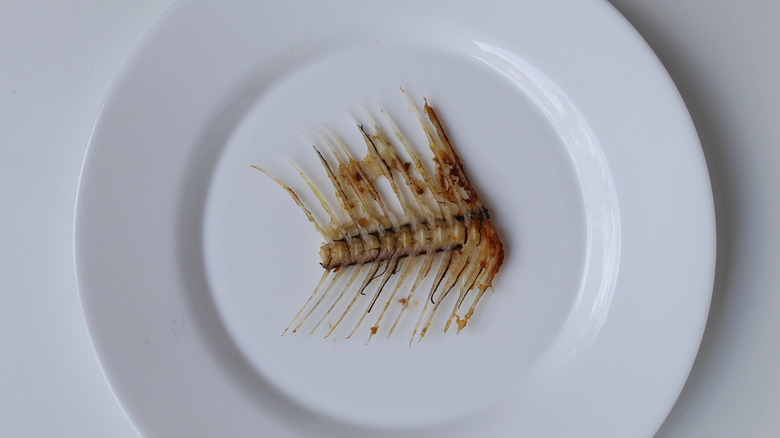
Determining if fish bones are edible comes down to size rather than specific species. Large, dense bones you will find in big cuts like salmon fillets or cod loins do not soften enough during cooking to be safely consumed. These bones can splinter or lodge in the throat, which is extremely uncomfortable and can be a choking hazard, so it is worth avoiding at all costs.
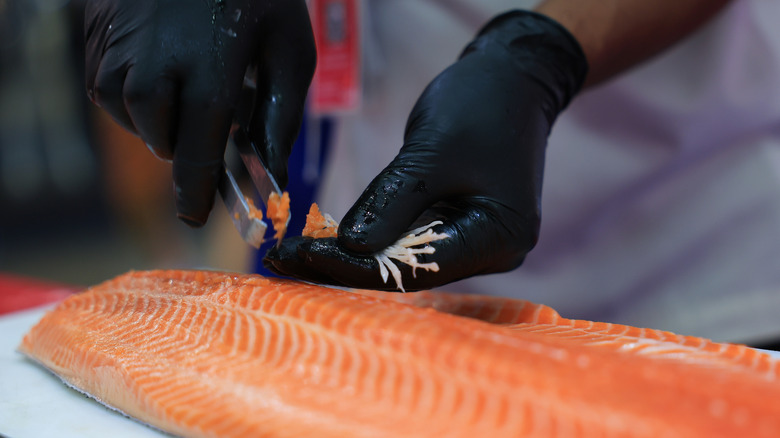
Some fish have fine, hair-like pin bones that are technically chewable but unpleasant. These don't break down the way canned bones do and are usually pulled out for comfort rather than safety. This is common with fresh salmon and other large fish. The larger the fish, the bigger the bones, but also, the easier they are to de-bone, because the bones are visible and grab-able, whereas with a smaller fish, you might have to use a magnifying glass and tweezers.
There are also preparation methods that are too gentle to permeate the bones. Steaming or light poaching does not soften bones sufficiently for consumption, even in smaller fish. Without high heat, pressure, or extended frying, bones retain their strength and inedibility.
For home cooks, it's pretty simple. If the bones were softened by canning or other prolonged, high heat cooking methods, they're likely edible; if they're large, rigid, or sharp, they're not. When in doubt, remove them. Eating fish bones should never require effort or guesswork.