

The Case Against Choosing Quartz Countertops For Your Kitchen
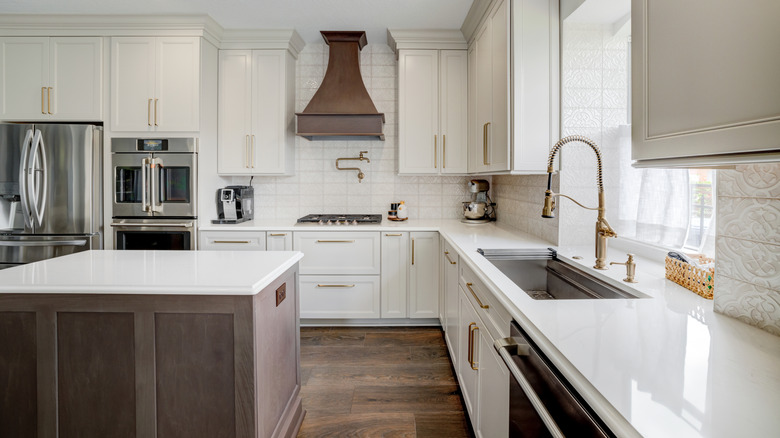
Choosing the countertop material is a very defining decision for the kitchen. It dictates the visual aesthetic of the space and simultaneously needs to be functional for your family's cooking habits. Quartz is a popular and quite luxurious option, but before you commit, consider its poor heat resistance and how that could impact long-term use.
While investigating the pros and cons of quartz countertops, Tasting Table spoke to Miko Pasanen, the founder and business developer of Miko LLC. According to him, the lack of heat resistance is a big downside of quartz countertops. "Don't put a hot pan straight on it," warned Pasanen. "You could end up with a burn mark or crack." Given how expensive quartz countertops are, that would certainly be a heartbreaking experience, even more so if you have chosen it for its modern look. With quartz, you should always use a trivet, or at least a hot pad, when placing cookware on it.
If you're specifically looking for a countertop with great heat resistance, there are several kitchen countertop materials to pick from. Granite, porcelain, and soapstone are all good choices, as is quartzite — a natural stone that's different from the man-made quartz countertop.
This is why quartz countertops don't withstand heat
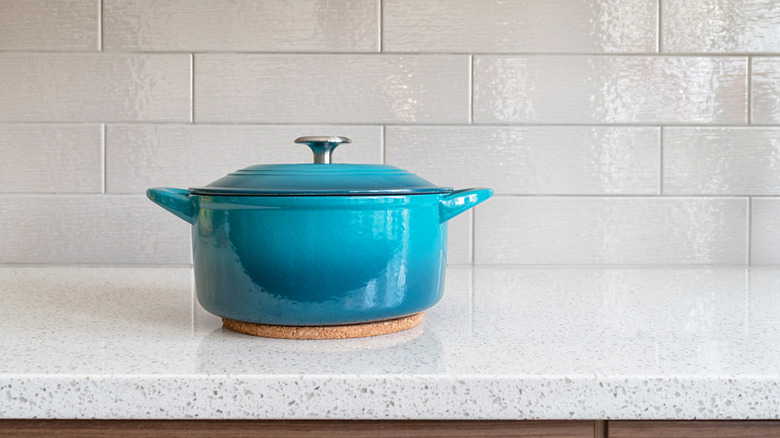
Quartz countertops are made from real quartz that's held together by resin. The resin is sensitive to heat and can change color when exposed to it, which ruins the appearance of your countertop and compromises its longevity. Resin is the reason for another con of quartz countertops — they're sensitive to sunlight. More specifically, it's the UV rays that are the issue, as they can discolor the resin. If you have a kitchen that's exposed to sunlight most of the day, it could be an issue. Resin's UV sensitivity also means quartz countertops cannot be used outdoors.
Quartz is certainly a low-maintenance material long-term, as it's very resistant to scratches and water damage, both good features for homes with children. However, it's an investment up front not just because of its cost, but also the installation expenses. Quartz countertops are very heavy and require professional installation, which is something you'll have to budget for. Granite is usually more affordable than quartz, plus it's heat-resistant, but it requires regular sealing, making it more high-maintenance. At the end of the day, all materials come with pros and cons which need to be weighed before making the final decision for your individual home. But if sunlight and hot pans on countertops are an everyday occurrence in your kitchen, definitely pass on the quartz.