

The Safe Way To Clean Your Slow Cooker In The Dishwasher
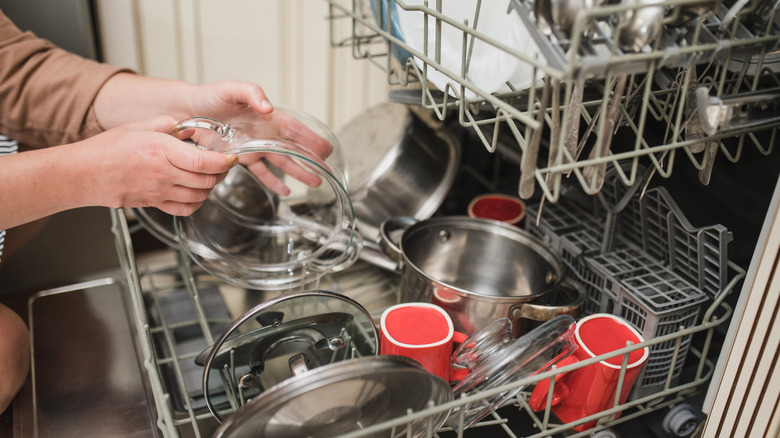
If you've ever stared at your crusty slow cooker after a long braise and wondered whether the dishwasher could handle it, you're not alone. Consider that a slow cooker looks like a single appliance, but it's actually a system of very different parts with very different care needs. Only the removable components of a slow cooker should ever go in the dishwasher. That means the metal or stoneware insert and, in most cases, the lid. The heating base, which houses the electrical components, isn't much different from a toaster or a blender base, and should never be submerged in water or placed in a dishwasher.
Most modern slow cooker inserts are made from glazed ceramic or stoneware that is designed to tolerate prolonged exposure to heat and moisture. After all, that's what they're doing when turned on, so it's their whole life purpose. That makes them generally dishwasher-safe, especially when placed on the top rack, where they're farther from the heating element and subjected to gentler spray pressure. Glass lids are usually safe to go in the dishwasher, but practice careful placement to keep them from clattering around.
Aggressive wash settings and high-heat drying cycles can gradually degrade finishes or stress ceramic over time, so using a normal or gentle cycle is the safest approach. Among other dishwasher strategies, it's also important to avoid overcrowding the dishwasher, since heavy inserts can shift during the wash and chip if they collide with other items. Before loading anything, check the manufacturer's care instructions for your specific model.
What to do with a dirty slow cooker
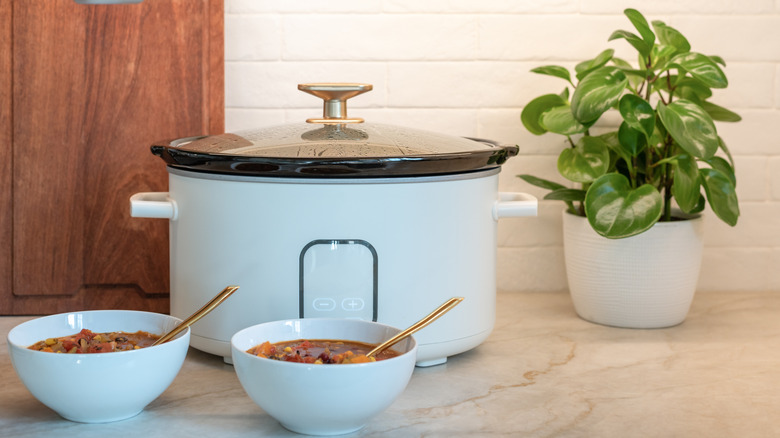
Dishwashers also combine wet heat and alkaline detergents, which help de-gunk even the most caked-on cookers. While this usually affects appearance, not safety, dishwashers can shorten the lifespan of an insert if used exclusively. Cracks in the glaze are another reason to avoid the dishwasher, since moisture can seep in and cause further damage. Hand-washing is the smarter option for older inserts or stoneware with decorative finishes that may be more vulnerable to cosmetic hairline cracks and fading from repeated dishwasher cycles.
For truly recalcitrant, baked-on residue, soaking the insert with warm water and a little vinegar and baking soda is often enough to loosen stuck food. Many slow cookers can also "self-clean" by running on low with water and a bit of dish soap, or more baking soda and vinegar, for a short time, which softens residue before washing.
The safest way to clean the base is simple, with a damp cloth and mild soap, making sure it's unplugged and fully cooled first. Water can damage internal wiring and controls of the heating base, creating both safety risks and costly repairs.