

The Reason Hot‑water Pie Crust Holds Up Better Than The Flaky Kind
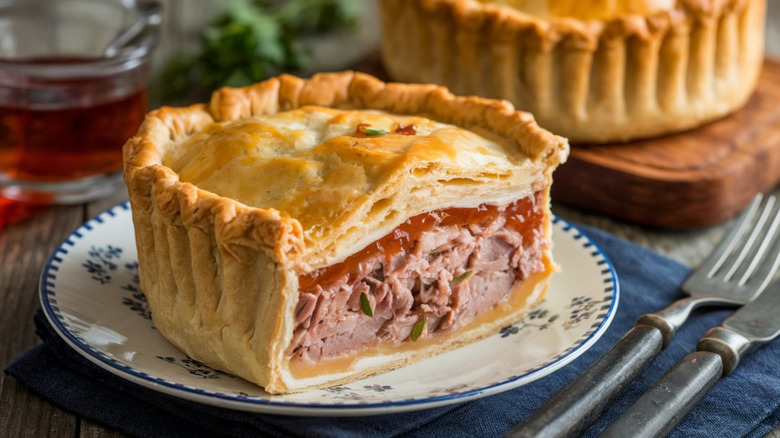
When you're making a savory pie the recipe likely calls for a hot-water crust rather than the traditional flaky crust used for sweet pies. That's because hot-water crusts are made to withstand hefty and often moist fillings such as stewed meats, but how exactly do they work? As with most things baking related, the answer comes down to science. Both types of pie crust use essentially the same ingredients, but at different ratios and most importantly, different temperatures.
In a hot water pie crust, the water and the fat are heated until boiling, then added to the flour. This gelatinizes starches in the flour, essentially precooking them, causing them to swell and take on water. This added hydration makes for a more pliable dough that can be shaped without breaking, and without the worry of over-working. The gel formed by the starches holds together during the baking process for a cohesive, sturdy shell that will stand alone when un-molded.
A flaky pie crust recipe, on the other hand, relies on keeping all the ingredients cold. Rubbing fat into the flour creates pockets that steam open into layers during cooking. This is what gives the pie crust its namesake flaky texture, but also where it sacrifices strength.
Tips for making hot-water pie crust

Hot-water pie dough is much more forgiving than a traditional flaky crust, and when done correctly will reward you with a crust that's strong but with a crisp texture that's a pleasure to eat. Traditionally, this type of pie crust would have been made with lard, and some cooks still swear by it for the crispiest results. But whether you prefer to swap this for butter or shortening, or a combination of two, the most important thing is that you use enough of the right kind of fat.
While it's the hot water that helps to create structure, it's the fat that gives hot crust its desirable texture. Using liquid fat, as opposed to the cold butter in flaky pastry, coats the flour evenly and completely — preventing gluten bonds from forming which would result in a tough chewy pie. Unlike with other types of pie dough, there is no resting or chilling time here. Hot-water pastry needs to be worked with while it's still warm. While this does speed up the pie making process, it means you need to be more organized. Make sure you have your filling and pie dish ready to go before starting on the pastry.
The best results come when you use the right pie crust in the right recipes. The hot-water pie crust isn't a useful swap for the delicate flaky pastry we expect from a dessert, but it really holds its own for heartier dishes. Try it with a deep-dish pie of stewed beef and vegetables, traditional British pork pies, or to make a portable version of Chanel Murphy-Lowe's mini curried chicken pot pies.