

The Saucy Condiment Mistake That's Ruining Your Mexican Food
We may receive a commission on purchases made from links.
With countless types of salsas, drizzles of crema, and mayonnaise-coated street corn, you might think Mexican food welcomes all manner of condiments. Mexican food is zesty and spicy, so topping off your enchiladas or tacos with a drizzle of hot sauce won't do any harm, right? Wrong! All-purpose hot sauces like Tabasco and Louisiana Hot Sauce certainly have their place on the table, bringing a tangy zing to everything from deviled eggs to mac and cheese. But they're the saucy condiment that will ruin your Mexican food.
Mexican dishes are heavily spiced and seasoned with a lot of care and deliberation. Chefs plan every flavor that goes into a highly intricate mole or pork al pastor, and when they hit your plate, they're ready to eat with no further embellishment. Hot sauces may be made with peppers, a Mexican crop, but they're also full of vinegar. These vinegary sauces will overpower all the nuanced spices and herbs that make Mexican dishes so complex and delicious. Dousing these dishes in hot sauce will make them taste like, well, hot sauce; you won't be able to taste the difference between refried beans and arrachera.
While hot sauces like Cholula, Valentina, and Tapatio are mainstays in Mexico, Mexicans use them for other applications. For example, Valentina is a popular condiment used to drizzle over popcorn at movie theaters, while bottled habanero hot sauce and Cholula are common additions to slices of pizza.
More Mexican food red flags
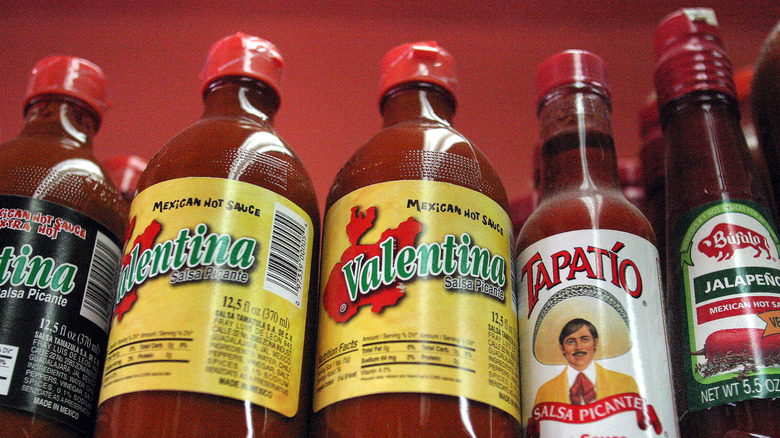
If canned or bottled sauces are the only options at a Mexican food restaurant, that's a bad sign. Any Mexican food restaurant worth its salt makes salsa in-house, from scratch, and should offer various types of salsa with various heat levels. If you want to add condiments to your tacos, enchiladas, or burritos, homemade salsas are the ticket. You can consult your waiter for recommendations on which salsas pair best with the dish you ordered. For example, a chipotle sauce would bring powerful heat and a touch of sweetness to match the robust flavors of barbacoa or arrachera tacos, while a tangy, zesty salsa verde would cut through the richness of a cheesy chicken quesadilla. Of course, smothering everything with salsa is also a mistake you should avoid at a Mexican food restaurant.
If you're dining at an authentic Mexican taqueria, packaged tortillas are a red flag that should discourage your patronization. Fresh, handmade tortillas are as important as scratch-made sauces, especially for tacos. Cheese is yet another Mexican food restaurant red flag. If your enchiladas or tacos are full of shredded or melted cheddar and Monterrey Jack cheese, they aren't Mexican, they're Tex-Mex. Cheddar cheese has no place in authentic Mexican cuisine. Cheesy Mexican dishes should utilize Mexican cheeses. Mexican quesadillas contain Oaxaca cheese, refried beans, and tostadas might be garnished with cotija cheese, and chile relleno may be stuffed with a firm and squeaky queso panela.