

The Salsa Red Flag You Should Never Ignore At Mexican Restaurants
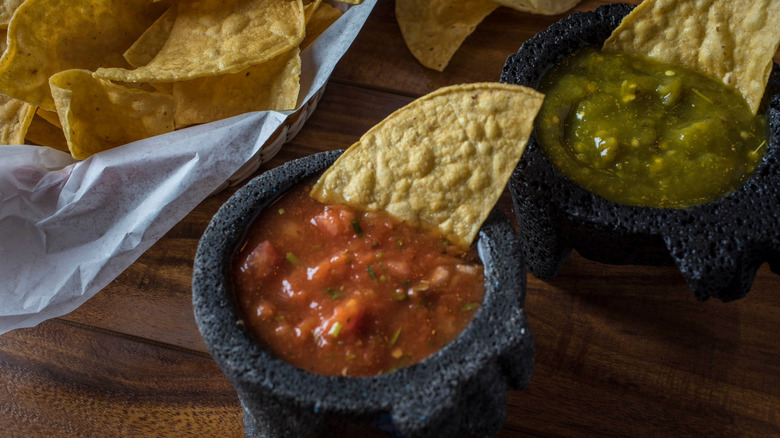
When a small, locally-owned Mexican restaurant is good, it's really good. You know what I mean — you can smell the delicious aroma of fresh-cooked meats and fried tortillas as soon as you get out of your car, it always has a line out the door, and its signature dishes are unlike anything you'd be served at a national chain restaurant. Unfortunately, the reverse is also true. There are red flags that pros know indicate a Mexican restaurant is going to be bad. One of those red flags is that the restaurant doesn't make its own salsa.
The pro we spoke to is Miguel Martín Gómez, a well-traveled chef and owner of Amsterdam's Colíma Cocina Mexicana. Gómez told us that there should be at least three different types of salsa on the menu, each made from scratch with fresh tomatoes, green tomatillos, or habanero peppers. He says, "It's just the way it's done in Mexico, and it's part of the culture."
You might expect jarred or mass-produced salsa at a popular Mexican chain restaurant, but you're going to your local hole-in-the-wall because you want something better. If a restaurant isn't making its salsa fresh each day with real ingredients, it's very likely that it's using other jarred or canned ingredients to make the rest of its food, which means nothing on the menu is going to taste fresh or authentic.
Different types of salsa at authentic Mexican restaurants, and why they should be made fresh
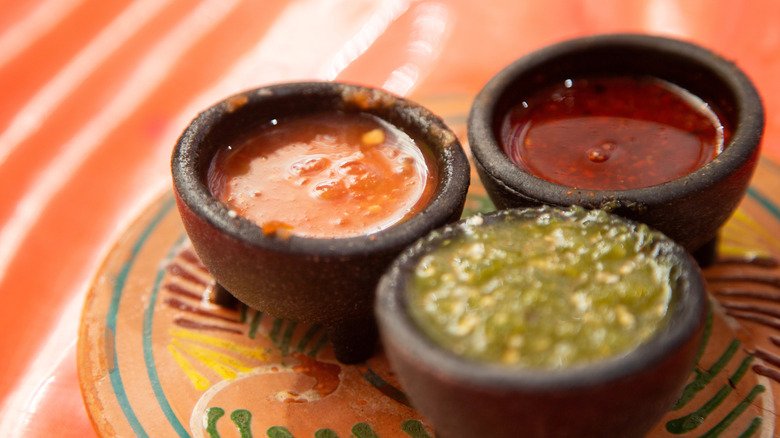
If the salsa is homemade, the restaurant is more likely to have fresh, healthy, authentic food. Homemade salsa not only tastes superior to store-bought salsa, but it also indicates a commitment to quality and flavor. If the salsa is bad, it will affect the taste and presentation of everything it is served with.
You can judge a Mexican restaurant's quality from its salsa. The three most important salsas you should look for at a Mexican restaurant are salsa roja, salsa taquera or salsa verde, and pico de gallo.
Salsa roja, or red sauce, is a staple salsa used on everything from tortilla chips to tacos to burritos. It is made from tomatoes, onions, garlic, and chili peppers. It can range from mild to spicy depending on the chiles used, and can be served smooth, thick, or chunky. Some restaurants offer more than one type, but it should always be made fresh in-house.
Salsa taquera, or taco sauce, is typically blended so that it is smooth. It is made from tomatoes, onion, garlic, and spices, along with either chiles de arbol or tomatillos. Salsa verde, or green sauce, is salsa taquera made with roasted tomatillos. These salsas can be used for a restaurant's signature enchiladas, tacos, burritos, and other dishes, as well as served with tortilla chips.
Pico de gallo is made from a magic ratio of diced tomatoes, onion, cilantro, jalapeño or serrano peppers, and lime juice, along with salt, pepper, and garlic. It is often served with carne asada burritos or street tacos, but can also be eaten with tortilla chips.