

How Birria Evolved From A Food Of Necessity To A Delicacy, According To Chef Rick Martinez
We may receive a commission on purchases made from links.
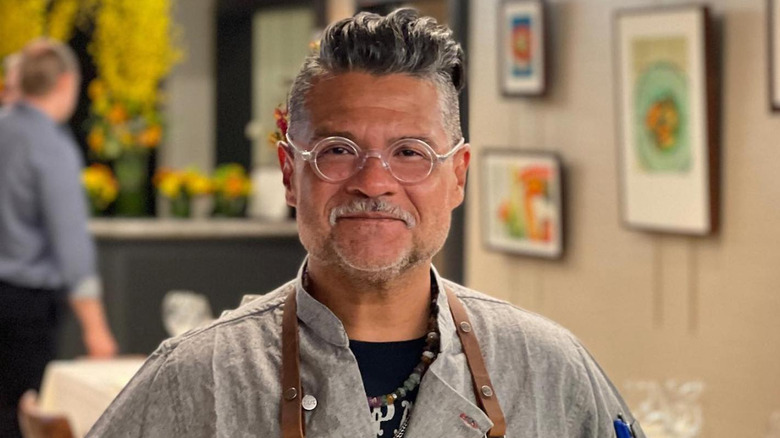
If you've never had birria before, you're really missing out on not only a meal that's cooked for maximum flavor and tenderness, but one that's rich in history and has evolved over centuries. What's now so popular that even fusion dishes like birria ramen are a trend is a dish that, according to chef Rick Martínez, has deep roots in western Mexico. Tasting Table had the opportunity to speak with the cook, food personality, and author of "Mi Cocina: Recipes and Rapture from my Kitchen in Mexico" about the history of birria and how the food has evolved from necessity to wide popularity.
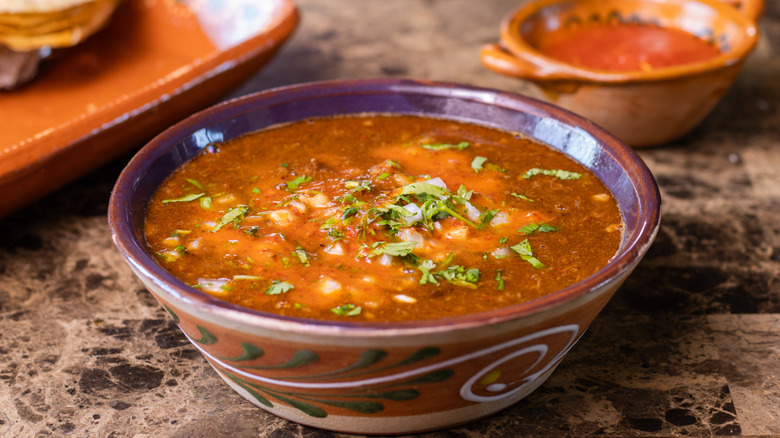
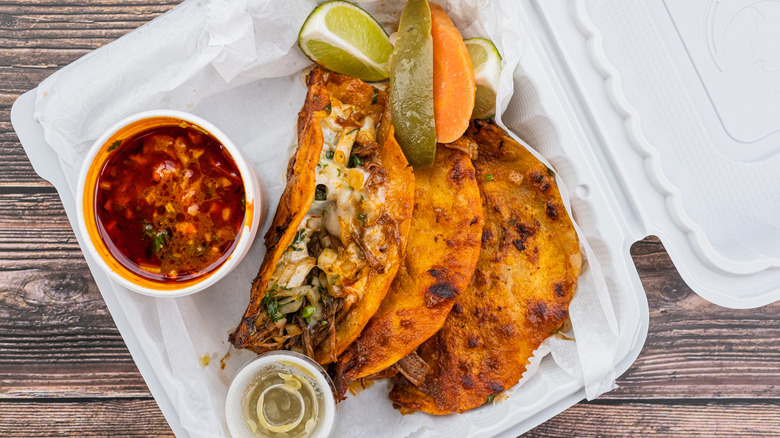
Martínez told us that, "Birria is a traditional dish from western Mexico, especially Jalisco, where meat is slow-cooked in a dried-chile adobo until it's tender, creating both a deeply seasoned meat and a rich consomé that are served together, either as a stew or used for tacos." Usually made by searing and seasoning the meat before slowly braising it in broth, the reduction is reserved and topped with cilantro and onions so it can be served as a side for sipping or dipping tacos in. While birria is most commonly made from beef today, Martínez explained that the origins of the dish come from an entirely different animal: goat.
Birria stems from necessity and pest control
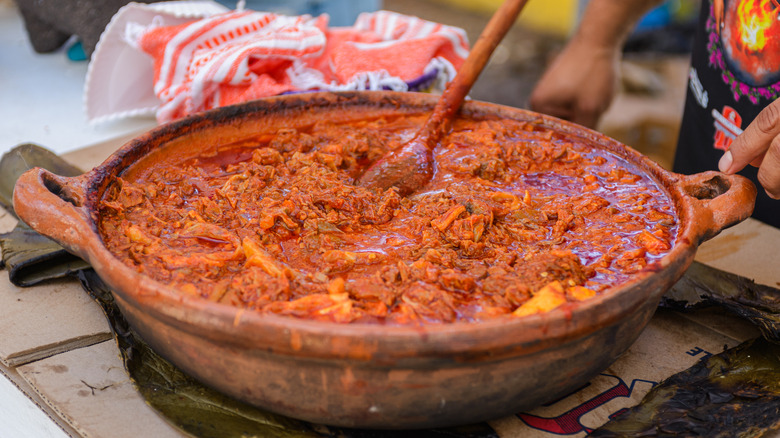
The origins of birria began when the Spanish brought goats with them on their arrival to Mexico in the 16th century. Chef Rick Martínez explained that "they multiplied quickly [and were] destroying fields and crops. So killing and cooking them was essentially a form of pest control." However, the native Mexican population weren't fans of the meat's flavor or texture. Rather than wasting it, they transformed it into something delicious. "That meant long, slow cooking to make the meat tender and moist, and using a lot of chiles, spices, and aromatics to balance and soften the gaminess," said Martínez.
As the years went by, the invasive goat population came to a manageable level, Martínez said that goat became far less available — but the people once again adapted. "Beef became very common, pork and lamb appear occasionally, though that's rarer," he explained. With the exception of the state of Jalisco, Martínez told us that, these days, beef is the most commonly used meat for making birria. Some chefs are still keeping the original tradition alive though, and you can still find Jalisco-style goat birria in Los Angeles, if a trip to Jalisco isn't in the cards.
To be considered true birria, certain ingredients are necessary
There are key seasonings and spices that give birria its distinct flavor. Chef Rick Martínez considers these to be: dried chiles, like "guajillo, ancho, and sometimes chile de árbol for heat;" basic aromatics like "garlic, white onion, and spring onions or scallions;" orange juice, which "adds sweetness and brightness;" tomato or tomatillo, both of which are optional, but bring tang; spices such as "Mexican cinnamon, clove, black pepper, cumin, [and] oregano — used with restraint." Finally, the last essentials to making traditional birria are salt and water or stock, which build the braising liquid that is later served as flavorful consomé.
While those ingredients are the most traditional, every cook has their own tweaks, and the ratios are open to personal interpretation. "More chile, less chile. More tomato, less tomato. Less cinnamon. More oregano. That's personal sazón. But the structure stays recognizable, and that's what makes it birria," explained Martínez. In his top tips for making birria at home, he noted that you can use any meat made for slow cooking to make birria — that is, as long as you stick to using the other traditional ingredients.
"If you change the meat, then I think you should stay somewhat faithful the traditional ingredients in the consomé," said Martínez. "Obviously change the ratios and amounts to suit your taste. But keep the dried chiles, the aromatics, the spices. That's what anchors the dish as birria."
Switch up the type of meat, but stay true to the flavors
While goat and beef are most common, you can use other meats to make birria too. For chef Rick Martínez, "the best meats for slow-cooker birria are cuts that have connective tissue and fat, because that's what breaks down over time and gives you tender, juicy meat." If you want to use pork for birria, Martínez recommended shoulder, ribs, cheek, or shank because they're similar to certain cuts of beef and "They stay moist, shred easily, and hold onto the flavor of the sauce." Similarly, Martínez told us that lamb neck and shoulder are great for birria because "These cuts have enough fat and connective tissue to handle long cooking, and they pair beautifully with the warm spices typically used in birria."
You can also use chicken for birria, although Martínez said the "result is lighter, but still very flavorful." You'll also need to shorten the cooking time — closer to one hour compared to the two or three beef, pork, lamb, or goat would call for. Even seafood like shrimp, mussels, or lobster will work as long as you make a deeply flavored consomé beforehand and gently poach the seafood in the broth for a very short time. "The goal is tender, perfectly cooked seafood, not something that's been overcooked," said Martínez. In some cases, your birria doesn't need to call for meat at all. As long as you're sticking with the core spices and seasonings, and make the broth first, Martínez said "Anything hearty that can hold its shape and doesn't need more than about thirty minutes of cooking is a good candidate."
Whether you use tofu, tempeh, winter squash, broccoli, or cauliflower — and no matter what meat you choose — a birria is still a birria with the right seasonings. Just make sure you pair it with homemade tortillas — because store-bought tortillas just won't cut it.