

Layering Is The Secret To Good Enchiladas. Here's What That Means
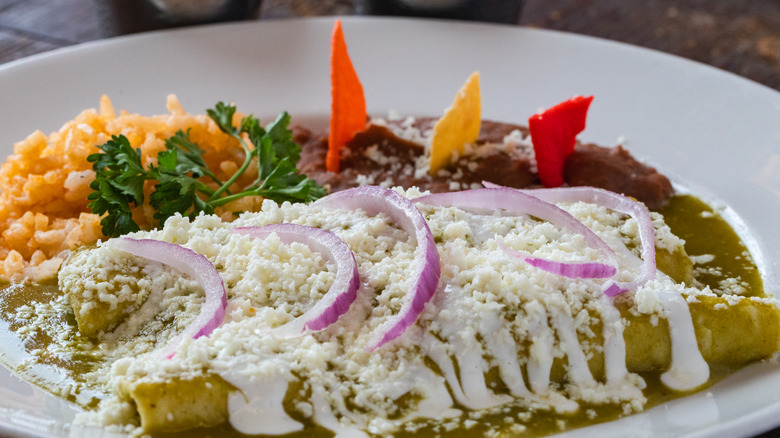
Enchiladas have become as beloved of a Mexican dish as tacos and guacamole. You'll see countless variations at Mexican restaurants, not to mention thousands of homemade recipes online. Enchiladas are the sum of their parts, and the success of a recipe lies in properly layering the flavors. We spoke to Paco Romeo, the culinary director at La Loma, about how important it is to build and layer flavors in an enchilada.
According to Romeo, "Each seasoning is selected based on the type of enchilada and the desired outcome of the dish. The order of layering an enchilada has been practiced and perfected for hundreds of years." Common Mexican seasonings in enchiladas include cumin, chili powder, oregano, garlic, and onion powder, which are often used to season the filling and the sauce you pour over enchiladas. Layering these flavors is a balancing act that revolves around highlighting the main ingredient. As Romeo explains, "With a carnitas enchilada, the protein is the main focus of the dish, and you have to be sure not to drown out the flavor with the sauce and other ingredients you chose."
Consequently, layering should start with pinpointing the main ingredient to which you'll then match the rest of the flavors. If you're pouring an especially spicy chipotle sauce over the enchiladas, you might opt for a more robust protein like steak that'll stand up to the spice level. Alternatively, you can temper the spice to showcase milder-tasting chicken with cream cheese, a well-known ingredient that'll upgrade your enchiladas.
More tips for stellar enchiladas
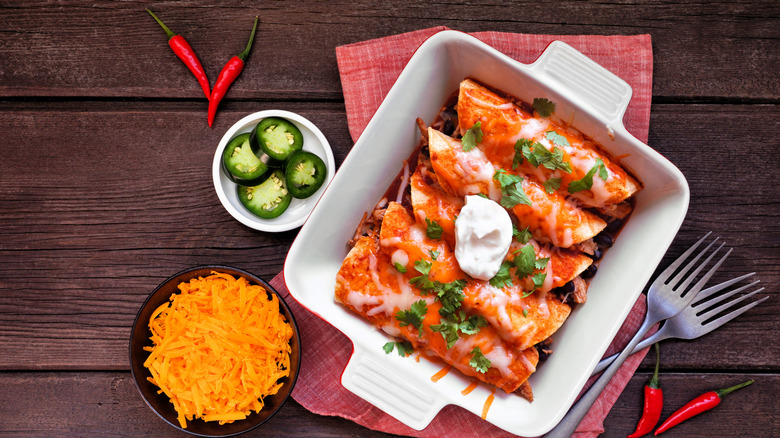
Romeo isn't the only expert who's shared invaluable flavoring tips for enchiladas. We spoke with famed Mexican chef Pati Jinich who gave another crucial tip about layering flavors. Jinich believes you should emphasize flavor by using the same seasonings in each component. For example, if you're making these cheesy salsa verde chicken enchiladas, you should incorporate chicken stock into the salsa as well as the chicken filling itself.
Romeo couldn't agree more, stating, "Cumin and chicken broth are key players in most recipes for enchiladas and their sauces. These flavors enhance the taste and profiles of classic sauces and also the proteins inside to give you that enchilada taste you were craving." By following this rationale, you can swap the chicken stock for beef broth in a loaded beef and cheese enchilada. If you're making a vegetarian enchilada, incorporate vegetable broth or even mushroom broth for a burst of umami savoriness. Another way to bring flavorful harmony to roasted vegetable and black bean enchiladas that may lack the same flavor intensity as meatier recipes is by seasoning the roasting oil with cumin, chili powder, paprika, and garlic powder to infuse the veggies with a Mexican flavor profile.
As a final tip, Romeo shares, "My personal secret is choosing a high-quality corn tortilla, which helps the enchilada hold its shape and keeps all the flavors sealed inside." Corn tortillas are undoubtedly the best type to use for enchiladas. You can even dip them in broth to make them more malleable, while also instilling the same flavor scheme.