

The Best (And Worst) Tequila To Buy From Costco

Always among the top alcohol retailers in the U.S., Costco is well known for its extensive and reasonably priced liquors. While there will always be hits and misses in terms of quality, warehouse shelves no doubt carry something for everybody and every budget. This is certainly the case with its tequila selection, where top-shelf premium brands like Don Julio tango with bottles of Costco's own Kirkland Signature line. With so much going on, let's take a look at the best — and worst — tequila it has to offer.
In my half-decade of bartending in fine dining, cocktail, sports bar, and catering settings, I learned that good tequilas are defined not by price, but by personality. And this personality depends on the type of agave used, the distillation, and the aging process. I also learned it's truly a versatile liquor. Añejo or reposado tequila can be aromatic or whiskey-like, while a blanco is often brighter and cleaner. Most of all, I learned that tequilas can be complex. They can be as subtle and perfect for sipping as anything else, but they also can go all wrong. Based on what I've learned, I can confirm that Costco has several outstanding tequilas, as well as a few that miss the mark.
In putting this together, the focus was first on flavors and aromas of each, next on the quality of ingredients and production process, and, since we're talking about Costco, also on the prices of the tequilas. There's a full breakdown of how I determined this roundup at the end of this article.
The prices listed here come from a warehouse in West Springfield, MA. Costco prices vary based on location.
Taste a high standard with Patrón Silver
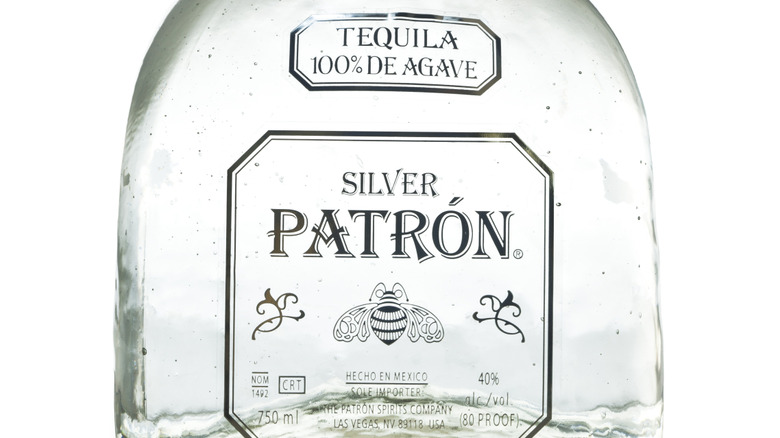
Everybody knows Patrón — it's the third most sold tequila brand in the U.S. — and Patrón Silver is a mainstay on any bar's top shelf. In terms of both quality and bang for your buck, this is one of the best choices at Costco. Let's start with how this blanco, or clear tequila, is made. The distillers ferment 100% Weber Blue agave cactus twice in copper pot stills, using the more traditional "tahona" technique. It's a young tequila, so it's bottled directly after distillation.
What this gets you is a tequila that has punch; it sips well while making an excellent cocktail mixer. For a blanco tequila, Patrón Silver is smooth while retaining crispness. Because of the double fermentation process, the agave aromas blend with subtle citrus and pepper notes, leading to a well-rounded finish. This is an excellent top-shelf choice to have on hand, and the price makes it even better: 750 milliliter (ml) bottles sold for $79.99, much lower than at my local liquor store. Among the tequilas at Costco, this one is hard to pass up.
Skip the Kirkland Signature Tequila Añejo
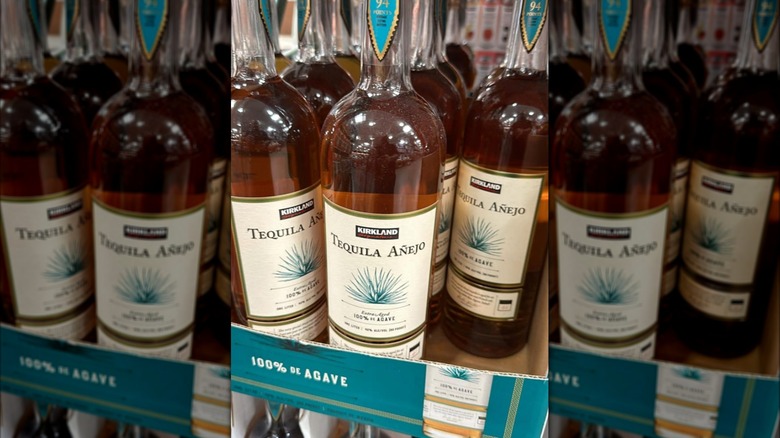
Añejo, or aged tequila, is one of the major types, along with reposado (rested) and blanco (white). Spending one to three years in oak barrels, this type has a darker, amber color and fuller body. The aging makes the flavors richer; compared to younger tequilas, these are more balanced and smoother. My favorite añejo tequilas are buttery or oaky with notes of vanilla or caramel. While there are standouts among Kirkland Signature liquors and tequilas, the Tequila Añejo misses the mark.
We used Kirkland Signature Tequila Añejo at a catering gig I worked; it was part of a signature margarita variant for a wedding reception. Tasting it on its own, I couldn't quite get over the sweetness and almost syrupy finish. Rather than being flavorful, it's flavor-forward; far too aromatic. You could pair it with lime or grapefruit juice, triple sec, simple syrup, and spices in a cocktail as we did, but I wouldn't recommend it for sipping. What could tempt you is the price. Since the Tequila Añejo is the house brand, it sells for less than comparable budget options like Espolon or Hornitos. At my local Costco, where it was the only añejo tequila in stock, a 1-liter bottle was $21.99. It's hard to say if it's worth it.
Try the Kirkland Signature Tequila Reposado
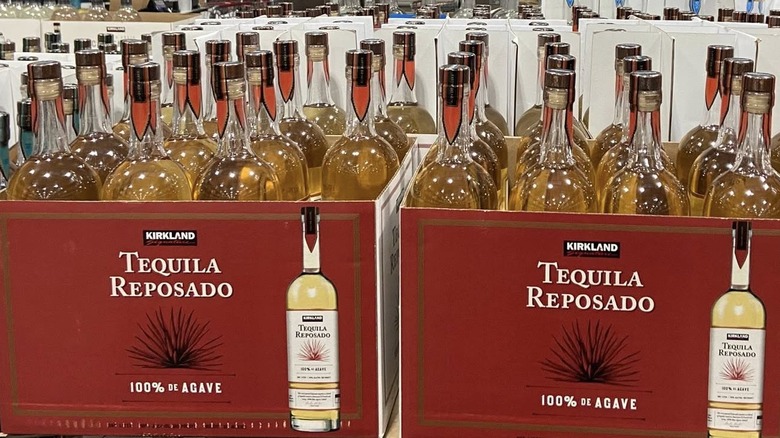
I don't like to be a liquor snob, so it was gratifying to find lots to like in the incredibly priced Kirkland Signature Tequila Reposado. A reposado, or rested tequila, spends between two and 12 months aging in American and French oak barrels; more than a blanco but less time than an añejo. As a result, it retains some of the brightness and punch of a younger tequila, while gaining some color and smoother flavors from exposure to all that wood. I always thought of it as the middle child of the tequila family, mixing the assuredness and sophistication of the older añejos, and the brashness and boldness of the younger blancos.
Kirkland's Tequila Reposado more than makes up for the disappointing añejo. Made with 100% blue agave, it's distilled in Jalisco, Mexico — a region with a Denomination of Origin (DO) designation where all tequilas must be made by law — by Destileria Santa Lucia. Hard as it may be to believe, what you get is delightful notes of vanilla and herbs that roll pleasantly away; a complicated flavor profile that you usually pay a lot more for. The price was jaw-dropping; a 1-liter bottle sold for $15.69 at my local warehouse. It's hard to overstate how much of a deal this is.
Kirkland Signature Tequila Blanco doesn't quite stack up

There's no doubt that Kirkland Signature Tequila Blanco is affordable. At $23.49 for a 1.74-liter bottle at my local warehouse, you'll have trouble finding a better price. But is it worth that price? Is it worth shelling out a little more for something else? In my view, despite some positive aspects, the answers here are "no" and "yes" in that order. Despite being budget-friendly, Kirkland's Tequila Blanco just isn't remarkable; it tries but doesn't quite hold up to others.
Because they're the youngest and least aged of the major types of tequila, blanco flavor profiles can be a bit finicky. Compared to reposados or añejos, this drink is brighter and bolder, which can both help and harm the overall flavor. In a good blanco, I expect notes of lime, grass, and pepper; it should have just enough bite to boost a paloma or margarita while remaining subtle enough to sip. Kirkland's Tequila Blanco does carry flavors I like — a distinct citrusy sharpness — but this fades into a very sharp, almost bitter finish. It's a good choice if you're making margaritas for a party; less so if you're trying to impress tequila enthusiasts.
Choose Don Julio 1942 for a top-shelf choice
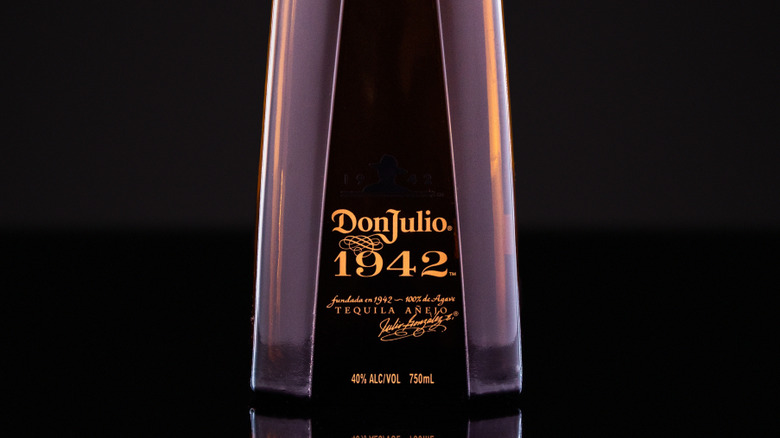
Commemorating the year the brand was founded by Don Julio González, Don Julio 1942 tequila is a top-shelf añejo. It's what Costco offers for the true tequila lover and expert. Starting with 100% Blue Weber agave, this small batch tequila is distilled twice in copper pot stills. Then, it's aged a minimum of two and a half years in American white oak bourbon barrels before bottling. So much of what makes Don Julio 1942 exceptional comes from the time it spends in the wood.
Don't you dare use Don Julio 1942 tequila in a cocktail. Like a fine scotch or whiskey — and with a similar amber color — this tequila is designed to be savored on its own. I'd serve it neat, chilled, or with a splash of water. On the nose, it gives off caramel and chocolate, along with woody and tangy notes like cinnamon and mango. In the mouth, this tequila tantalizes with a warm, oaky, grassy, and vanilla taste and a finish that lingers. Firmly on the upper end of tequilas, bottles of Don Julio 1942 that can retail for $200 or more were $154.89 at the local Costco. As far as I'm concerned, this tequila is worth every penny.
Methodology
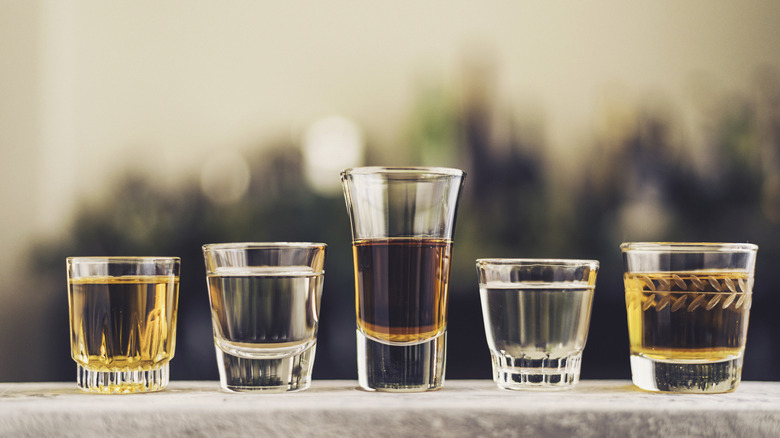
To determine the best and worst tequilas at Costco, I first considered how each was made. Methods such as using 100% blue agave or aging in specific types of barrels can make or break a bottle. I also tasted each personally, relying on the tequila knowledge I'd gained as a bartender to assess quality. The goal was to find tequilas that stand on their own and have smoother and more well-rounded flavor profiles. I tried to find tequilas best sipped, rather than used in cocktails. Since Costco prides itself in offering savings, price was also a factor, and I compared what my warehouse charged with prices at other retailers.