

What Makes Muesli Such A Nutrient-Packed Cereal
We may receive a commission on purchases made from links.
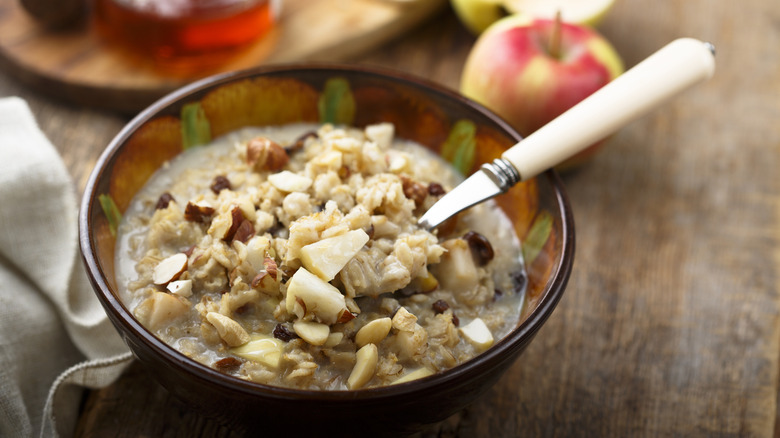
Few foods functionally embody the buzzword "superfood" as well as Bircher muesli — or, as it's often called, simply "muesli." While exact ingredient combinations can vary, muesli is a dry mixture of oats, nuts, and other grains, plus dried fruits and spices like cinnamon or dried apricot chunks. Whatever its exact formula, it's a textural smorgasbord of different flavors. This raw cereal is all about rich composition and minimal processing, sitting firmly at the intersection of food and medicine since its conception. Muesli was formally invented by Swiss physician Dr. Maximilian Bircher-Benner, who devised the nutrient-dense cereal to give to his clientele of chronically ill patients. It might not be a cure-all, but this health food boasts impressive, myriad health benefits, and it's easy to add a spoonful to your regular rotation for a quick nutrient-dense punch.
For starters, muesli is lower in sugar than granola due to its lack of processing. Its raw oat base makes the cereal high in fiber (especially the soluble fiber beta-glucan), which helps maintain digestive tract and gut health, as well as reduces the risk of heart disease. Those oats are also packed with protein, promoting satiety. This helps foodies feel fuller longer while keeping the body energetically fuelled throughout the day, supporting weight management goals. But those impactful oats are only one part of muesli's multi-dimensional makeup.
Oats and nuts deliver impressive fiber, protein, and antioxidants
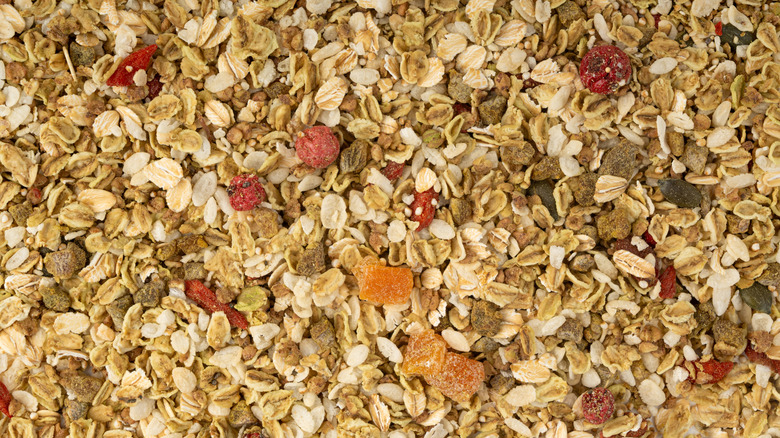
The nuts and seeds in muesli — which often include cashews, almonds, walnuts, hemp, flax seeds, and chia seeds — contribute healthy fats, omega-3 fatty acids, and vitamin E, which promote heart health, healthy cholesterol levels, and skin and hair strength (call that benefits "inside and out"). Muesli is also high in antioxidants, which support the immune system in fighting off diseases. This powerhouse cereal can even help lower LDL cholesterol, maintain blood sugar stability, and reduce inflammation in the body, which also contributes to heart health. Indeed, eating a well-rounded breakfast is connected to long-term heart health and improved cognitive function. And, with muesli, all those advantages won't bust the grocery budget, either.
Happily (and often unlike many pricey products branded as "health foods"), muesli is ultra cost-effective for its nutrient density, especially if bought in bulk. This four-pack of 18-ounce bags of muesli by Bob's Red Mill brand, for instance, is quite an affordable option on Amazon — especially if you consider the per-bag cost. It makes a terrific, no-cook option for plant-based eaters looking to incorporate more protein into their daily diets, not unlike nutritional yeast (aka "nooch"). Raw muesli can also be elevated with any choice of flavorful toppings, all of which also come with their own unique health benefits.
How to get the most mileage out of your muesli
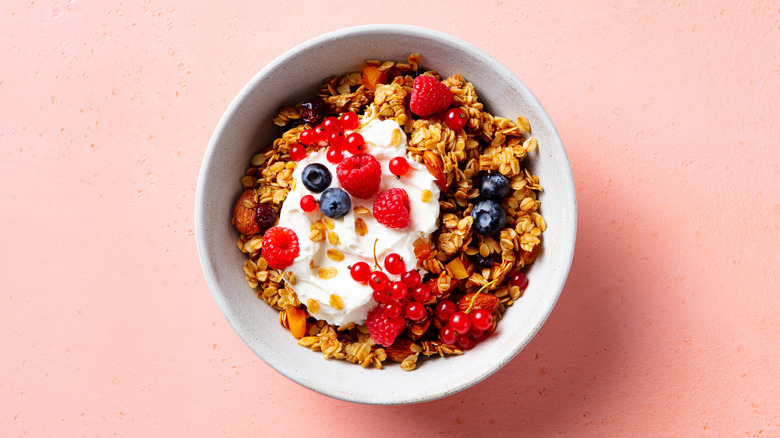
Muesli is customarily packaged and eaten raw, which, unlike granola, means no baking or other processing with sugars, honeys, or sweetened coatings. Subsequently, muesli is not as straight-up snackable as granola, but it's often served in the same ways: as a yogurt topping, or cereal-style in a bowl of milk. If you go the yogurt route, then that already-nutrient-dense muesli gains the added probiotic benefits of the yogurt's fermented live active cultures.
It's also common to prepare muesli overnight-oats-style, hydrated in the fridge in a jar of milk. On an epicurean note, that muesli base can be doctored up with all of your favorite overnight oats toppings, from fresh berries to pineapple, a scoop of almond butter, vanilla extract, coconut cream, and more. Adding a swirl of nut butter would majorly boost the muesli's protein level, while fruits like dried figs would deliver a kick of potassium, or a scoop of pomegranate perils would add antioxidant and anti-inflammatory punicalagins.
If chilled muesli isn't your thing, it can also be prepared hot on the stovetop like oatmeal. Oatmeal-style muesli might be topped with fresh diced apples for an even greater health benefit; the fruit contains pectin and quercetin, natural compounds that further lower inflammation and help regulate digestion. For plant-based foodies, hydrating that muesli in soy milk would also add eight grams of protein (the protein equivalent of whole milk) to your breakfast bowlful.