

Review: Aldi's Samuel Joe's Bourbon Is A Cheap Treat For Whiskey Mixers
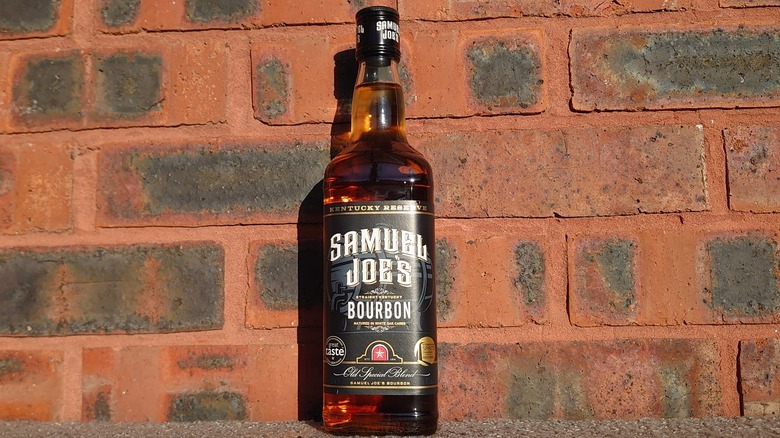
In the U.K., there isn't really such a thing as bottom-shelf bourbon. The cheapest American whiskey in my local supermarket is usually Jim Beam, which is generally priced at a similar level to decent single malt Scotch. This is why Samuel Joe's has the potential to fill the void. For those looking for a cheap and cheerful bourbon, there aren't too many rivals to this Aldi whiskey. As you may guess, it's far from the best bourbon in the world, but is it good enough to prevent you from reaching for those well-known bourbon brands? That's the question I'll be looking at here.
I've been an avid whiskey lover for nearly two decades, and my tasting experience has included drinking countless bourbons. This includes Aldi's Samuel Joe's, a label that intrigues with a lovely aroma and some interestingly sweet tasting notes. Due to my extensive experience I was able to analyze Samuel Joe's and its tasting notes, and I also compared it to some other labels with a similar profile and price point. You'll see why I'm a regular buyer of Samuel Joe's, but, interestingly, you'll realize why I may not necessarily recommend it to anyone interested in drinking whiskey.
Where is Samuel Joe's Bourbon from?
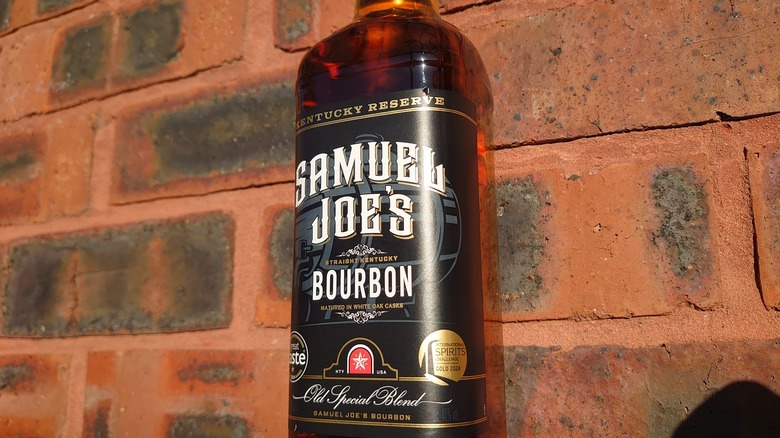
Essentially, we don't know where Samuel Joe's Bourbon comes from. Not showcasing the distillery's name is not uncommon for whiskey brands, but it's usually easy to find info — for example, we known that the fantastic Eagle Rare 10-year is made by the Buffalo Trace Distillery. For Samuel Joe's, the name of the distillery is an industry secret, which is legal to do. After extensive research, I came up empty. Though there are some assumptions it's made in Ireland at West Cork Distillers — it's the distillery that makes Aldi's award-winning Ardfallen whiskey – there are some important reasons why that won't be true. While it isn't a requirement for the label to tell us exactly where it's made, the description of the product has to be accurate and honest.
The label states this is Straight Kentucky Bourbon. Legally, only whiskey that is made in America can be bourbon. Additionally, to be labeled as Kentucky, the bourbon has to be made from grains that come from the state and has to mature for at least one year in Kentucky. For U.K. drinkers, this gives you the confidence that you're getting the real thing, but there's more. A bourbon can't advertise as straight unless it fulfills several strict criteria, including minimal two-year maturation in new oak. In my view, bourbon matures much quicker than Scotch, so two years is long enough for a decent drink. So, while we don't know who makes Samuel Joe's, the label gives assurances about its authenticity and basic quality.
Price and availability
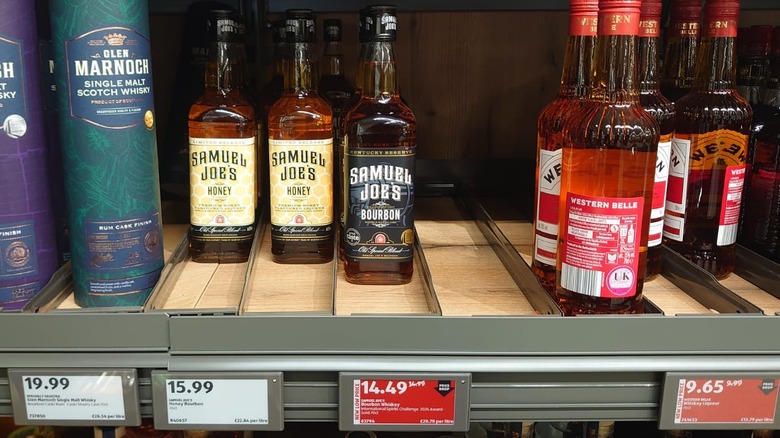
Upon my last check, the normal price of Samuel Joe's was £14.99 (around $20) with a recurring offer price of £14.49. Any bourbon lover in the U.K. will know that prices for named brands only come close to that when they're on special offer. For example, the regular price of Jim Beam is usually just over £20. In this respect, the price is extremely tempting. For those used to paying a higher cost for their bourbon, it's refreshing to see something priced at a similar level to many brand-name Scotches.
As for availability, Samuel Joe's is only available in Aldi stores in the U.K. Therefore, its availability is directly tied to how close you live to a store. From my visits, it also seems it's a highly popular product, and I have been unable to buy it on a couple of occasions due to it being out of stock. That may be due to my local Aldi being a fairly small store, but it's worth considering if you're going out of your way to buy a bottle.
Taste test
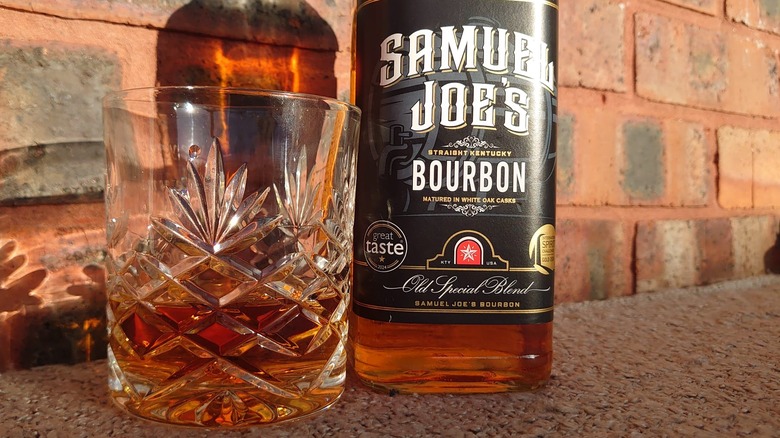
When it comes to the most important test, I have mixed feelings. The smell is quite lovely as it presents with a rich caramel that's soon followed by a whiff of vanilla. There are some baking spices there, but they're too vague to diversify into a specific note, perhaps just some muted cinnamon. There is a slight ethanol note, but it's mostly hidden by stronger and more pleasant aromas. When it first hits your tongue, you'll be greeted by a wave of corn sweetness. This might indicate that the mash bill is likely quite high in corn and fairly low in rye.
That's about where the pleasantries end. You quickly get an ethanol burn. This is the sharp, hot sensation you get from drinking low-quality alcohol. Sometimes this can ebb away after a few sips but with Samuel Joe's, it persists. I was able to pick out some brown sugar and caramel, but that's about it. As soon as you swallow, that burn continues to the back of your throat and stays there. I always try to give a whiskey the benefit of the doubt and look for the positives, but it's hard to do it here. It's not a bad bourbon, I've had worse, but it's not particularly great either. That being said, you'll soon see why I often buy it.
How to drink Samuel Joe's bourbon
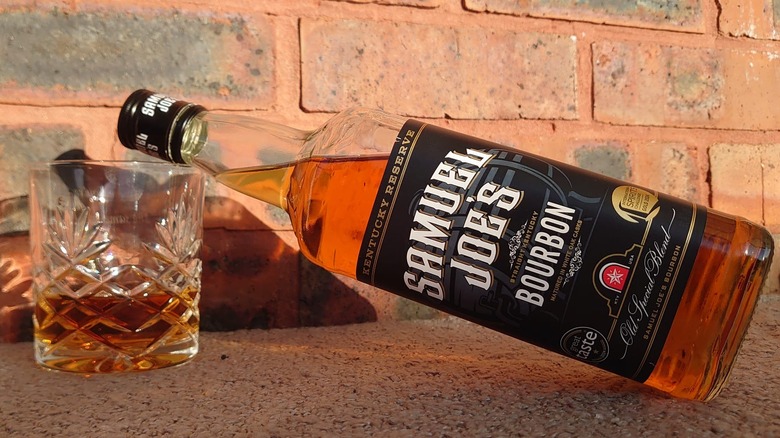
The first question to answer here is whether or not it's good enough to be drunk neat. As you would have probably guessed by now, the answer to that is no. It makes me wonder how it was able to claim gold at the International Spirits Challenge in 2024, as proudly stated on the bottle. After a little research, it was one of 55 North American whiskeys to receive a Gold medal that year. Based on this, my opinion is that these awards mean very little. It's far from cheap and nasty whiskey, but you want something much better for a sipper.
However, it excels when mixed with cola. There is something about how the two combine that brings out a lovely vanilla flavor. The cola masks the alcoholic burn, and instead, you get that nice whiskey warmth. In this respect, I view it as much nicer than bottom-shelf Scotch when combined with this classic mixer. It also works well with ginger beer, as they combine to give very pleasant, spicy warmth. As for its suitability with cocktails, that depends on the overall quality of the cocktail. If the rest of your ingredients are high-quality, I'd recommend you use something else. But when it comes to the classic whiskey and cola, it does a great job.
Is Samuel Joe's worth it?
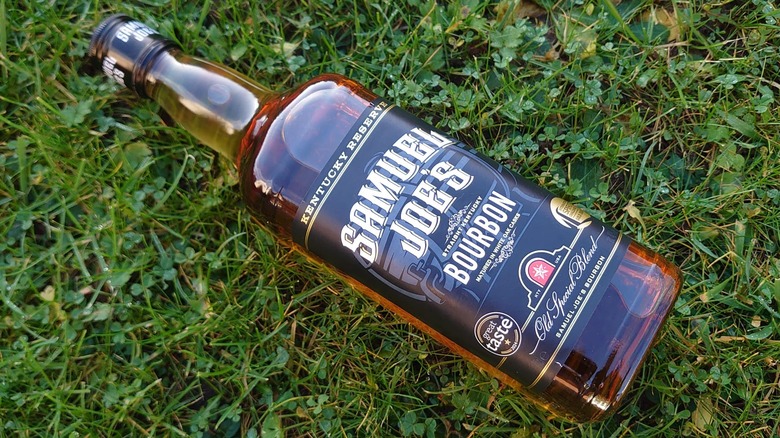
As stated, the regular price of Jim Beam is just over £20, and there are usually several bourbons that you can get for the same price, though the price tends to drop if the product is on offer. For U.K. drinkers looking for a sipping bourbon, I'd recommend spending those few pounds extra whenever the likes of Jim Beam, Buffalo Trace, or the underrated Benchmark No.8 come on sale. In this respect, I don't think it's worth it if your intention is to drink it neat, as you probably won't finish the bottle. If you want something mellower than Scotch to go with your mixers, that's where it becomes excellent value.
The difference in quality between a good bourbon such as Jim Beam and Samuel Joe's is clear when neat, but not so much with a strong mixer like cola or ginger beer. If that's your aim, I think it's best to save yourself a bit of money by going for the cheaper option. I buy Samuel Joe's fairly frequently for this very reason. I don't like bad whiskeys with cola, as you can taste the harshness through the drink, and I don't like good whiskeys with cola, as it feels like a waste of a fine spirit. Samuel Joe's hits that sweet spot in the middle ground. Simply put, if you're buying Samuel Joe's for a neat sipper, you'll regret it. If you're buying it mixing with other drinks, you won't.