

Squeeze Out The Water From Shredded Vegetables With This Unexpected Kitchen Tool
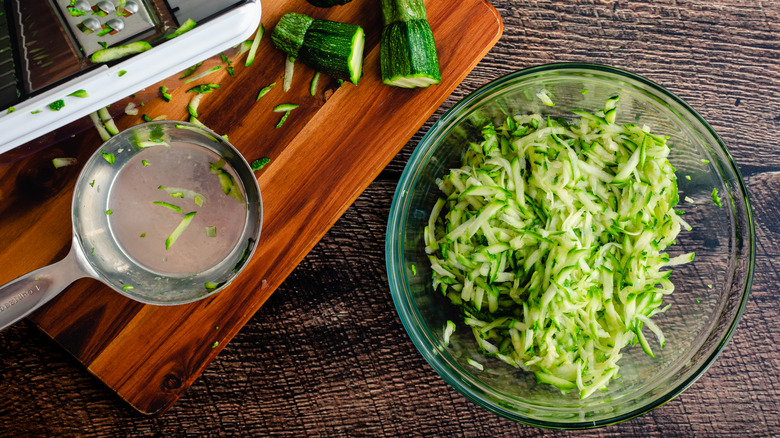
From Fritters and quiches to koftas and rostis, squeezing water out of shredded vegetables is an essential step in a whole bunch of recipes. And while there are many tips online on the "best" and "easiest" way to do this, they're all a bit of a pain. Doing it by hand rarely gets all the moisture out. A nut-milk bag works great, but they never really seem to be around when you need one. You could use a sieve or a potato ricer, but good luck trying to get all the veggies out once you've squeezed out all the water. We've finally found one kitchen tool that ticks all the boxes when it comes to squeezing water out of your shredded veggies: Your humble, everyday French Press!
All you need to do is shred your vegetables as you normally would, dump them in the French Press, and squeeze the plunger as far down as it will go. The liquid released from the vegetables will rise through the filter into the upper chamber of your French Press, and you can pour it out as you would your morning cup of coffee. This method ticks every problematic checkbox that's usually associated with this step. Unlike a nut-milk bag, there's usually a French Press handy. Unlike a cheesecloth, it won't need to go into a washing machine; just a simple rinse will do. And it's easier to get the moisture-free veggies out than from a sieve or a potato ricer.
Why this step is important (according to James Beard)
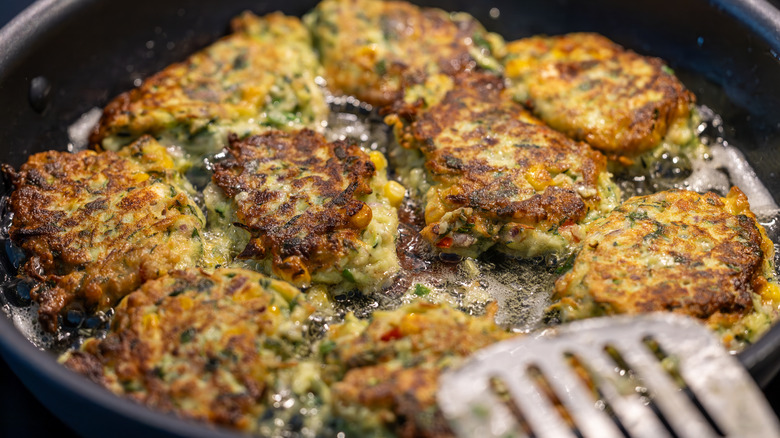
James Beard is one of the most celebrated chefs of the modern era. In many ways, he's America's first foodie. So when he tells you to squeeze your vegetables, you listen. In his seminal 1971 book "Beard on Food," the OG TV chef wrote an essay on this topic, where he explained that squeezing the liquid out of certain vegetables — specifically zucchini, cucumber, mushrooms, and tomatoes — made them more pleasant to eat. "Zucchini, for instance, becomes a totally different vegetable when it is shredded and squeezed," he writes, adding that he then either fries it in butter or steams it. "Either way it comes out wonderfully crisp and bitey, with none of that soggy, droopy quality one usually associates with zucchini."
Beard notes that cooking cucumbers the same way yields excellent results as well. In the case of mushrooms, he also recommended using the leftover liquid to add depth to a broth, while he used squeezed-out tomatoes to make an intense sauce that went into multiple recipes, from cooking seafood to poaching Italian sausages.
Meanwhile, if you do fall in love with grated zucchini much like Beard did, you could — believe it or not — use it as an unexpectedly delicious bread swap for your grilled cheese sandwich! You grate and squeeze your zucchini, make two bread-shaped slices, and fry them in your skillet. Add your cheese (here's a list of the 14 best cheeses that work beautifully in this decadent snack), wait for it to melt, and form the most surprisingly fun sandwich you've ever had.