

The Easiest Way To Ruin A Cake's Caramel Frosting Is A Common Mistake
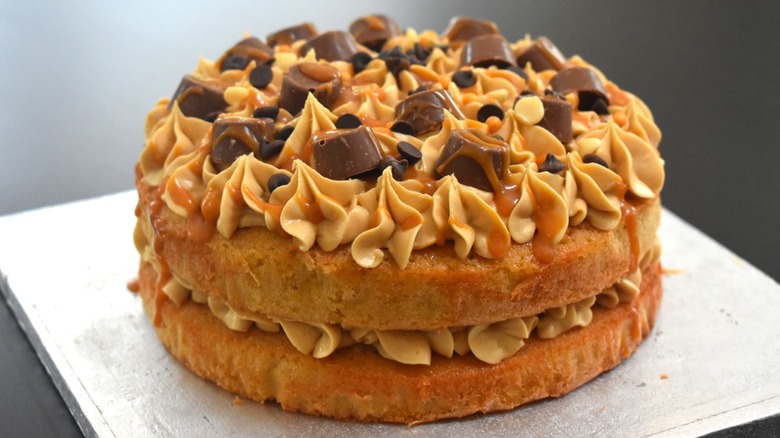
Caramel sauce and buttercream frosting are simple in composition yet surprisingly difficult to perfect, making caramel frosting seem doubly intimidating. But with careful execution and some expert advice, a silky, delicious frosting is well within your reach. We asked Eric Lanlard, baker, pastry chef, author, and TV host of "Baking Mad with Eric Lanlard" and "Glamour Puds," how to avoid the worst (and most common) caramel frosting mistake.
Above all else, Lanlard cautions: Never leave simmering caramel unattended. This is a mistake everyone makes with caramel, yet some cooks still underestimate the danger. "Caramel can go from perfect to burnt within seconds," Lanlard says. "Once it crosses the line into bitterness, it becomes unusable. It can also bubble up and overflow, becoming a burn hazard." He also notes that home cooks should be careful even after taking caramel off the stove, as residual heat will continue to cook it.
Ensure you won't have to walk away from the caramelizing sugar by completing other duties beforehand — multitasking and caramel go together like vinegar and a paper cut. If the caramel still overcooks by a smidge, Lanlard says "[remove] it from heat immediately, adding a splash of cream or milk to dilute the bitterness and stir in a touch of vanilla or a pinch of salt to rebalance." However, if caramel smells "acrid or tastes bitter," he says it simply can't be saved. It's better to prevent overcooking it by following these essential caramel sauce tips.
How to make caramel for frosting like an expert pastry chef
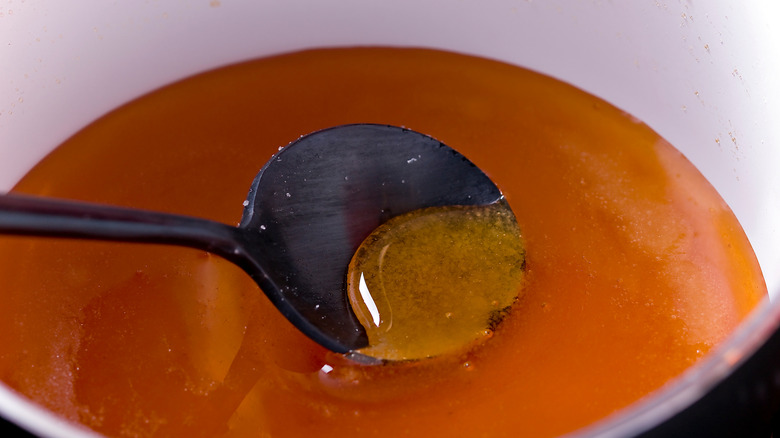
When making caramel, patience is key. Lanlard recommends cooking the sugar over medium heat. "Don't stir once the sugar melts," he says. "Swirl gently instead as too much air will make the caramel turn to rocks." This crucial stirring mistake for caramel sauce will make it cling to the sides of the pot and crystallize.
The exact temperature that sugar starts to caramelize is 320 degrees Fahrenheit, and it's best to use a candy thermometer to keep track. As it cooks, the syrup will change from a very light gold to progressively darker shades of brown, while also intensifying in flavor. No matter which stage you prefer, remember to take the caramel off the heat before it reaches its final temperature. Once you have your sugar syrup, add heavy cream and butter to make it rich and silky. Lanlard says it's best to warm up the cream before mixing it into the caramel, or it will seize and turn grainy. Butter should also be stirred in once the pot is off the heat.
To make your delicious caramel into a frosting, Lanlard says it's important to "let caramel cool slightly before mixing with buttercream so it doesn't melt it." From there, it's fairly simple to add caramel to buttercream for a decadent frosting. Once you taste it, you'll know that all that time and effort was worth it.