

12 Myths About Gluten-Free Food You Can Stop Believing

Gluten-free diets are a hot topic that has famously and infamously gained popularity over the last few decades. Some folks avoid gluten like the plague, while others aren't really sure what gluten actually is. On one hand, it's been seen as a "fad diet," while others have falsely stigmatized or overhyped it.
At its most basic, gluten is just a protein complex found in some of our favorite grains. There has been speculation about not only gluten's role in the development of serious health conditions like autoimmune diseases, but also about how 21st-century processing methods may alter its health impacts. This has caused fear and created a lot of chatter, both true and untrue, about gluten.
As a gluten-free recipe designer and chef and with a plant-based nutrition certification from Cornell, I've spent a great deal of time understanding gluten and how to cook without it. Furthermore, my interest in gluten-free cooking piqued when my mother was diagnosed with colitis and celiac disease, which encouraged me to develop recipes sans gluten. The most important thing I took from this study and recipe experimentation is that folks who eat a gluten-free diet can still have mouthwatering dishes and desserts; they just need to be aware of what they consume in order to maintain their health. Let's clear up the confusion by addressing the myths about gluten-free food that you can stop believing.
Gluten-free alternatives are inherently healthier

When gluten-free diets gained traction in the 2010s, folks weren't sure what to think. Some had an understanding of gluten sensitivity and celiac disease, while others considered it a diet trend. The notion that gluten-free alternatives were inherently "healthier" than their gluten counterparts was accepted by some, and in some cases led them to a gluten-free lifestyle. Even then, many individuals weren't entirely able to pinpoint just what gluten was; they just felt the need to avoid it. To assume that gluten-free alternative products are "healthier" or more nutrient-dense is not necessarily correct. Of course, there is a wide range of both gluten-free and gluten-containing products out there, so comparing the two isn't as black-and-white as it seems.
However, studies published in the Journal of Food and Nutrition Research show that gluten-free alternatives tend to be (but aren't always) more processed than gluten-containing products. They often contain more refined sugar, salt, and fat, and less protein and fiber. So to say that gluten-free alternatives are inherently "healthier" or less calorie-dense products would be untrue.
A gluten-free diet will make you lose weight

Another misconception is that the gluten-free diet is a weight-loss diet. Currently, there is no evidence to support this theory. Gluten itself is not a calorie-dense food. However, there are several factors that contribute to why someone might lose weight after eliminating gluten, or even gain weight.
Gluten-containing foods, like cookies, cakes, brownies, and some highly processed snack foods also contain sugar and fat. So, if you are avoiding gluten-containing products, you might find yourself eating fewer of these calorie-dense foods, in turn causing weight loss. In addition, gluten can cause inflammation for folks with celiac or gluten sensitivity, so cutting it out may reduce water retention or swelling. This can result in the appearance of weight loss. But at the end of the day, the gluten itself doesn't inherently cause weight gain, and cutting it out won't necessarily make you lose weight — unless other factors are at play. So, adults without a gluten sensitivity targeting weight loss shouldn't default to avoiding gluten and should instead set up a plan with a healthcare provider and/or nutritionist.
All grains contain gluten
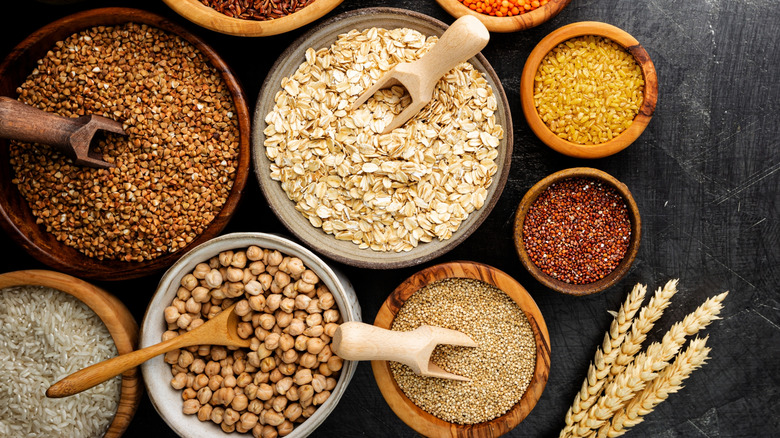
When my mother first came home with her diagnosis and declared she could no longer eat gluten, my first thought was, "What the heck is gluten?" I assumed it was wheat- or grain-related in some way. And I wasn't too far from the truth. While not all grains contain gluten, gluten is found only in grains. Unless you know your grains well, identifying gluten-containing products can be confusing.
Gluten is found in wheat, barley, rye, and triticale. But the fun doesn't end there. Each of those categories has derivatives you'll need to look out for. For instance, farro, spelt, and semolina are all common varieties of wheat, which, of course, contain gluten. The list is fairly extensive, so if you or a person you love has celiac or a gluten sensitivity, it may be worth printing out a list of ingredients to look out for.
Where it might get confusing is when you see gluten-free oats or gluten-free buckwheat on the store shelves. Although these grains don't actually contain gluten, they are often processed in facilities that do. The gluten-free label indicates they were not processed alongside gluten foods. It's recommended that highly sensitive individuals and those with celiac disease avoid even trace amounts of gluten, so it's best to look for the "certified gluten-free" label on non-gluten-containing grains as well.
Gluten-free and gluten-friendly are the same thing
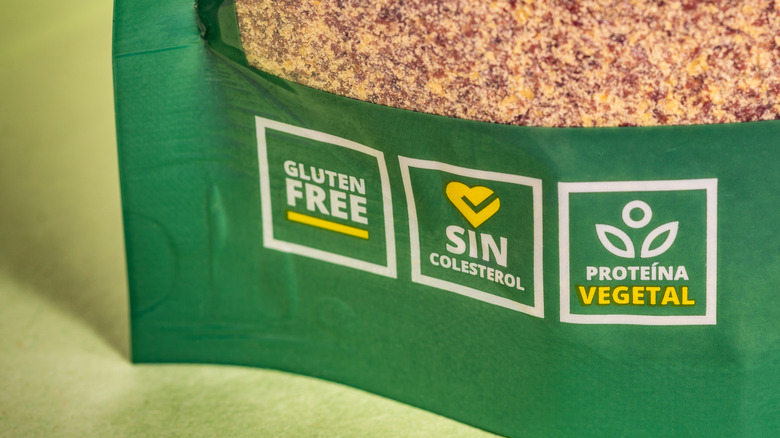
If you order a burger with a gluten-free bun at a restaurant, the server may ask you if the bun was ordered because you have an allergy or a preference. They aren't being nosy or trying to start a conversation. Many restaurants now have a certain protocol that requires specific pans, spatulas, cutting boards, and fryers to avoid cross-contamination. That's because folks with celiac really aren't supposed to ingest any gluten, as even a small amount can cause a reaction. Those with a gluten preference, or some with a mild gluten sensitivity, might choose a gluten-free bun, but not have a noticeable reaction to a little cross-contamination. These folks could choose to state their choice as a preference.
This is why a distinction must be made between gluten-free and gluten-friendly, as they require two totally different approaches. If you see a gluten-free label, it's regulated by the FDA and has a certain standard set of requirements in order to obtain that label. The package might also say "without gluten" or "no gluten." These are the labels that folks with celiac or a severe allergy should keep an eye out for. "Gluten-friendly" is not a regulated term, but rather one added by the specific manufacturer of the product. So, if you've given up gluten because of a mild sensitivity or preference, you may be able to expand your reach to gluten-friendly products as well.
Gluten-free food tastes like cardboard
Like with any cuisine, gluten-free products and recipes vary greatly. Some might blow you out of the water, while others might really disappoint you. Although gluten-free products are in constant development and have improved greatly in the last decade, some brands might still miss the mark by your standards. But don't give up on gluten-free products altogether, as you might find some that taste even better than their gluten-containing counterparts.
Folks have been voicing their opinions about the overall disappointment they have felt in the past with gluten-free products, and companies have listened and adapted. Check out your local gluten-free bakery, try Schär's puff pastry dough, Sweet Loren's cookies, or Freschetta's gluten-free pizza. Some of these products are to die for, as they hit the mark for both flavor and texture. If you're limited to a gluten-free diet, do your research and learn to bake using gluten-free ingredients. Heck, there are even ingredients you can add to improve your gluten-free pancakes or almond crinkle cookies. No need to settle for "cardboard" foods any longer; you just need to do your research and be willing to adapt your ingredients.
Gluten and wheat are the same thing
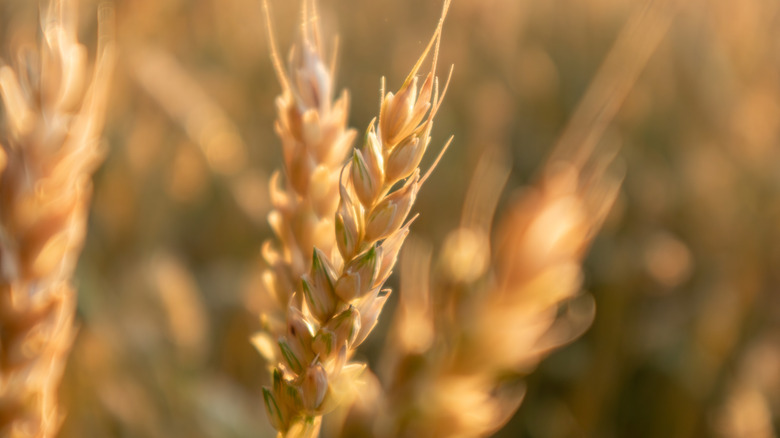
Some people incorrectly use "gluten" and "wheat" interchangeably. Wheat is a common gluten-containing grain, so it's no wonder that there's confusion surrounding the overlap. So, let's break it down: Wheat contains gluten, a protein complex, but gluten is not only found in wheat. If someone has a wheat allergy, they can usually enjoy other gluten-containing grains like barley or rye.
Wheat contains many proteins, some without gluten, which could trigger a wheat allergy. Allergy responses can vary, from short-term skin or respiratory reactions to full-blown anaphylaxis. A celiac reaction to gluten, on the other hand, can do long-term damage to the lining of the intestines and is categorized as an autoimmune disorder.
Someone with a wheat allergy should avoid gluten-extracted wheat, which may be labeled "gluten-free" or "gluten-friendly" but still contains wheat. Both a wheat allergy and a celiac reaction should be taken seriously. Yes, this may feel confusing at times, so if you're unsure if your friend, family member, or yourself can eat a certain product, it's important that you do your due diligence and check the label. When in doubt, look for a "wheat-free" or "gluten-free" label. Luckily for both gluten-free and wheat-free folks, there are alternative flours that can be used for cooking and baking.
It's just a fad diet
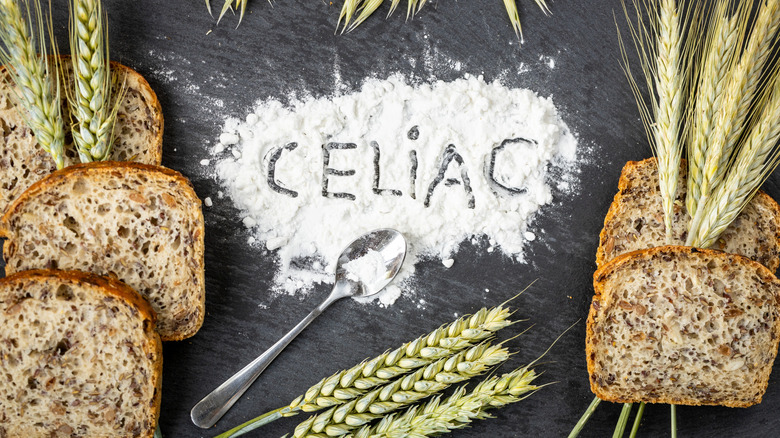
A frustration that many folks with celiac disease experience is being labeled as a "fad dieter." Many folks engage in trendy or popular diets, and as long as they are going about it safely and with some guidance from a healthcare provider, this should not be an issue. However, when celiac folks ask about gluten-free options, some servers, acquaintances, or family members might be quick to say that they're just being difficult about what's on the menu. This is not only be frustrating but also potentially dangerous if their condition is not being taken seriously.
All people should be respected in their food choices, but it's even more important that gluten-intolerance folks be taken seriously. As we know, even a small amount of cross-contamination can do major damage.
As such, one of the biggest mistakes a gluten-free diner can make at a restaurant is not speaking up. Outside of a restaurant setting, gluten-intolerant folks need to make their needs known to prevent cross-contamination and accidental exposure. It's also important that we recognize that not adhering to these dietary protocols can cause harm. Writing off an allergy or disease as a "fad" can be insensitive; let's all do our best to support those around us in their healing journey and meet people with understanding and respect.
It's nearly impossible to bake without gluten

It can feel nearly impossible to bake without gluten. Gluten-containing wheat flour is a baking staple, and it helps bind batters and doughs and create structure. If you grew up baking with gluten-containing products, it might be challenging to transition to gluten-free recipes.
If you want to avoid crumbly baked goods, you'll need to find an effective binding replacement for gluten. Luckily, some gluten-free flours can have a binding effect. Chickpea flour can be used to make pancakes without any eggs, starches, or other binding agents needed. Ground flaxseed can be added to gluten-free recipes to act as a binder, along with starches like cornstarch or potato starch. In addition, ingredients like psyllium husk, guar gum, and xanthan gum are popular ingredients found in gluten-free baking and in certain types of gluten-free flours. If you're new to the gluten-free baking world, start by following recipes before you start experimenting to get your footing. It's a different way of baking, but it is certainly possible.
Gluten intolerance is new

Gluten intolerance and celiac disease diagnoses are steadily on the rise. It's no secret that many more folks have been diagnosed with celiac in recent decades, but you may be surprised to find that it's currently being diagnosed at a rate of 7.5% per year, according to 2020 data published in the American Journal of Gastroenterology.
There are several possible factors contributing to these statistics. The first is the awareness and prevalence of testing for celiac, which has also increased in recent years. Others attribute the increase in diagnoses to higher-gluten wheat due to plant breeding. Although wheat production has evolved, this remains simply a theory until further research is conducted.
The truth is that celiac disease has been around for centuries, with the term "celiac" being coined in the 2nd-century A.D. Archaeologists have even discovered remains from the 1st-century A.D. that contained genes associated with celiac disease, and with signs of malnutrition as a result of celiac disease. Although the discussion about celiac is just picking up, it is a part of our ancient history. Hopefully, we will continue to understand this disease, conduct research, and help those with the condition to thrive.
Celiac and gluten sensitivity are the same thing
Do you know someone without a celiac disease diagnosis who has a physical reaction after consuming gluten-containing foods? There are many different ways that someone might experience a reaction to gluten, even without a diagnosis — which is called a non-celiac gluten sensitivity or NCGS. NCGS symptoms range, so keeping a food and wellness journal to show to a healthcare provider may be useful. Note any issues with your skin, digestion or gut health, mental health, or pain.
Now, someone with NCGS may be less sensitive to gluten than someone with celiac. It's not recommended for folks with celiac to consume any gluten, even via cross-contamination, while someone with NCGS may only react to larger amounts. As such, folks with NCGS may be able to dabble in gluten-friendly foods, while someone with celiac disease should only eat certified gluten-free products. Like with any allergy or sensitivity, severity varies, so consult your doctor about a game plan to manage your symptoms. Sometimes, symptoms of NCGS can overlap with celiac, so a celiac test might be necessary.
Foods labeled 'gluten-free' don't contain any gluten
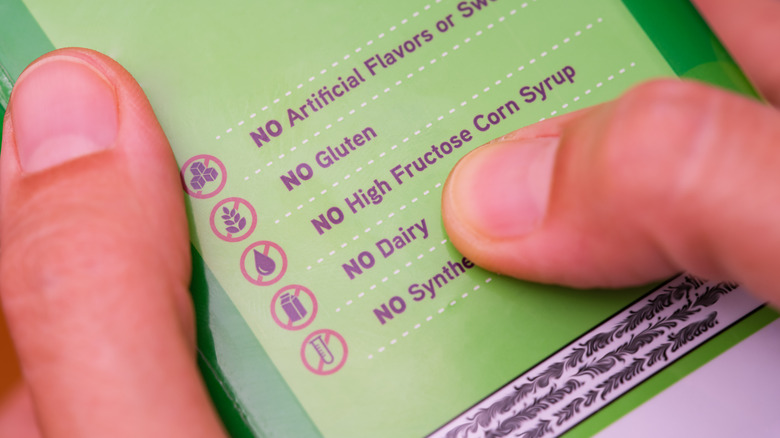
You'd think that foods certified gluten-free contain absolutely no gluten. And that's almost true. Gluten-free foods must contain less than 20 parts per million of gluten to be officially certified. That means 0.002% of the product can contain gluten. This has been deemed safe for folks with celiac per the FDA and is considered to be such a minuscule amount.
Unprocessed produce, like fruits and vegetables, is safe for people with celiac, as long as there has been no cross-contamination. These foods often don't have "gluten-free" labels associated with them, because they are non-gluten-containing products. So, while your apple contains zero gluten, that gluten-free cookie might have 0.002% gluten or less. Although the FDA has deemed that safe, it's always important to understand food labels, especially if you have a disease or allergy.
Gluten allergies and sensitivity only affect the digestive system

In 2017, I started getting rash-like hives all over my body. They first appeared on my hips and then slowly made their way to other joints. They itched like heck and stuck around for months. My doctor couldn't quite pinpoint what was causing it, but eventually I tried cutting out gluten because of my mother's celiac diagnosis. The rash went away, and I was unofficially diagnosed with Dermatitis herpetiformis, also known as DH, which is closely linked to celiac disease.
Many folks will rule out a gluten intolerance because their stomach health feels stable. But gluten allergies and celiac disease can affect different parts of the body. Some people report brain fog, confusion, ADHD-like behaviors, and other mental health-related reactions as a result of consuming gluten. Others notice a reaction on their skin, headaches, or even joint pain and inflammation.