

Why Sushi-Making Is Such A Difficult Cooking Technique To Master

When going out to a sushi restaurant or even making sushi at home, it can be easy to miss all the nuances and techniques that go into making quality sushi. To the untrained eye, sushi can seem like little more than a slice of fish on a small log of rice, or fish and vegetables rolled up in a layer of rice and a sheet of seaweed. Truth is, there is vast knowledge, technique, and expertise that goes into making sushi. If you've ever experienced an omakase meal, you know the world of sushi making goes far beyond just fish and shaping rice.
While sushi in the United States can be found in grocery store chains these days, proper sushi is an art form. Creating sushi involves technical precision, many years of practice, and a true respect for the ingredients. Perfectly executed tasks often look simple to amateurs, like an Olympic gymnast's routine, but behind that ease of perfection is at least a decade's worth of hard-earned expertise. Even the way you cut fish can make or break your sushi, not to mention selecting the freshest, highest-quality fish and knowing how to perfectly pair each fish with specific ingredients to bring out the cleanest, best flavors and dining experience.
Sushi chefs train for a lifetime
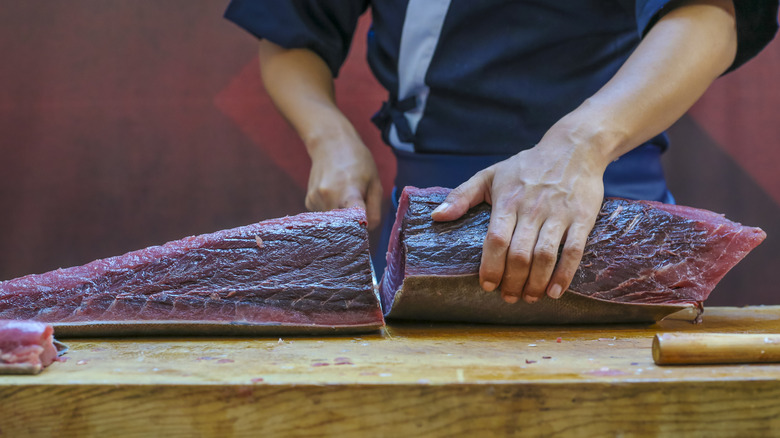
Out of all the hardest cooking techniques to master, sushi may be the most difficult. While there are some schools or programs out there that claim you can be a professional sushi chef in just a handful of weeks, the truth is that it takes much, much longer than that to properly train and practice these precise skills. In Japan, the mecca of sushi, people train for at least a decade to earn the highly esteemed and honorable title of head sushi chef, known as "itamae" in Japanese.
Aspiring chefs need to first find a sushi master to take them on as an apprentice, and start at the very bottom of the ladder with simply cleaning and observing, then moving on to learning to make sushi rice. After getting the hang of the rice, they then move on to basic prep work of ingredients and the beginnings of breaking down fish. It may take years of this before an apprentice is even allowed to use proper sushi knives. Then comes learning to select and perfectly prepare the fish, as well as how to interact with dining patrons.
Of course, if you're just making casual sushi at home for yourself or friends, no one expects you to be a true sushi master. However, even making nigiri at home is not easy. Make sure you have fresh, sushi-grade fish from a reputable source, along with properly seasoned rice. With these 10 tools you need for great homemade sushi, you won't become an itamae overnight, but your sushi will definitely improve with practice and patience.