

These 7 European-Style Butters Are Worth The Money
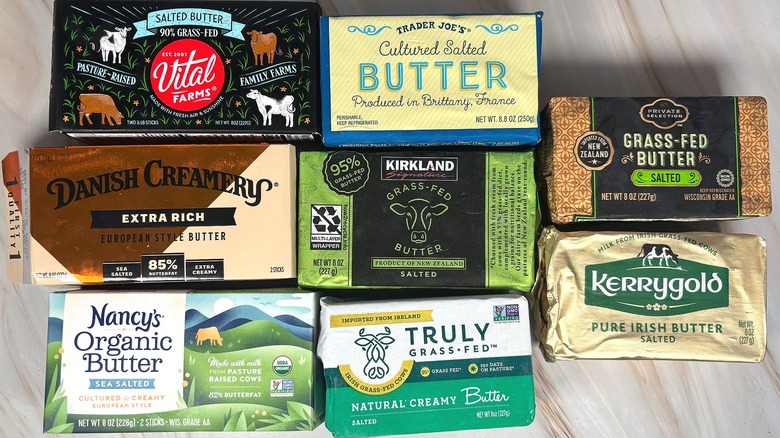
It's time to talk about one of my all-time favorite subjects: butter. As a home baker, butter is an obvious staple in my house. Open my fridge, and in the door, you'll probably find no fewer than three types of butter at any given time, including unsalted butter for baking, salted sweet cream butter to sauté with, and a salted European butter to put on toast, make into terrine, or for any other use where I want butter to shine.
Whether you buy butter indiscriminately or go through all your options with a fine-toothed comb, you're probably at least semi-aware of the hype around European butter. The biggest thing differentiating between European and American butter is the butterfat content of each. While American butter qualifies as butter at 80% butterfat, European-style butter has to have at least 82% butterfat. That 2% difference may seem negligible, but it's what leads most to consider European butter as higher quality than American butter. A few other differences between the two are that European butter will often have a slightly acidic quality to it because it's made from cultured cream, and you'll also often find some earthy flavors in true European butter made from grass-fed cows.
European butter may stand in a category of its own, but surprisingly enough, not all European butters are created equal. Each of the ones I tried for this piece is delicious, and which you buy will depend on what you want from your butter; a desire for a grassy tang will have you leaning toward one specific brand, while more neutral uses may steer you in a different direction. So without further ado, here's the lowdown on what to expect from some of the most popular European-style butters available stateside.
Vital Farms
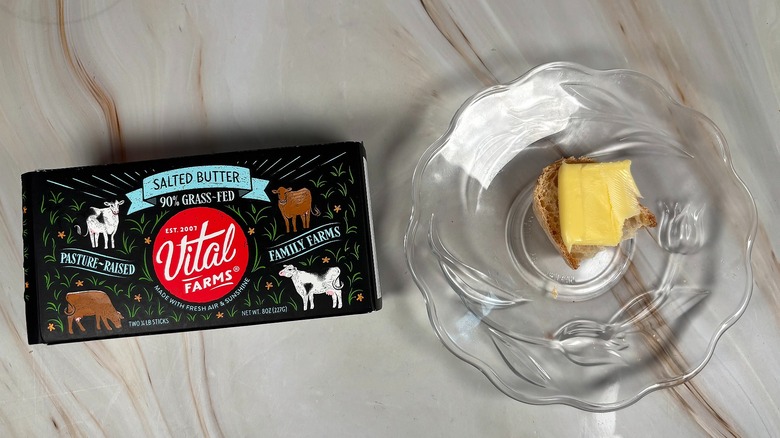
You're probably familiar with the Vital Farms label for either its butter or its eggs, both of which come in the same eye-catching, grass-speckled black packaging, which also features the animals at the core of providing the products. One thing you won't see right on the front of Vital Farms butter, though, is a proclamation of its Euro-style formulation. However, the company's unsalted and salted butter do indeed adhere to European butterfat standards, with a butterfat content of 83% to 85%. Notably, 90% of the diet of Vital Farms' cows is made up of grass.
All of this results in a butter that prompted me to write down "exquisite" as my first reaction upon tasting it. Vital Farms' salted butter is rich and indeed well-salted — I'd even say it just toes the line of being too salty without going overboard. Moreover, the butter has a full umami quality that coats the mouth and lingers for a long time after the bite is finished. Its deep yellow hue is indeed indicative of exactly what you'd expect: a rich, flavorful butter that offers enough to be used as the sole topping on any slice of bread.
Kirkland
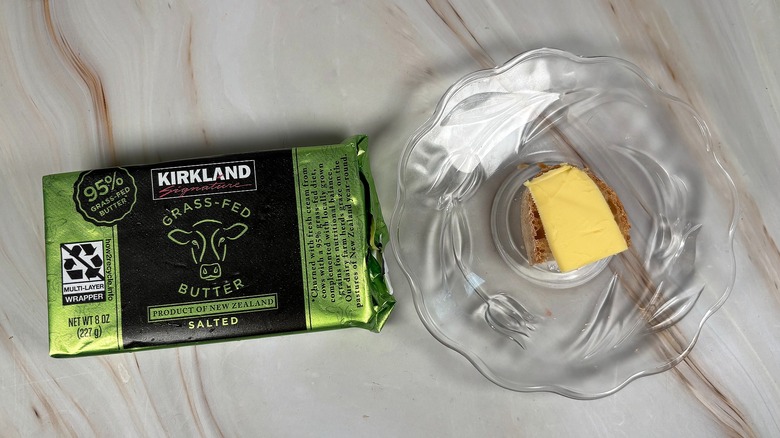
Any Costco cardholder is sure to be familiar with the famous butter debate: Is Kerrygold or Kirkland butter better? Though some consumers out there will never sway from their top pick, personally, I think they're pretty comparable (and the bulk savings you get when buying Kirkland's shouldn't be understated). Regardless of your own opinions on the Irish vs. New Zealand butter debate, or the Kerrygold vs. Kirkland debacle, there's no doubting that Kirkland butter is indeed made in the European style and holds its own as a high-quality butter.
Now that I've addressed the proverbial elephant in the room, let's dive deeper into what has to be one of Kirkland Signature's best products. Some consumers will favor this over other brands because it leans more neutral, which may be preferable if you don't want your butter to have a tangy or grassy profile. Still, there's plenty of depth here, alongside some sweetness and lots of umami appeal. It's only a little less punchy than the aforementioned Vital Farms, and which you choose may be purely a budgetary decision. Fortunately, both are incredible.
Nancy's
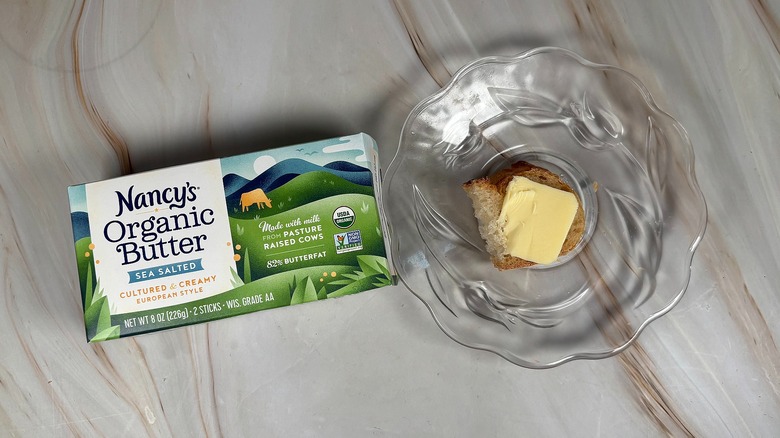
You may notice that Nancy's Organic Butter is slightly lighter in hue than either of the aforementioned butters (and many of the selections that follow), but don't for a second think that means it'll have a less punchy flavor. This butter has the required 82% butterfat and is made with cultured cream — a good indicator that you'll find some tang in the butter — and it had some of the brightest flavors of all the butters on this list.
As I expected, the butter was amply tangy, and it had a very earthy, grassy appeal as it melted in my mouth. It stood wholly apart from the previous butters I tried, and I mean that in a good way. I loved the acidity of this butter. Moreover, it's still really creamy, and combined with the tang, you just get this bright fullness that coats the inside of your mouth and activates the salivary glands. This is a really delicious butter that I wouldn't want to use for any application that wouldn't allow it to shine.
Kerrygold
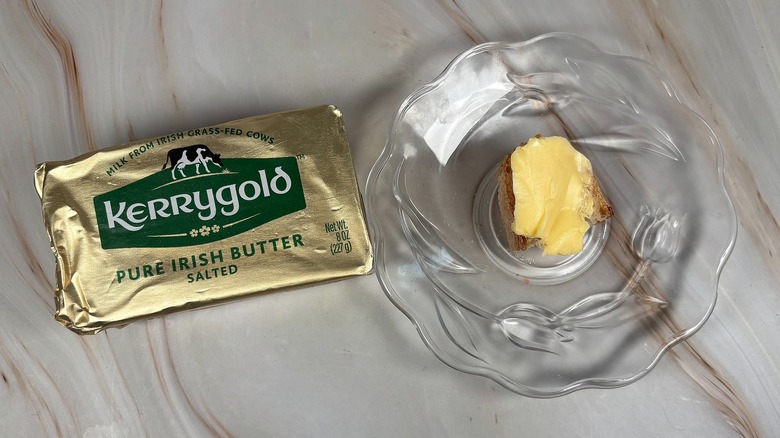
Ah, Kerrygold — perhaps the most prolific European butter (it's even available at Trader Joe's) and certainly the one that comes to mind when you picture European butter, in all of its gold-packaged glory. If you've ever wondered whether Kerrygold is worth its premium price tag, the answer is yes, always, and definitely. Kerrygold's butter has between 82% and 83% butterfat and is made from cows that are primarily grass-fed, putting it on equal footing with the other butters in this lineup.
Call me basic, but if I had to pick a favorite Euro-style butter, I'd pick Kerrygold in a heartbeat — and not just for the brand recognition. This butter is just really, really good. It packs the best qualities of all the butters here into a single package, and the result is heavenly. It's sweet, tangy, salty, creamy, and extraordinarily rich, with a mild grassiness to it that really rounds out the whole deal. Kerrygold is my go-to European butter for any purpose, and though I'm unlikely to switch teams anytime soon, it's good to know now that all the butters on this list would make viable replacements if I ever couldn't get my hands on my beloved.
Danish Creamery
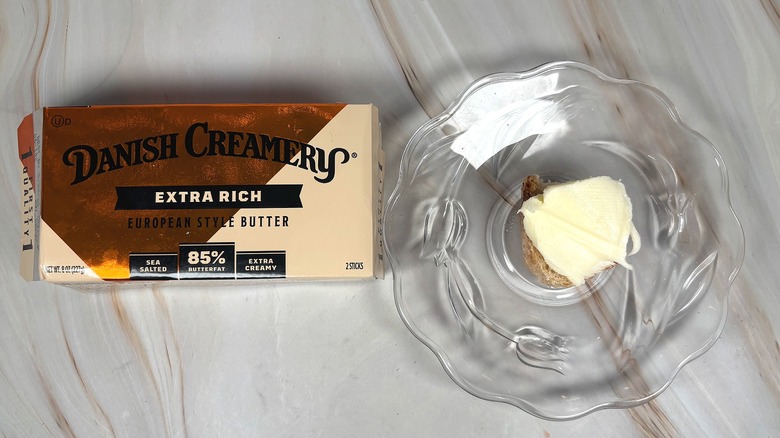
Danish Creamery's butter has some of the highest butterfat of the selections on this list, sitting squarely at 85%. You wouldn't know from looking at it — its pale hue is definitely misleading, but it does give some clues as to its flavor. You won't find any of the earthy or grassy notes here that you will in some of the more yellow butters. Rather, it manages to be both rich and light, indulgent and elegant, all at once.
This butter may just be the sweetest and creamiest of all the butters I tried for this tasting, and I quite liked that about it. Its flavor is almost akin to frosting (though not nearly as saccharine, obviously). It's well-salted and feels pretty light and delicate in the mouth. If you don't like the grassy notes present in other European butters, this would pose a good alternative, and you won't compromise any of the rich mouthfeel by choosing this butter.
Trader Joe's
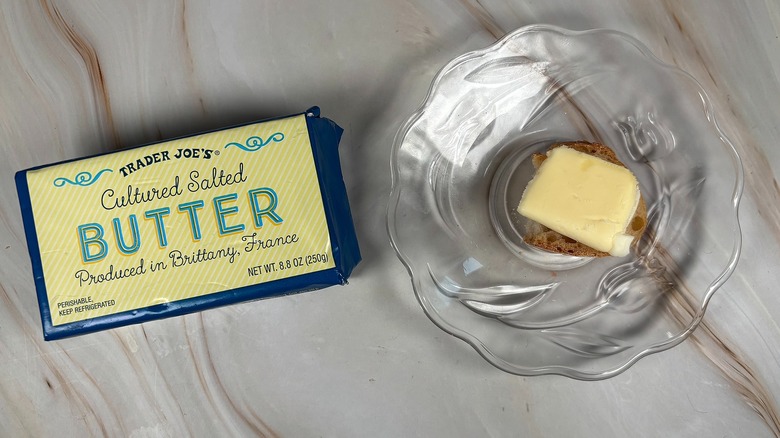
Obviously, I had to include an entry from Trader Joe's on this list. Its Cultured Salted Butter (imported from France) is the butter you'll find in my fridge most often. I've pitted Trader Joe's products against other fan favorites before, and occasionally, the brand does come out on top (as it did in my almond butter taste test and my whole-bean coffee assessment). I wouldn't say its European-style butter is my favorite on this list, but it's still really darn good and a reliable fridge staple for pretty much any purpose.
It's not quite as pale as the previous butter, but still lighter than some of the other butters in this lineup, and it gives an intermediary flavor that may be best if you don't want your butter to lean in one direction or the other. The butter has subtle grassy qualities that come in behind a gentle sweetness, and you definitely get the tang that you'd expect to find from it being cultured. It's not too salty, and I found the salt came through at the end of the bite rather than right away. As far as the journey from the beginning to the end of the bite, I'd say this butter took me on a long one and was very dynamic from start to finish.
Truly
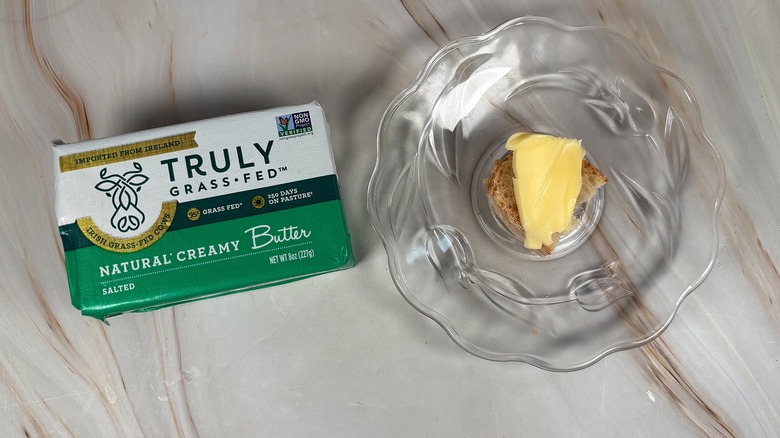
Last but certainly not least, we have Truly's butter, imported from Ireland and made from grass-fed cows. This European-style butter is made from cows that spend 250 days pasture-grazing, but surprisingly, it's not as grassy as Kerrygold or Nancy's. Still, it has an enviable golden hue, and it would be a great choice if you want a relatively neutral butter that dials up the creamy notes to 11.
The first thing you'll notice when you taste this butter is its rich, creamy flavor and mouthfeel. You will get a subtle grassy sweetness at the end of the bite, which I quite enjoyed, though I'd still call it mild in the face of a butter like Kerrygold. I'd also say it has the perfect amount of salt, with just enough to bring out its flavors but not so much that you'll worry about it affecting your bakes too much.
Methodology
I became ultra-knowledgeable about butter over the course of this article, and if there's one thing I have to caution readers about, it's this: Beware of European butter dupes. Well, maybe you don't need to actually be wary of them. But there are butters out there that very successfully imitate the look and taste of European butter without actually being European butter. Grass-fed butter isn't always made in the European style, nor is a yellow hue always indicative of a higher butterfat content. So, if you're particular about getting your hands on European butter, do your research before buying.
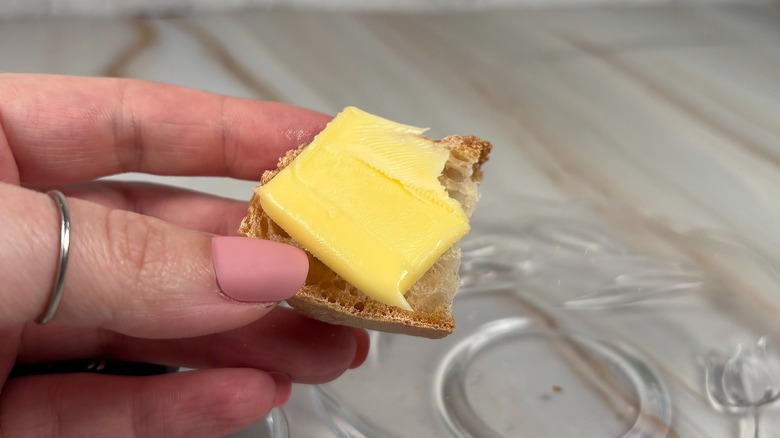
As far as determining whether the European butters on this list are all worth their price tag, my verdict was an easy "yes" after trying all of them on a piece of plain baguette. They all brought ample flavor to the bread (though there were variations among all of them), and as far as their price goes, I found them all to cost within a couple of dollars of one another. Whichever you buy may be based on accessibility or the flavor profile you're looking for, but I can say this for certain: You won't go wrong with any of them.