

Why A Dwarf Pomegranate Is An Easy, Space-Saving Option For Indoor Growing
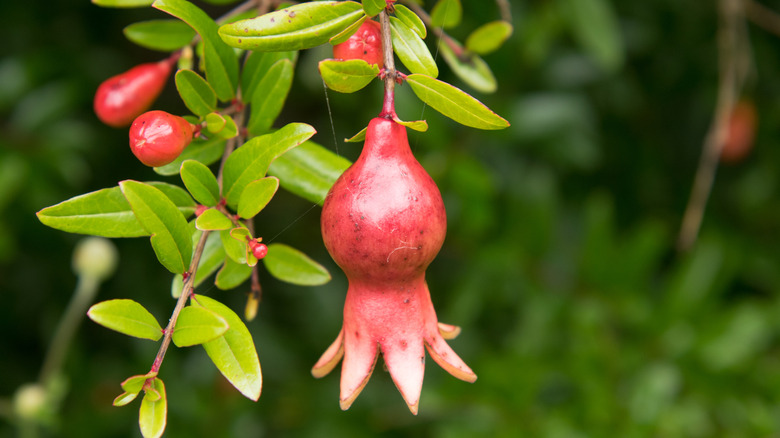
When you have limited space for gardening, you need to be discerning about what you're going to plant. This is doubly true if you plan to garden indoors. It's easy enough to grow herbs on a windowsill in an apartment, but you don't have to limit yourself to that. A dwarf pomegranate tree can adapt well to a small space if you make some accommodations for it.
You can grow a dwarf pomegranate in a pot as small as 5 gallons thanks to its fairly shallow root system. The tree does grow larger with more room — it can accommodate 10-gallon indoor pots, and a 40-gallon pot on a patio would even work if you had the space. However, in smaller pots, you can expect it to grow anywhere between 1 and 2 feet tall.
These plants do require some focused attention and care. You need high-quality, nutrient-rich soil for best results. The pots need good drainage (as most do), but because pomegranate is a drought-tolerant plant, it doesn't require as much watering as some other dwarf fruit trees might. Dwarf pomegranate trees also require pruning during the first couple of years of growth, to prevent them from spreading too widely and to encourage fruiting. They also need six to 10 hours of sunlight per day, temperatures around 80 degrees Fahrenheit, and low humidity. They can handle lower temperatures in winter, but we're just looking at ideals here. If you can manage all that, you may enjoy a tiny fruit harvest.
Don't take your dwarf pomegranate for granted
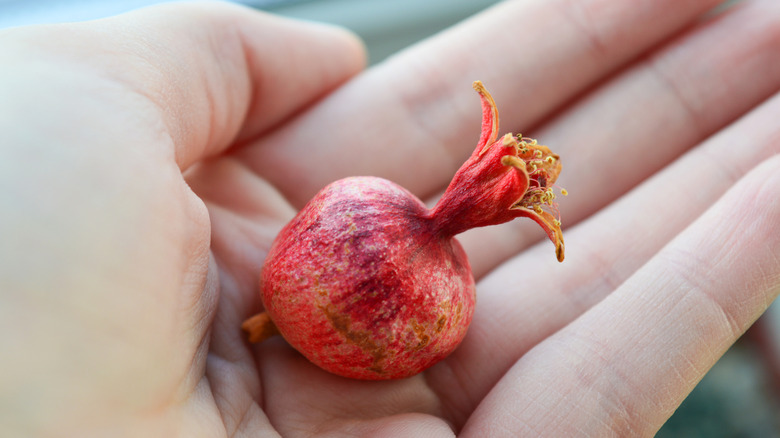
Like its larger cousin, the dwarf pomegranate produces smaller versions of those highly praised red fruits loaded with seeds. Small is the operative word here. Although they can produce an abundance of fruit, they are pretty tiny. They are edible, but remarkably sour. This is definitely more of an ornamental plant than one to grow for snacking. That said, if you're adventurous in the kitchen and like to play with flavors, you could find a way to make jams, sauces, or other treats with a little experimentation.
If you do want a fruit harvest, you need to give your tree a hand. Like with an indoor lemon tree, pollination cannot happen naturally. For fruit to grow, you need to manage pollination yourself. A fine paintbrush or cotton swab can do the trick. Once the flowers bloom, use the brush to gently transfer pollen between flowers. Lack of pollination is the main reason indoor fruit trees never produce fruit, but luckily this fix is pretty easy.
You also need to maintain a good watering schedule for your dwarf pomegranate. Keep the soil moist, but not wet. You definitely don't want it to dry out, but it shouldn't be soggy either. Organic fertilizer for the first few years can help with growth. Trim back excessive new shoots and some of the fruit as they begin to form so the branches don't get bogged down and the fruit can grow to size. With a little patience and care, you can have tiny fruit for years to come.