

It's Easier Than You Think To Grow A Lemon Tree Indoors
We may receive a commission on purchases made from links.
If you're a beginner gardener, you might find fruit trees intimidating. While some fruit tree varieties are beginner-friendly, most require consistent watering, fertilizing, pruning, and managing pests. Lemon trees are subtropical plants, so it can be hard to grow these trees outdoors year-round if you live in a climate that gets cold weather or overnight frosts. According to the USDA, the best regions for outdoor lemon trees are zones nine through 11.
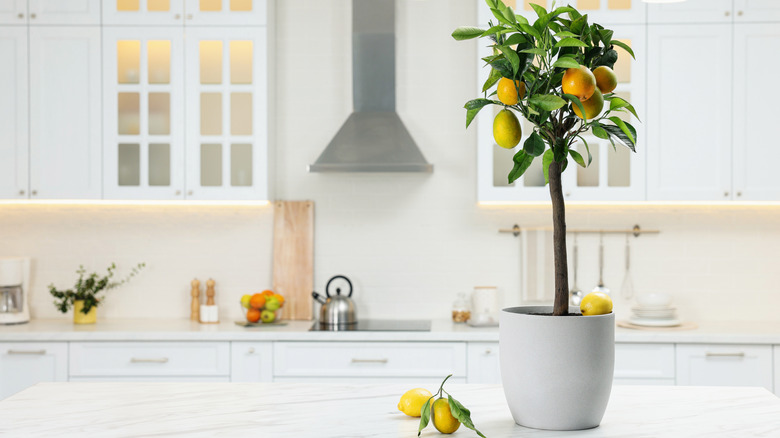
However, it's easier than you think to grow a lemon tree indoors, and you can do so in pretty much any climate as long as you don't keep your home at near-freezing temperatures. The best types of lemons to grow indoors are Dwarf varieties like Meyer, Improved Meyer, Ponderosa, Eureka, or Variegated Pink lemon trees. These varieties are smaller and can be grown in pots or large containers.
To give your tree the best chance of success, use well-draining soil like a perlite/peat moss or coconut coir mix. Fertilize it with a specialty citrus tree fertilizer or an all-purpose variety that is rich in micronutrients. You will also need to use a pot that has drainage holes so that your tree won't develop root rot. Terracotta pots are ideal for indoor lemon trees as they can wick away excess moisture from the tree's roots. Start with a pot that is just slightly larger than the size of the tree's root ball, and move your tree to a larger pot as it grows.
Tips for caring for an indoor lemon tree

Most plant parent know you don't want to ever let the soil in the pot get completely dry. Check the soil for dryness every two or three days and water your tree whenever the top few inches of soil feel dry. Your tree will also need at least six to eight hours of direct sunlight each day. If possible, place the pot in front of a south-facing window. If you can't do that, you can buy a grow light, like this Yadoker full-spectrum LED grow light, for supplementary light.
If the air inside is too dry, your lemon tree might suffer. You can either use a humidifier, like the Dreo Cool Mist Ultrasonic Humidifier, or mist the tree's leaves every few days. Your tree will thrive indoors if the temperature is around 65 degrees Fahrenheit during the day and between 55-60 degrees Fahrenheit at night.
An often overlooked reason an indoor fruit tree isn't producing lemons is a lack of pollination. You can move your tree outside to encourage natural pollination and greater fruit output. Start by moving the pot to a shady area, and then after a day or two, move it to a sunnier area. A few weeks before the first frost, you'll want to gradually acclimate your tree to returning indoors. Move the pot further and further into a shaded region of your yard over a period of three weeks before bringing it back inside.