

Avoid Pre-Shredded Parmigiano When Making This Classic Italian Pasta
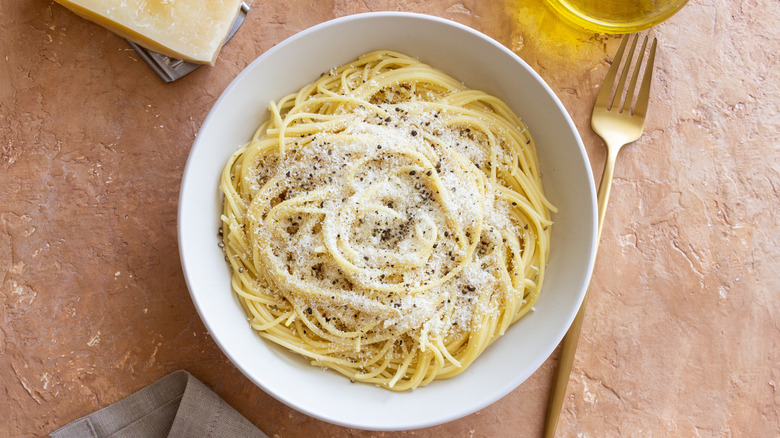
You've got your pasta water ready and your fresh black pepper toasted — everything is perfectly timed for an Instagram-worthy plate of the Italian classic: cacio e pepe. But instead of a silken cheese sauce coating your peppered pasta, you get a gritty mess studded with lumps of cheese fat. What went wrong? It's not necessarily anything you did, but what you used: pre-shredded cheese.
There's a reason why virtually all chefs avoid and despise pre-shredded cheese: No matter what it says on the packaging, it's never "100% cheese." These convenient shreds are coated in substances — typically cellulose or wood pulp, starch, calcium sulfate, or sodium aluminosilicate – to prevent them from doing exactly what cacio e pepe needs them to do: melting into a smooth, creamy emulsion that clings to every strand of pasta.
Pre-shredded cheese manufacturers aren't intentionally trying to ruin your meal. Those additive, anti-caking agents are there to keep your bag of cheese from turning into one solid, useless brick by absorbing moisture and keeping the shreds separate. But, while they're excellent for shelf-life, they're terrible for melting. For a dish this simple — this dependent on technique and chemistry — those additives are the equivalent of kryptonite.
The best type of cheese for cacio e pepe is always fresh
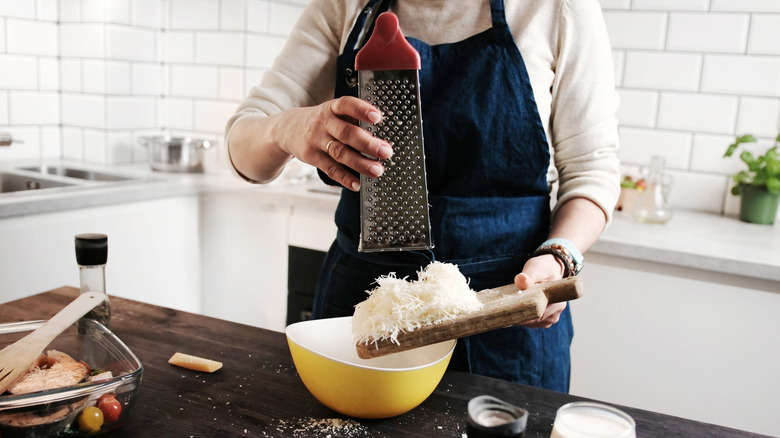
The fix for your cacio e pepe is simple: buy blocks of fresh cheese and grate them yourself — and that goes for any cheesy pasta. Those extra three minutes will repay you tenfold when you see how beautifully the fresh cheese melts into the pasta, unlike the pre-shredded stuff that turns lumpy the moment it meets heat. You also have the opportunity to experiment with a different variety of cheeses.
Outside of Parmesan, you've plenty of fresh cheese alternatives. For the most authentic cacio e pepe, use Pecorino Romano — the type of cheese Romans always use for the dish. Sharper with a more savory kick, it can handily cut through the richness of the dish and make the black pepper sing. Most people wouldn't expect a three-ingredient dish to taste this complex.
Grana Padano is also an option. It costs less and tastes milder, but still melts beautifully when freshly grated. Or try aged Asiago — it has different flavor profile, sure, but it'll give you the creamy consistency you're chasing without the grainy texture that comes from factory-added starches. For the absolute creamiest results, read up on cheese grater hacks and take notes from Ina Garten to get it grated more quickly.