

10 Items Making Your Dining Table Always Look Messy
We may receive a commission on purchases made from links.
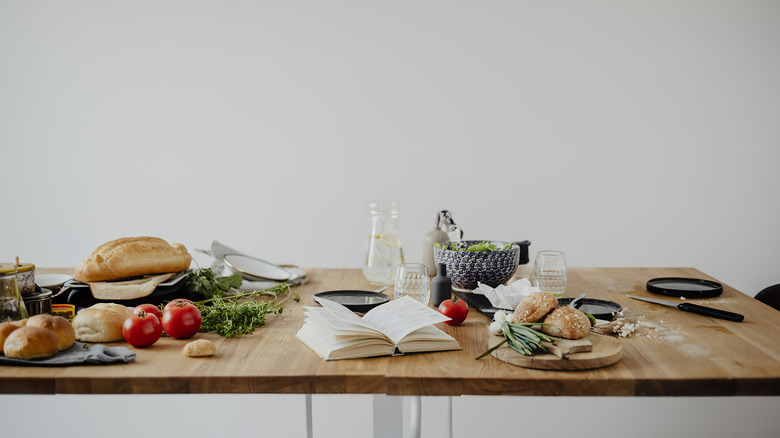
Eating, serving, and hosting: The dining table serves as the epicenter of some of our most cherished culinary memories. However, this flat workspace can also serve as a convenient landing spot for clutter — although the latter may not be entirely your fault. After all, decision fatigue is particularly high by the end of the day. After working the 9-to-5 grind, even micro decisions, such as where to put the junk mail, can feel mentally draining. As a consequence, seemingly innocuous items pile up on the dining table until you can find time to put them away "later."
If you have an iron-clad system for organizing things but your dining table still feels messy, certain design choices may be working against you. Adding too many things at once is a rookie mistake when decorating the dining room, and the same principle applies to table decor. Oversized centerpieces, excessive placemats, and chaotic tablecloths can make the dining table feel busy and visually overwhelming.
The good news, however, is that awareness is the first step towards reclaiming your space. By staying wary of the common clutter culprits and design missteps, your dining table can be transformed into a tranquil zone where everyone lingers on long after the last crumb has been polished off.
Oversized centerpieces
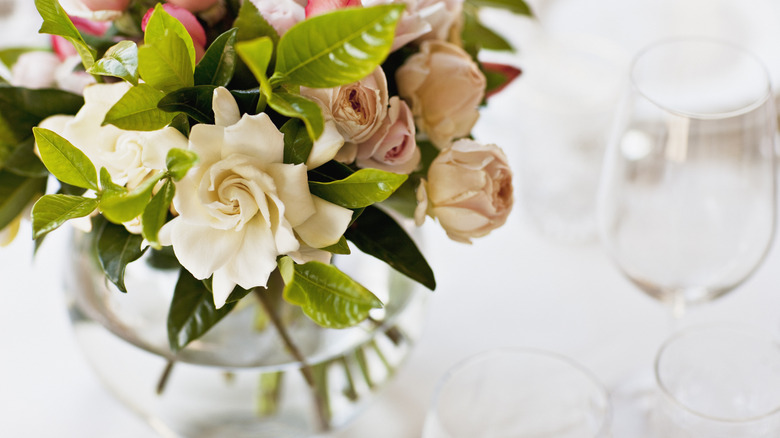
Bigger isn't always better, and this certainly applies to your dining table decor. A centerpiece is meant to draw your loved ones together and encourage people to linger on at the dinner table. But if an oversized display is blocking sightlines and restricting the placement of plates and glassware around the table, you may find people choosing to dine from the couch.
A single centerpiece generally suffices for a table that seats six. For a rectangular table that seats eight people, you can pair a taller centerpiece with smaller flourishes. A sophisticated centerpiece can be made with cheap Dollar Tree finds, like candles, vases, and ceramic sculptures. But your choices need to be intentional — too many decorative knick-knacks can make the display feel chaotic. If you are putting together a larger seasonal display for the holidays, individual pieces should be repurposed around the house after the event is done.
To ensure that your centerpiece doesn't monopolize the dining table, it helps to choose the size carefully. A recommended height of 12 inches helps family members easily converse with each other without having to crane their necks. Instead of opting for an assortment of pieces that minimize your usable area, a single vase filled with seasonal flowers can often make a statement. If you are looking to move beyond the usual suspects, you can swap the flowers for fresh herbs that complement your food — think sprigs of rosemary arranged in a small footed bowl if you cook Italian often.
Too many electronics

Ever since a global pandemic took the world by siege, the lines between our personal and professional lives have been permanently blurred. If all the warnings about the overexposure of blue light have left you nonplussed, here's a more practical reason to purge electronics from your dining table: the clutter and chaos that gadgets can create.
There is nothing that can ruin the clean lines of a dining table as efficiently as the sight of jumbled cords snaking their way across the space. Apart from aesthetic considerations, there are logistical concerns as well. All the laptops, tablets, and power banks can compete with plates and dinnerware for space, while also eating into the available elbow room. If any water bottles or liquids get accidentally knocked over amidst all these fragile gadgets, you might risk irreversible damage to expensive devices.
Going tech-free at the dinner table is the ultimate dream, but the reality is that certain essential devices will always find their way over. Minimize clutter while dining by allocating a designated storage bin or basket for all remotes, headphones, and tablets to rest during mealtimes. Drill a small hole at the bottom of the basket and add something like this TESSAN Surge Protector Flat Extension Cord within, so that everyone's gadgets can charge simultaneously without any turf wars. Finally, your work ends by staying one step ahead of tangled cords and cables by investing in silicone cord clamps and reusable cable ties.
Junk mail

From credit card offers to unsolicited newsletters you didn't sign up for, junk mail can sneak in through the cracks under the door — in the most literal sense of the term. And if it has been sitting on your dining table for more than a week, it amounts to clutter that you could do without.
The biggest issue with an unsightly stack of junk mail is that it can serve as a magnet for more clutter. Before you realize it, other odds and ends are tossed randomly in this corner until you can find the time to sort them. Beyond creating visual chaos, junk mail can also eat into the space reserved for other necessities, such as plates and cutlery.
You may not be able to stop junk mail from showing up at your door permanently, but you can control how you deal with it. Instead of having random letters and coupons scattered across the dining table, it helps to create a designated drop zone. Over-the-chair storage pockets are the unexpected Dollar Tree find that can help you organize junk mail and save precious inches on the dining table. You can further categorize the incoming mail into relevant piles: save, discard, or shred. As tempting as it might be to put it off until later, it is important to follow through on the actions denoted to each pile once a week. This will ensure that your drop zone doesn't overflow onto the table and defeat its intended purpose.
Excessive placemats
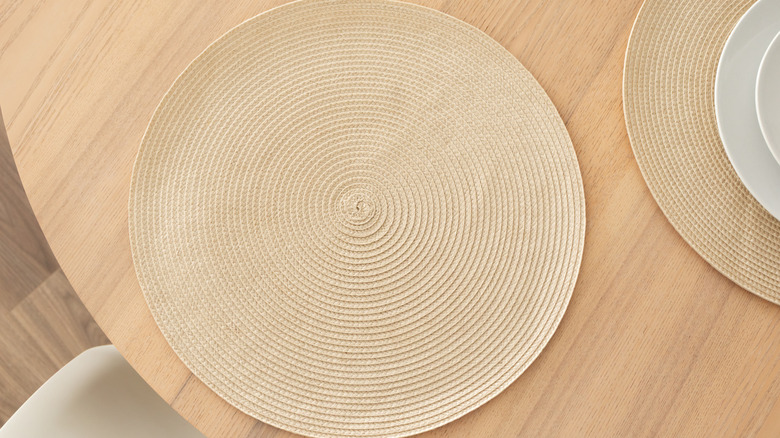
With roots in ancient civilizations, placemats were originally created to serve as a buffer between the table and a wide array of food spills and splatters. But given the decorative role that they now occupy, it can seem tempting to stock up on one set too many. If every inch of your dining table is plastered with a decorative placemat, it might be time to reconsider.
On paper, the role of a placemat is to mark the designated space for each diner. As such, it is advisable to only have as many placemats as the number of people dining at the table each day. The rest of your table needs to be left unobstructed so that you can land hot pots and pans with ease. As a general rule, small households with two people will find five to six placemats sufficient for their needs, with enough to spare for the occasional guest who may pop by. Larger families with over five people can require up to 16 placemats for everyday meals. If you are looking to save a few bucks, flea markets and thrift stores are among the unexpected places you can score affordable placemats and kitchen decor.
Apart from the number of placemats laid on the table, the patterns and textures also need to be considered carefully. Too many clashing prints and colors can create visual overwhelm. Minimalist interiors will favor muted neutrals, while woven options work well with bohemian decor.
Too many condiment jars
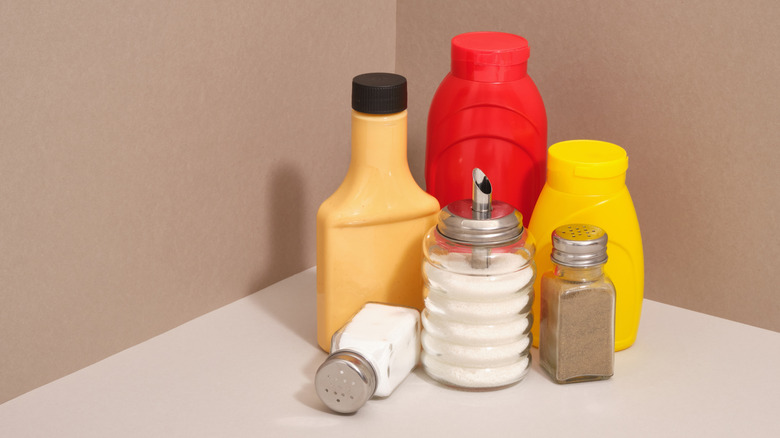
From pickles to specialty vinegars, there is no dearth of condiments that promise to elevate your everyday meals. Queen Elizabeth II may have loved her Tabasco sauce, but the truth is that not all condiments deserve a spot on your dining table. For starters, condiment jars tend to be caked with sticky spills and drips that can look off-putting when hosting gatherings. When multiple oddly sized bottles are stacked together, it can also lend a chaotic air to the dining table.
The road towards a more orderly dining table starts by getting rid of mismatched condiment jars. Instead, you'll want to decant yours into uniform bottles to create a more cohesive display. Adding handy labels can ensure that nobody accidentally sprinkles sugar over their eggs Benedict instead of salt. Then, you'll need to look for a storage caddy or a rotating lazy Susan, like this Farmhouse Oak 9-Inch Lazy Susan Turntable Organizer, to get your condiments into formation.
Wiping down the condiment bottles at the end of each day is essential to get rid of any residue and debris before they have a chance to settle in. A monthly audit is also needed to ensure that you are keeping only the useful candidates on the table, rather than cluttering the space with just-in-case options. You can make an exception for one crowd favorite that is used regularly — perhaps that steak sauce that goes so well with your roast beef — and store the other sauces out of sight in the pantry.
Mismatched cutlery sets
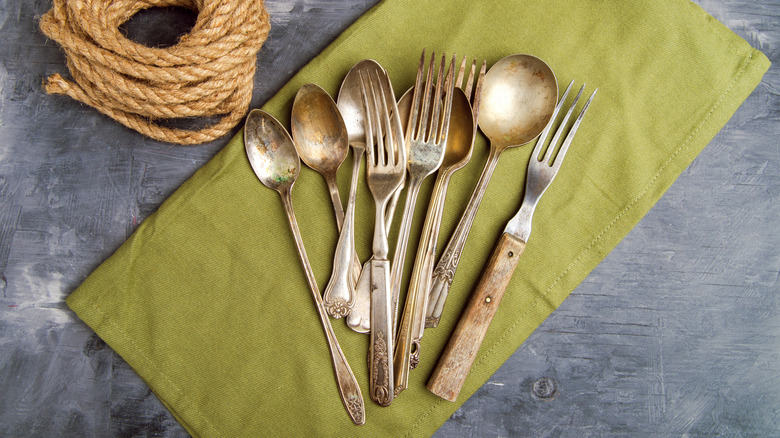
Pairing mismatched cutlery together can seem like a handy way to funnel your creative energies. But uncoordinated textures, sizes, and finishes can often read disorganized rather than whimsical. Different proportions can also throw off the symmetry of the table setting and lead to visual fatigue as your eye tries to make sense of all the clashing shapes and colors. The difference in the sizes can also make it harder to corral everything together into one organizer.
Excessive cutlery can derail your dinner party, but it can also hamper the flow of your everyday meals. Instead of displaying all your finest pieces every single day, it makes sense to keep one completely matched set on the table for everyday use. Backups can be stored in the sideboard inside an Extra Large Expandable Silverware Organizer, so that you can easily find what you need in between meals.
The cutlery set in your everyday rotation needs to be inspected regularly for any signs of rust or discoloration, since it is used heavily. It might seem heartbreaking to retire the entire set once a few pieces lose their lustre, but there are plenty of ways to repurpose old flatware around the house. Use the spoons for smoothing caulk in the kitchen and the forks for combing through tangled tassels on rugs.
Chaotic tablecloths
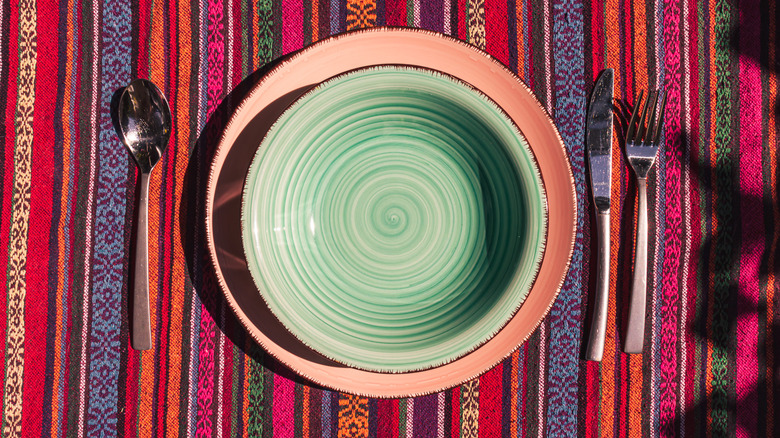
You may have ruthlessly rooted out all clutter and organized all the essentials with military precision on the dining table. But if your handiwork is placed over a chaotic tablecloth with busy prints or jarring colors, it can instantly overwhelm the senses. When the backdrop of the table is already chaotic, even the addition of a single spoon can turn the space into an eyesore.
Patterned tablecloths may be more adept at camouflaging stains, but they can also be a double-edged sword, as food debris may go unnoticed for days on end. It also requires the brave of heart to commit to a bold print. Large chevron stripes, chaotic paisleys, and multi-hued tie-dye patterns will all clamor for attention once the placemats and the plates have been added. Extremely trendy prints also run the risk of becoming outdated soon, forcing you to keep repurchasing newer options more often than you'd like.
When in doubt, stick to solid colors and classic prints that won't fall from favor a few months down the line. Taking cues from your decor and serveware can also help. Think powder blue linen for complementing ceramic Portuguese tableware, neutrals for minimalist settings, and textured fabrics for special occasions. If all else fails, turn to a crisp white tablecloth — a timeless staple that has been smoothed over tables for centuries. On days when you are feeling more creative, you can always add a table runner to infuse some prints into the space in small doses.
Unused coaster sets
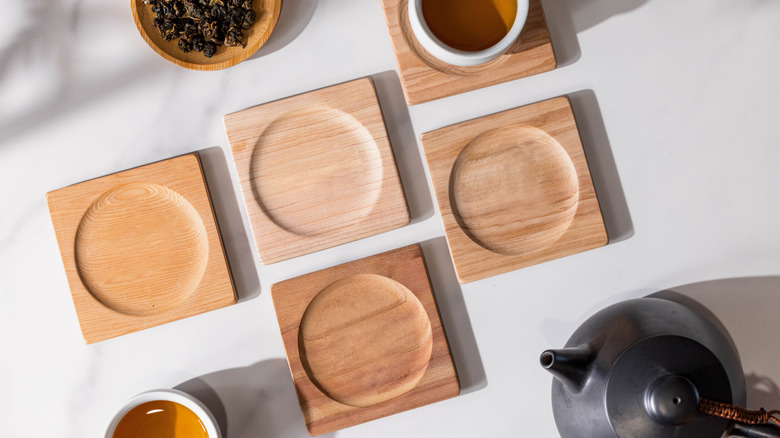
Standard coaster sets have four to six pieces for home use, and some of these will sit untouched for years unless you host gatherings often. The driving force for a well-organized table is keeping only what you use every day within reach. If your coaster set has collected dust or is missing a few pieces, you can consider it a sign that it needs a new home elsewhere. You can instead stash the set on a console near the dining area or inside the coffee table. This keeps them within reach when needed without creating visual clutter on the dining table.
However, if your table is made from porous materials, such as wood, or high-maintenance options, like marble, you may need coasters immediately at hand at all times. The key to ensuring that your coaster set blends in with the clean lines of the table, rather than disrupting everything, is to tie your choices to your decor. Cork-based options work for a rustic setup, marble coasters align perfectly with glass tables, and textured wood will sync with farmhouse style.
The designs can be rotated seasonally, but it helps to do a monthly edit to ensure that you aren't holding on to chipped or mismatched sets. Coasters that have outlived their utility on the dining table can be put to other uses around the house, such as catching wax drips underneath pillar candles.
Extra glassware

Maybe you are running low on cabinet space, or perhaps stocking extra glasses on the table to minimize mid-meal kitchen runs just seems like good common sense. There are several reasons why we end up accumulating extra glassware on the dining table — but the outcome is rarely ever optimal. To begin with, there is the safety hazard. When a table is laden with excessive glassware, there is less elbow room to spare. This means that accidents and spills are just begging to happen. Having your table cluttered with unnecessary glasses can also slow down your everyday cleanup routine after meals.
The road towards decluttering a messy dining table starts by defining how many glasses you actually need every day. A set of eight glasses will suffice for the average family, but larger households may require 12 for their daily needs. Specialty glassware should be stored safely within a sideboard or hutch, rather than on the dining table. If you have guests dropping by often, it helps to opt for versatile designs that can be used for entertaining as well — think ribbed textures and highball glasses. Any chipped or warped glasses need to be immediately taken out of your everyday rotation, but you can always give them a fresh lease of life in other places around the house. Use yours to store pens and office supplies or as a planter for succulents.
Overflowing catch-all tray
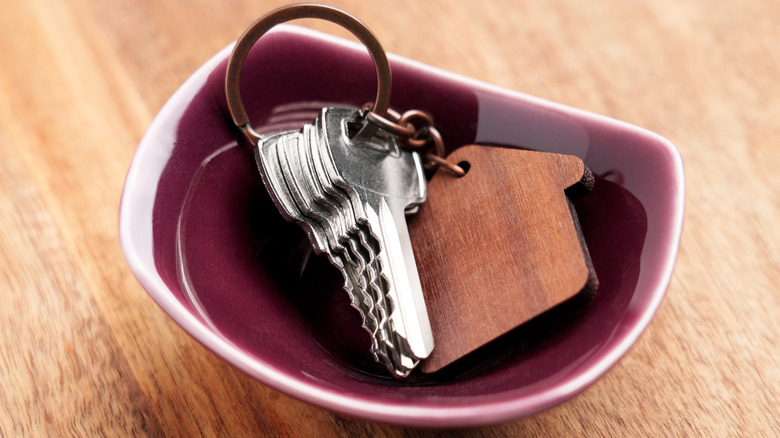
A catch-all tray is theorized as the magical solution for catching all the clutter that doesn't fit anywhere else and keeping it orderly. But what happens when the catch-all tray becomes a dumping ground for all kinds of random knick-knacks? If yours is placed on the dining table, you may find it hard to move around an overflowing tray to adjust place settings. The visual chaos of all the clutter that is trapped within can also make your dining table feel messy, even if everything else is in order.
Keep your catch-all tray from devolving into anarchy by first defining its purpose: Will it be used to store keys, charging cables, or takeout receipts? Anything that doesn't fall within your defined parameters needs to be relegated to its relevant home elsewhere. You can further keep different sections from merging into each other by using adjustable plastic separators to demarcate clear boundaries within the tray. While good intentions and the right tools can help, the only way to keep your catch-all tray organized in the long run is to develop a regular decluttering routine. Simply empty out the tray, wipe it down, purge items you don't need, and allocate a permanent home to items that don't belong in this spot.