

5 Canned Spinach Brands, Ranked Worst To Best
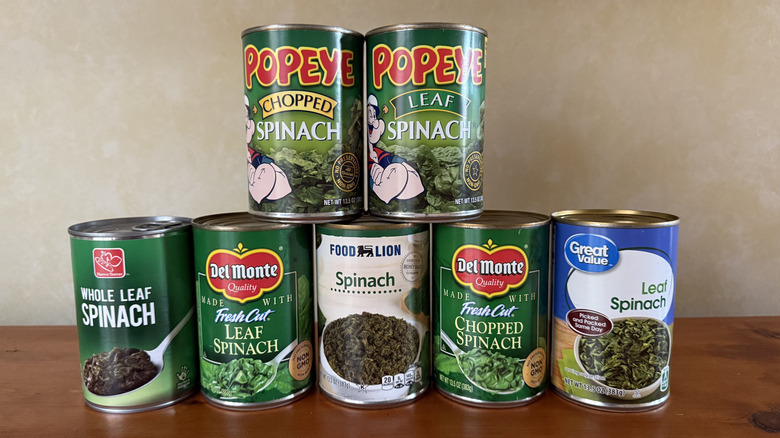
Canned fruits and vegetables have a time and a place. That's something I always realize during the holiday season, when I am cooking up a storm for family gatherings. Whether it's canned soup for a casserole or canned vegetables for stuffing, there's no shame in forgoing the fresh produce aisle every once in a while. Nevertheless, there's no getting around the fact that canned vegetables have their limitations in terms of texture and flavor. That's why I decided to taste several brands of canned spinach to unpack their pros and cons and help identify which one you should reach for next time you are short on time and energy.
Of course, eating canned spinach right out of a can is not the most appealing task, but it's not unthinkable either. I tasted each spinach plain, but it was ultimately destined for other dishes. There are myriad recipes where canned spinach could shine; for instance, you could use it to upgrade scrambled eggs.
I judged each product based on its texture, flavor, quantity, and price. All of the products I tested contained nothing more than salt, water, and spinach, though there are products on the market with seasonings. You can find more information on my methodology at the end of this article.
5. Harris Teeter
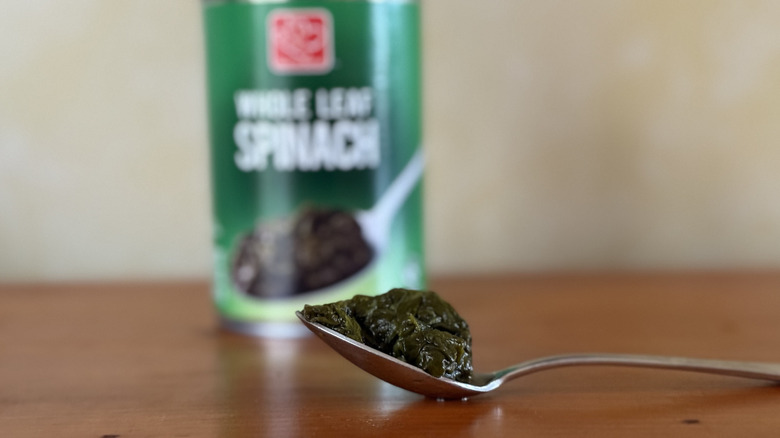
If you typically can't even bring yourself to open a can of spinach because you are repelled by the wet, gooey texture of the leafy greens, I wouldn't recommend trying Harris Teeter's version. Despite costing more than any other brand on this list, this product was by far my least favorite because it was the mushiest of the bunch. It wasn't particularly high in salt, which I appreciated, but that factor couldn't rescue the spinach's disappointing texture. I could theoretically use this spinach in a casserole, where it could mingle with the texture and flavor of other vegetables.
Most of the time, I love Harris Teeter. This regional grocery store chain, which is concentrated in the Southeast, has some fantastic fresh baked goods. In my experience, it's also usually a safe bet for finding high-quality collard greens, bok choy, and root vegetables. Even so, I don't typically shop here for canned vegetables because its value-for-money is not satisfactory. This canned spinach only confirmed that.
4. Popeye
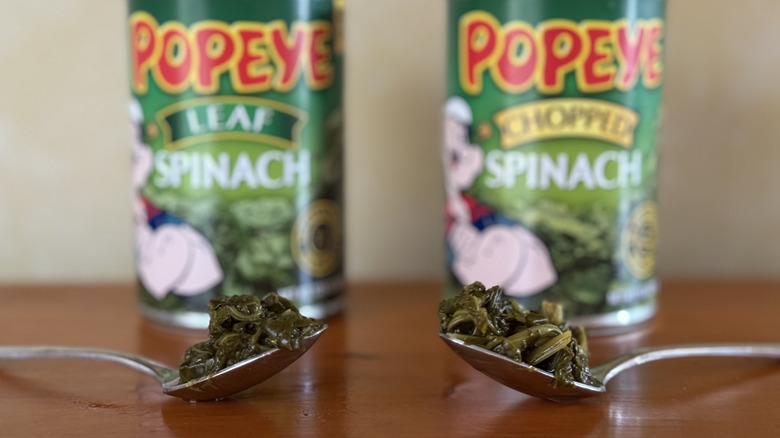
I wanted to like Popeye spinach simply because of the nostalgia it evoked. The lovable one-eyed sailor puffing away on his pipe captured Americans' hearts in the first half of the 20th century, but his influence reaches us even today, nearly a century after he first appeared in the Thimble Theatre comic strip in 1929. Popeye famously loves spinach, and it supposedly makes him strong. A single ½-cup serving of Popeye chopped spinach does indeed offer 2 grams of protein, while the same serving size of Popeye leaf spinach contains 3 grams. That's not to mention the nitrates and moderate amounts of iron offered by the leafy green, both of which can boost athletic performance.
When it came down to quantity, however, this product left a lot to be desired. I mean that quite literally; once I had drained the leaf spinach, the volume of greens that remained was noticeably lacking and less than what was advertised on the can. This wasn't the case with the chopped spinach, making this brand unpredictable and not worth the amount I paid per can. I also wish this product had been a little less salty.
One redeeming factor for Popeye spinach? The recipes featured on each can help you figure out how to use the goopy greens. If they don't strike your fancy, though, check out these other wonderful ways to use chopped spinach.
3. Del Monte
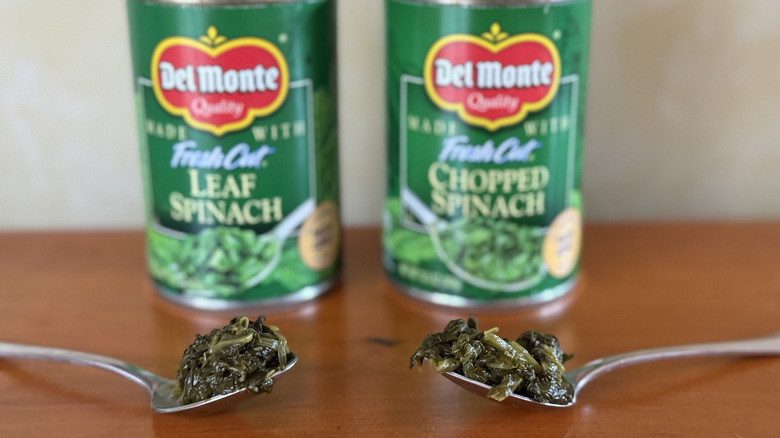
When I think of Del Monte, I think of canned green beans and whole kernel corn. The brand's spinach products weren't on my radar before this taste test, and they probably won't be afterward, either. Since it's a well-respected, mainstream brand available at a variety of grocery stores, I understood why each can cost me a bit more than Walmart's version or Food Lion's version. But did I get a significant quality improvement in return? I'm sad to report that this was not the case.
I concede that this spinach bore a slightly darker hue than all the other spinach brands I tested, possibly pointing to riper leaves. I couldn't taste a difference in flavor, though, and the texture was not anything special. What put me off about this product was its excessive saltiness; each ½-cup serving of the chopped and leaf spinach contained 310 milligrams of sodium. While researching this brand afterward, I found that it offers cans of leaf spinach with no salt added. This product has received much higher reviews from customers online, so I would be willing to try it, too, if I could find it in stores near me.
2. Food Lion
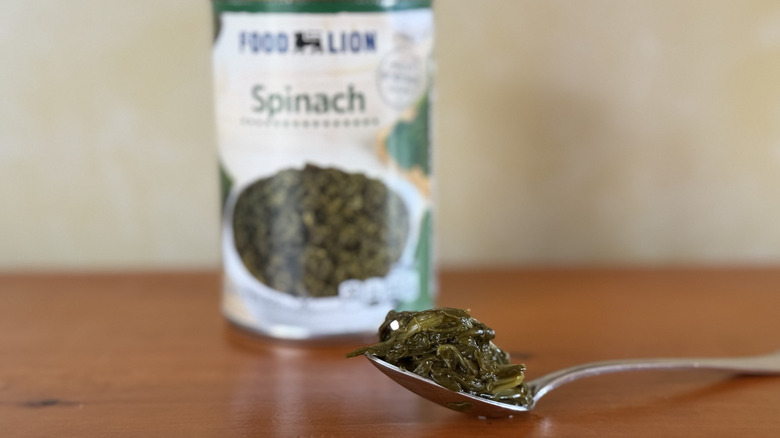
Food Lion's spinach was the most affordable product on this list, but I figured out part of the reason why when I drained it. To my surprise, I was left with significantly less spinach than the other brands provided. One look at the label confirmed my suspicions; each can of Food Lion spinach contains only 60 calories worth of spinach, while several of the others contain 70 or 75 calories each (I chose to compare calories rather than serving sizes due to discrepancies in draining). Even after accounting for the reduced amount of greens, however, Food Lion spinach is still the most affordable brand on this list on a cost-per-calorie basis.
Price wasn't the only thing I liked about this spinach, though. I was relieved to discover that it was reasonably salty, with only 140 milligrams of sodium per ½-cup serving; other brands had more than twice that amount. The texture of this spinach didn't stand out, so it could be used in a variety of recipes without necessarily wowing or disappointing. No matter what, though, make sure to drain it well to get rid of all that excess water.
1. Great Value
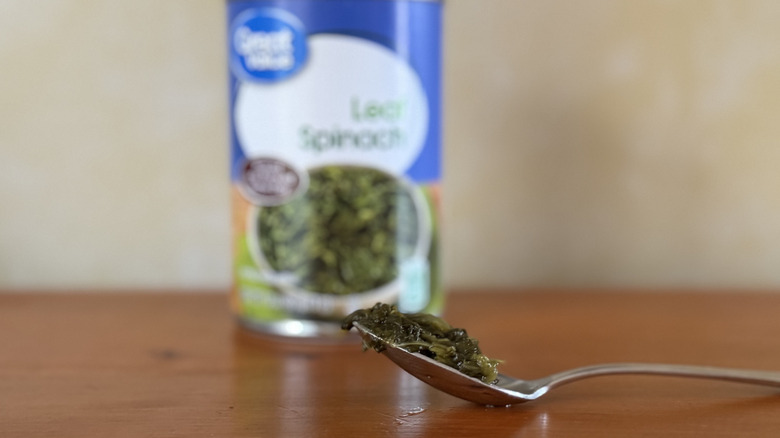
Usually when I conduct a review, I can identify a clear winner among all the products I test. This is one of the few times when the products have been so similar that I have had to pay extra attention to notice their minute differences. Great Value's leaf spinach barely eked out the top ranking, and that was in large part due to the generous quantity of spinach in the can. According to the nutrition label, this can was supposed to contain only 60 calories worth of spinach, which is 10 to 15 calories less than some of the other cans. However, in reality, Great Value leaf spinach offered the most generously packed can. Nobody likes a bag of chips filled mostly with air, and water shouldn't take up the precious space in packed spinach, either.
It's important to note that the flavor and texture of this product were still average. No matter what, I feel that fresh spinach will always have a leg up on canned spinach in those arenas. A tight budget, however, can make canned spinach a worthwhile purchase. Great Value does indeed offer excellent value for your money; it was the second-cheapest product I tested.
Methodology
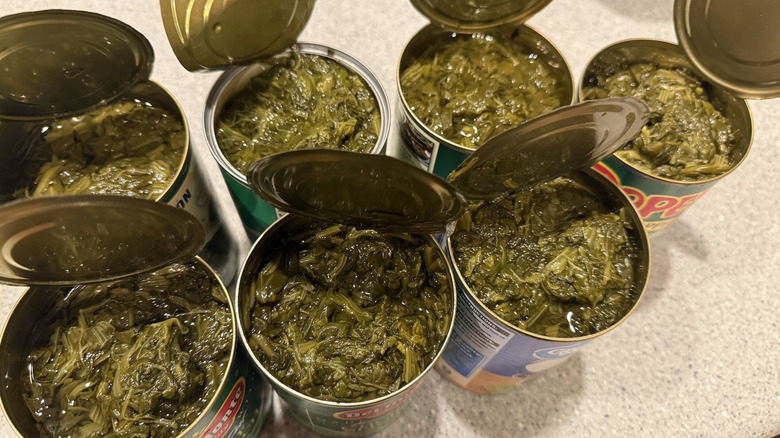
Each product I tested included nothing more than salt, water, and spinach. For some brands, I found that two types of spinach were offered — chopped and leaf — and in such cases, I sampled both (though differences were, again, minimal).
I tasted each spinach plain from a spoon and then ranked the products according to texture, flavor, quantity, and price. The brands were often quite similar in texture and flavor, but I was able to detect a few minute differences, as noted.