

10 Department Store Restaurants You Probably Haven't Thought Of In Ages
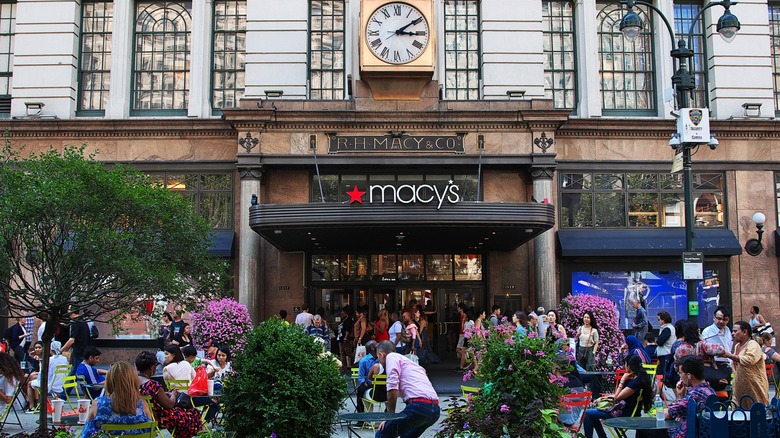
Restaurants may not be the first thing that comes to mind when you think about department stores. However, dining at department stores used to be more common than food courts in malls. It was the height of the retail experience — extravagant decor, glamorous window displays, spiffy attire, in-store theme park rides, massive Christmas tree-lightings, and more. Department stores offered people a peek at possibilities, and in many ways, were the arbiters of the American dream.
The restaurants were equally aspirational, and unlike the food courts that would replace them, offered some of the best food around. Not only did they keep people shopping, but they became focal points for some of America's major social shifts, from the tea rooms, which gave women a rare opportunity to connect independent of men, to the sit-ins that contributed to desegregation during the Civil Rights Movement.
The department stores of today are a far cry from what they were, and along with their decline, many of the restaurants have been forgotten or have disappeared altogether. But that doesn't mean that there aren't any worthwhile department store restaurants around anymore. At Nordstrom, for example, fine dining is as vibrant as ever, along with Macy's and Bergdorf Goodman, to name a few. Here are some department store restaurants you probably haven't thought of in ages.
Bird Cage (Lord & Taylor)
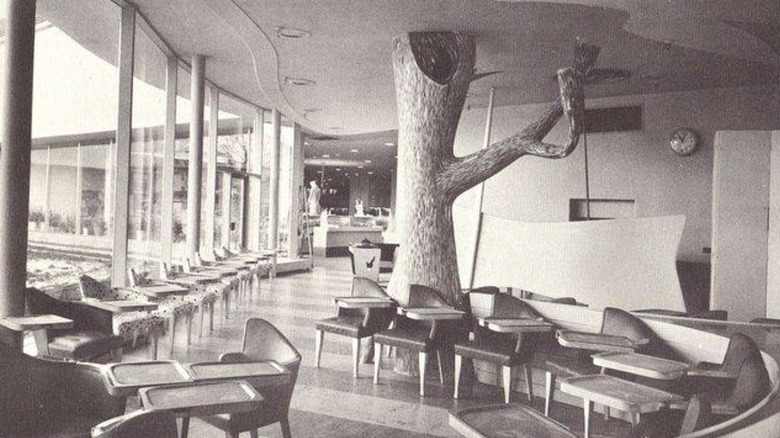
Lord & Taylor has had many restaurants over the years, but none are as iconic as the Bird Cage. The first location opened on the 5th floor of the Fifth Avenue New York City store sometime in the early 1900s, with locations popping up in other cities following World War II. It operated well into the 1980s, when the name was changed to Café American Style.
The Bird Cage existed during the heyday of "high-class," when the staff would serve morning refreshments to waiting customers in fine china, before the store opened for business. Inside, shoppers found momentary respite behind ceiling-high windows, and enjoyed food in stylish chairs with trays attached, surrounding a large centerpiece fashioned to resemble a tree. Diners were given complimentary cigarettes while they perused the menu, which featured coffee, tea, and hot chocolate with toast, hot clam broth or bouillon in a cup, an array of sandwiches, including Virginia ham and roast beef. A wide selection of ice cream flavors and confections were also available.
This upscale establishment was not only a restaurant, but also a tea room where women convened to discuss life and the latest fashions. Special Afternoon Tea was served between 3 and 6 p.m. for 50 cents per person. When the Bird Cage became Café American Style, the interior was transformed into a floral escape, and the menu was updated with soups. With the gradual decline of department stores, the last Lord & Taylor brick-and-mortar closed in 2021.
Magnolia Room (Rich's)
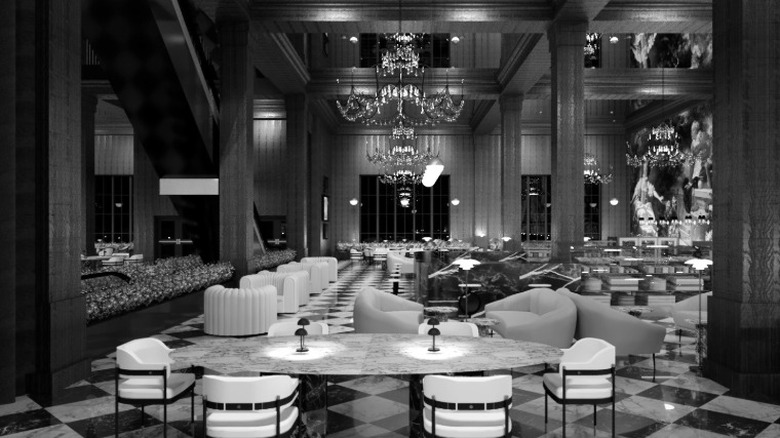
For over a century, Rich's department store was a beloved ritual for Atlanta residents. From the Pink Pig monorail that whizzed children around the store, to its yearly Christmas tree lighting that drew thousands of attendees, it offered a truly one-of-a-kind experience. Rich's opened the first Magnolia Room on the sixth floor of the 45 Broad Street location. It was a luxurious restaurant with Italian Renaissance flourishes, marble-top tables, and tile flooring that reflected hanging chandeliers. Along with being a place for hungry shoppers, it was a popular venue for bridal showers and fashion shows.
As Rich's expanded, additional locations were opened at North DeKalb Mall, Greenbriar Mall, and Lennox Square. The Lennox Square menu from 1959 featured a handful of appetizers, salads, desserts, and gourmet selections, including a London broil topped with mushroom sauce and served with potatoes au gratin and tossed green salad. According to those who frequented the restaurant, however, the chicken salad and coconut cake were the standouts.
Interestingly enough, what history remembers most about the Magnolia Room is an incident involving Dr. Martin Luther King Jr. and the Civil Rights Movement. In 1960, Dr. King and others were arrested for staging a sit-in at the Magnolia Room in protest of segregation. Due to his involvement, the protest gained widespread publicity, subsequently fueling mass sit-ins at lunch counters throughout Atlanta.
Café SFA (Saks Fifth Avenue)
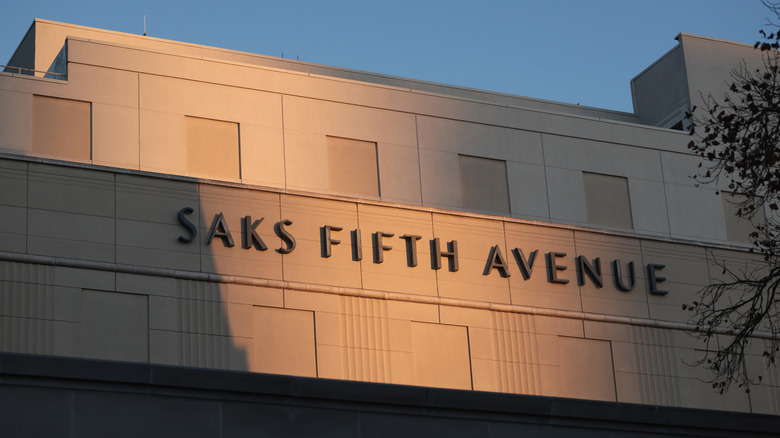
Opened in 1990, Café SFA was a full-service restaurant located on the 8th floor of the Saks Fifth Avenue flagship store in Manhattan. Along with shoppers and tourists, it was a popular spot for midtown business types. It featured a 154-seat dining room wrapped with wainscot paneling and gold-blotted walls and windows that offered an aerial view of the cityscape, remaining a fixture of the Saks Fifth experience until 2018.
The cafe debuted with a menu of about a half dozen salads, including a roasted duck salad and Oriental chicken salad, both considered inventive approaches to traditional department store dining for the time. Soup and sandwich pairings, various pan-Asian dishes, teas, and a considerate wine selection rounded out the offerings. By the 2010s, the appeal to a diverse and upscale clientele remained, with elevated lunch fare as the focus, demonstrated by new additions like seasonal fruit with curried chicken salad and grilled lamb topped with charred spring onion and romesco sauce.
Freds (Barneys New York)
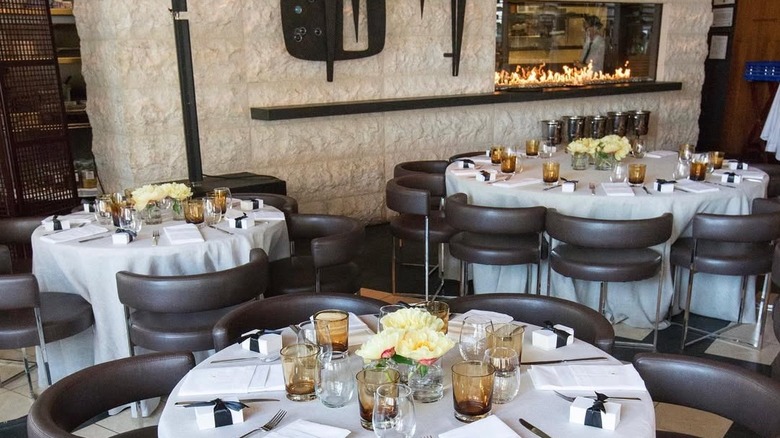
The iconic luxury department store Barneys needs no introduction. It was a New York City landmark for nearly 100 years, with locations nationwide, but in 2020, it closed all of its stores due to bankruptcy. Today, the Barneys spirit lives on as a department experience at Saks Fifth Avenue's flagship store. At its height, however, the place to be was Freds, the in-house restaurant where New York's fashionable elites dined. Freds existed for awhile before it took off. Initially, it was called "The Pub," but transitioned to Freds in 1996. Then, in 2001, it was relocated from the lower level to the ninth floor of Barney's Madison Avenue location.
Chef Mark Strausman, who had led the kitchen at Barney's through its transition to Freds, crafted a menu of elevated Italian dishes that you can still enjoy. In 2018, a tribute titled, "The Freds at Barneys New York Cookbook" was published. The book features many of the restaurant's famed favorites, like roasted halibut with Sicilian peperonata, potato latkes with tartare of smoked and fresh salmon, and "The Madison Salad," a hearty deluge of Italian tuna, beans, beets, and vegetables. Over the years, Barneys would bring Freds and Strausman's menu to its Chelsea, Beverly Hills, and Chicago locations prior to its closure.
Le Train Bleu (Bloomingdale's)
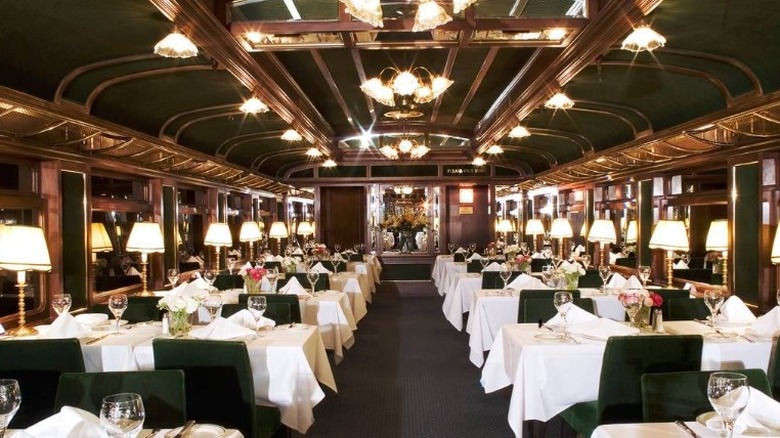
Le Train Bleu was an immersive restaurant located on the sixth-floor rooftop of Bloomingdale's flagship store in New York City, inspired by a famous French train that travelled between London, Paris, and the Riviera. Created in 1979, it offered a turn-of-the-century experience with a French touch, resembling a luxury train carriage that only those in the know could board. Hidden within the Bloomingdale's kitchenware department, a narrow staircase would transport you to a bygone era, where a blue-carpeted corridor with nostalgic flourishes led to Le Train Bleu.
Inside, enrobed in mahogany finishes, velvet walls, and dimly-lit vintage light fixtures, waiters dressed like conductors would serve diners. Windows offered a view of the 59th Street bridge, and a menu with a monogram logo offered fine dining fare, including entree salads and an array of grilled appetizers, along with steak and eggs, omelets, and grilled salmon, shrimp, or chicken with mixed salad for Sunday Brunch, served with a complimentary glass of champagne.
Others who experienced it report that the Louisiana crab cakes and signature Le Train Bleu hamburger covered in blue cheese deserve honorable mention. Sadly, after 37 years, the train departed the sixth floor in 2016. It's possible that Bloomingdale's little-known secret, ultimately, was too secretive to prove lucrative.
The Walnut Room (Macy's)
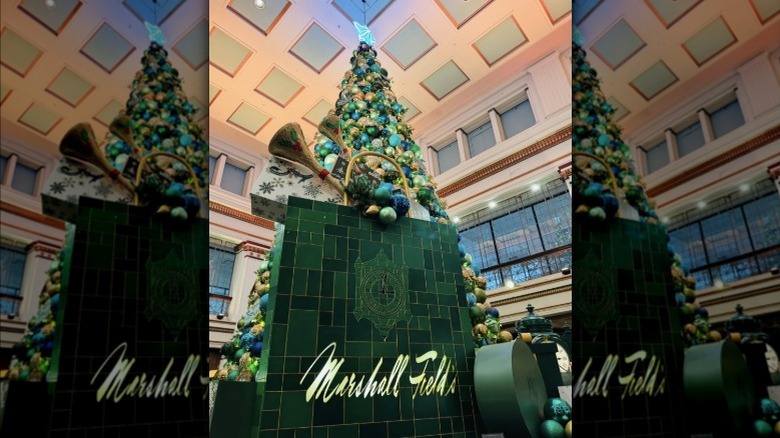
Chicago's The Walnut Room is the longest continuously-running department store restaurant in America. Opened in 1907 on the seventh floor of what used to be Chicago's legendary Marshall Fields, before it was changed to Macy's in 2006, it still retains many of its core historical elements, like Austrian crystal chandeliers and Circassian walnut paneling imported from Russia. In fact, that's where it got its name, though it was originally called the "South Grill Room." Suffice it to say, to dine here is to step back in time.
The dark wooden paneling makes it so that even electrical lights resemble candlelight. A decorative Victorian-style fountain sits at the center of the high-ceiling main room, surrounded by tables covered with pristine linens. During the holidays, the fountain is replaced with a 40-foot-high Christmas tree, which has been a local attraction since the early 1900s. The menu from 1948 was decidedly old-fashioned, featuring items like minced tongue with pickle and egg on white bread, chilled fresh fruits dressed with peppermint candy whipped cream, and other salads, soups, and sandwiches with a mid-century twist.
For the 2025 holiday season, in celebration of 118 years, Macy's decided to rechristen the restaurant, "The Marshall Field's Walnut Room." Today's menu includes the signature Walnut Room smashburger, a healthy selection of vegetarian and vegan options, desserts, and several of Field's favorites, like Mrs. Hering's 1890 Original Chicken Pot Pie, which seems worth trying for nostalgia's sake.
BG Restaurant (Bergdorf Goodman)
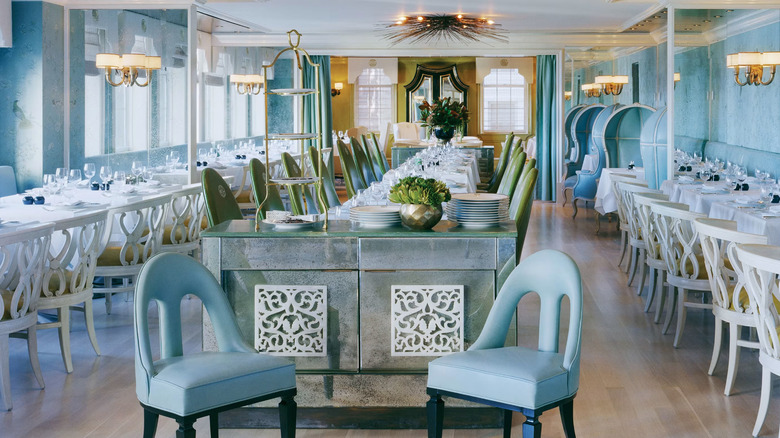
The fine dining experience of yesteryear is alive and well at the Bergdorf Goodman flagship store on New York's Fifth Avenue. There, you'll find several escapes from the allure of luxury consumerism: Goodman's Bar, Café Ginori, and BG Restaurant. At its main eatery, BG Restaurant, elegance is an understatement. Chinese-inspired wallpaper surrounds a posh pastel-colored setting with an intimate table arrangement under warm lighting, with sweeping views of the Grand Army Plaza, Central Park, and Upper Fifth Avenue. Simply put, it's one of the most fashionable eateries around the world.
The menu offers an international mix of gourmet options, including duck dumplings, double-stuffed ravioli, and a mezze plate with hummus, baba ganoush, and tzatziki. There's caviar russe ossetra, or caviar made from Russian sturgeon, vegetarian-friendly sides, an ample number of desserts, and several coffee styles. To take a trip down department store lane, with a contemporary touch, BG Restaurant is open Monday through Sunday from 11:30 a.m. to 6 p.m.
The Zodiac (Nieman-Marcus)
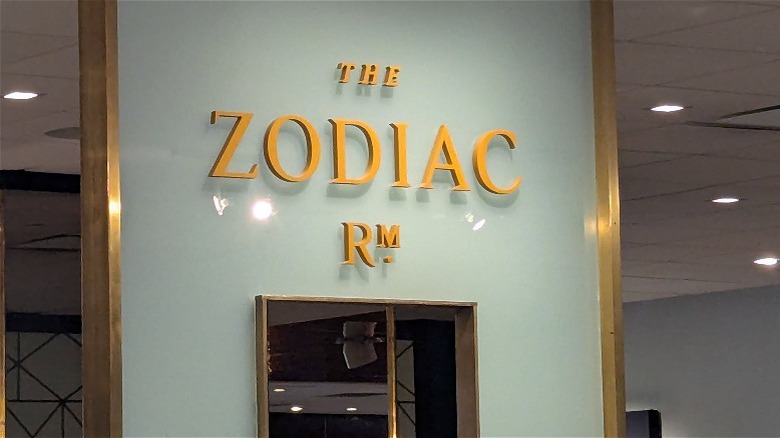
The Zodiac at Neiman Marcus's flagship store in Downtown Dallas has entranced the community for 71 years. Known for its complimentary popovers, which are light, bulbous rolls that resemble doughy popcorn, and are served with delectable strawberry butter, The Zodiac isn't just a Dallas landmark, it's a piece of American history. Locals considered it a fashionable restaurant and tea room when it first opened, with cerulean blue walls in the main dining area and terrace covered in zodiac signs, plush carpeting, and an Italian tile pool enlivened with water lilies.
Stanley Marcus, the co-founder of Neiman-Marcus, envisioned The Zodiac as a place that would attract more people to the downtown area. Customers could enjoy a bite and continue shopping while models in the latest, purchasable fashions walked around during luncheon. Marcus credits Helen Corbitt, the restaurant director, with establishing The Zodiac as a must-visit culinary destination.
Corbitt's curated luncheon entreés included Dutch oven chicken with orange butter-smeared pancakes and sour cream and onion-infused beef stroganoff. As a sign of the times, select menu sections were divided along gender lines — the zodiac slim-waisted luncheon for women, printed above the Neiman-Marcus men's luncheon. While the salads and sandwiches nearly filled the entire second page, leaving a small section for beverages at the bottom. Today's menu is appropriately genderless, with highlights like the NM Chicken Salad, the crowd-favorite Mandarin orange soufflé, and more. Even today, The Zodiac is one of the best department store restaurants.
Charleston Gardens (B. Altman and Company)
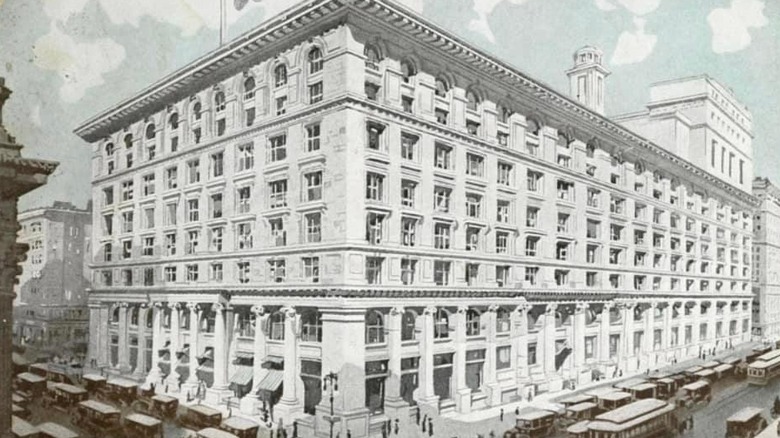
Charleston Gardens was the famed in-house restaurant located in the B. Altman and Company department store on 34th and Fifth Avenue in New York. The exact year it opened is unknown. Apparently, it was 25 years old when this 1980 New York Times article was published. However, the Johnson & Wales University Culinary Arts Museum contains a menu from 1943. What is etched in history, however, is the full-sized facade of a colonial-style Charleston house that comprised the decor, white columns and all painted with wilted Spanish moss.
A few menus can be found online aside from the 1943 one, though none have a date printed on them, except for one from 1976. The menu evolved from a simple one with three sections into an elaborate one with several pages. Oddly enough, the restaurant didn't offer sandwiches at first, but mostly à la carte bites like stuffed tomato with macaroni, tongue, and dill pickle, corned beef brisket, and Charleston Garden orange bread. A bakery with a wide variety of pastries appeared later on.
The restaurant managed to survive for at least half a century. Though, according to reviews, it had waned to a glimmer of its former self by the '80s. It must've been a hot spot at some point, no doubt, as First Lady Pat Nixon was known to dine there frequently with her daughters. B. Altman and Company's former Fifth Avenue location is now occupied by the CUNY Graduate Center.
Nordstrom Restaurants (Nordstrom)
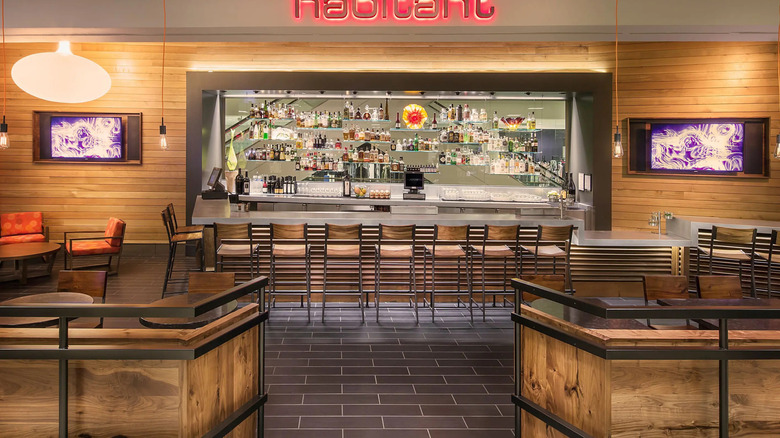
While it isn't uncommon for department stores to have multiple restaurant brands, Nordstrom has the most extensive restaurant empire, hands down. With over 188 restaurants, spread across a global total of 350-plus Nordstroms, Nordstrom Local, and Nordstrom Rack locations, its footprints are firmly planted in both retail and food industries. From coffee shops and bars to fast-casual eateries and fine dining lounges, there's something for every shopper's palate.
The first Nordstrom opened in 1901 as a quaint shoe shop called Wallin & Nordstrom on 4th Avenue in Seattle, Washington. It wasn't until 1980 that it ventured into the world of food, with the opening of its "Classic Cafe," a launchpad with a salad-heavy menu that later rebranded to "Marketplace Cafe." Today, Marketplace Cafe still exists, and salads still feature prominently on the menu, along with pizza, pasta, sandwiches, and more.
Those looking for a more refined experience will enjoy Ruscello, a well-reviewed full-service Mediterranean and Italian restaurant. Or you can stop by Habitant for signature Nordstrom cocktails in a casual setting. Visiting Hawaii? Grab a cone of all-natural sorbet at the Gelato Bar in Nordstrom Ala Moana. These are but a few of the department store restaurants that Nordstrom offers, and there are likely some near you.