

The Easy Test To Immediately Know If Your Spices And Herbs Are Expired
You likely go through seasonings like salt and pepper fairly quickly. But for more unique spices and dried herbs you may use for specific dishes, those little jars may sit on your spice rack or in your pantry for months, then years. When you're finally rummaging around for one of the more delicious, underrated seasonings like marjoram or Aleppo pepper, you may realize you have no idea how old yours are.
To see if your herbs and spices are still fresh and full of flavor, take a pinch and rub the seasoning between your fingers. When you go to smell that pinch, you should immediately get that seasoning's fragrant aromas. If you're not getting aromas or flavors, that spice is dead. You may even notice faded hues or clumping textures — other signs that the seasoning is past its prime.
Keep in mind that "expired" seasonings won't necessarily taste awful or make you sick the way other expired foods can. The expiration date on seasonings indicates they're past their freshness. Old seasonings past their prime just won't taste like much of anything anymore. Their aromas and flavors come from their essential oils, and those eventually evaporate. Without those, you're just adding bland powder or crushed leaves to your food — that's definitely not going to achieve the results you were hoping for.
How long seasonings should last with proper storage
In addition to the smell test, it's also helpful to know the maximum shelf life of different seasonings. Dried herbs can last in good condition for one to three years. For spices, ground ones last about the same, and whole spices can go as long as two to five years. Of course, this all depends on how you store them.
As with many other foods, moisture, light, heat, and air altogether are enemies of freshness. Light and heat accelerate the loss of the essential oils you need for flavor and aroma, while moisture and air can alter the texture of seasonings and cause them to become stale. So, make sure wherever you store your dried herbs and spices is a dry, cool spot out of direct light. Keep seasonings in airtight containers, such as their original jars or reuse mason jars with their lids for a farmhouse-chic look.
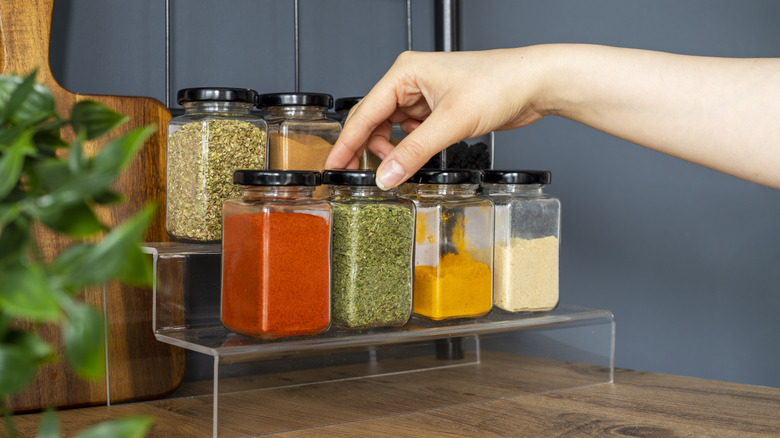
When it comes to organizing your spices and herbs, the most important tip is to keep everything as visible as possible. That way, you won't forget what you have and leave jars fading away in the back of some cabinet. Lay them flat, labels up, in a wide, shallow drawer right near where you cook. Hang a rack or shelves on a wall where things are easy to grab, but away from a window and the stove's heat and moisture. Or, use a lazy Susan to stay organized, displaying seasonings in an accessible cabinet.