

12 Retro Christmas Cookies That Deserve A Comeback
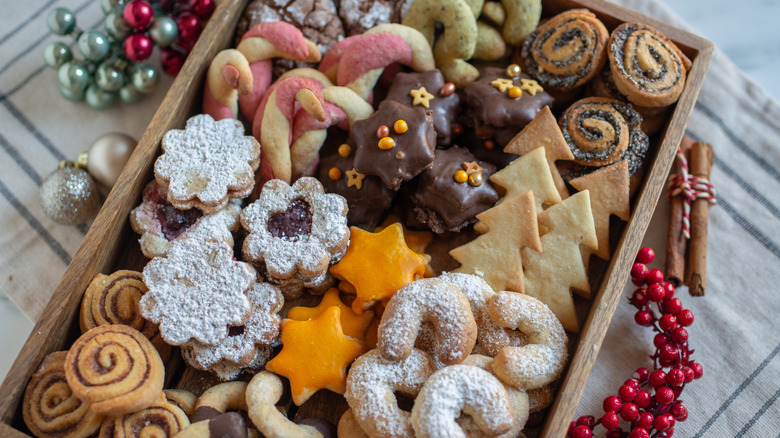
It's that time of year when cookies seem to fly out of the oven a mile a minute. Between office party potlucks and tins delivered to friends and neighbors, bakers put their cookie recipes to serious use during the month of December. And while the classics like chocolate chip, sugar cookies, and gingerbread never fail to please, when was the last time you dug farther back into your recipe collection and revisited Grandma's old-fashioned holiday favorites?
Many of the cookies that once dominated Christmas tables have quietly fallen out of rotation over the years. Some disappear due to changing tastebuds, while others are replaced by simpler and quicker recipes. However, these retro treats still hold up today, and many are just as flavorful and easy to make as the current crowd-pleasers. Some are far more visually impressive, too; the home bakers of the 20th century had a real knack for colorful glazes, molded shapes, and festive garnishes that instantly gave a holiday spread more sparkle.
These nostalgic Christmas cookies deserve another moment in the spotlight. Whether you're hoping to recreate the magic of childhood holidays or just want something new to add to your cookie swap, these recipes from Christmases long ago might become the start of a new family tradition.
Thumbprint cookies
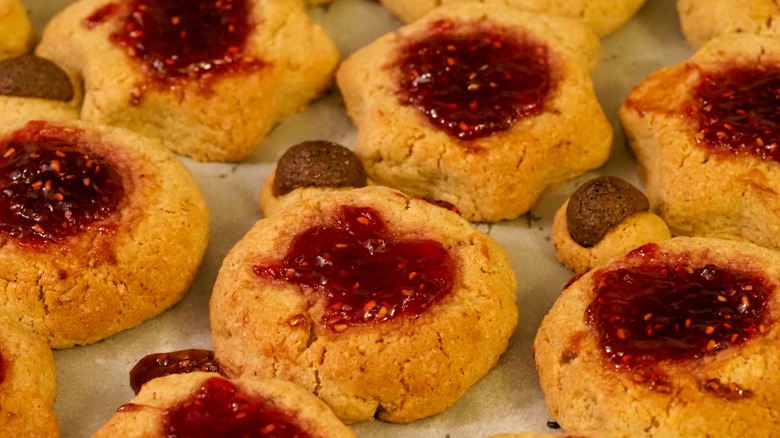
Thumbprint cookies, sometimes festively referred to as "Santa's Thumbprints," are one of those retro treats that never fully disappeared from holiday baking. The thumbprint method is simple: start with a soft, springy sugar cookie dough, roll it into small balls, and press your thumb into the center to create a little well. Some people even make two indents side by side for a heart shape. That dent is then filled with jam either before or after baking, depending on the texture you prefer.
These cookies date back to at least the mid-20th century; they appear in the "Heritage" section of Betty Crocker's classic "Cooky Book" from 1963, where the recipe calls for "thumb dents filled with sparkling jelly" and finely chopped nuts. Old-school recipes loved adding nuts to everything, necessary or not; back in the day, nuts were shelf-stable, easy to store, and considered an elevated addition for plain dough. Today, we'd usually consider them optional for recipes like this one.
The most traditional version of thumbprints features strawberry or raspberry jam, but the thumbprint technique is widely adaptable. At Tasting Table, we've experimented with flavors beyond the usual fruit fillings, including chocolate salted caramel thumbprints and even cannoli-inspired thumbprints.
Cholocate crinkles
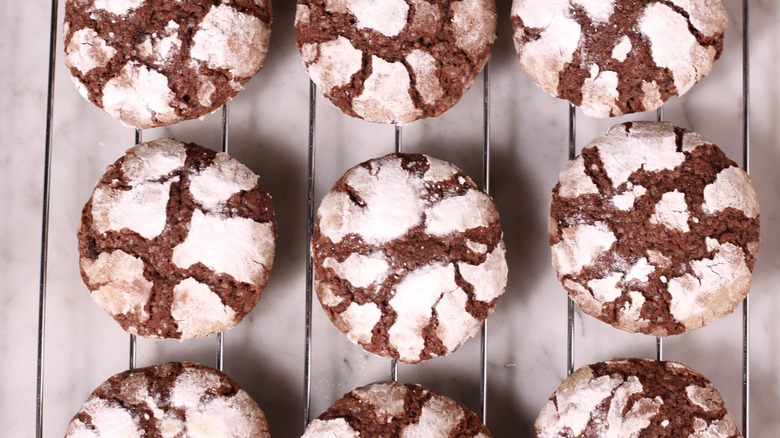
Chocolate crinkle cookies are a true grandma standard, and their wintry appearance is a big part of their holiday appeal. With their deep cocoa color peeking through a snowy blanket of powdered sugar, they look like they've been dusted with fresh snowflakes straight from a December morning.
A classic chocolate crinkle recipe starts with a chocolate dough (made with either melted chocolate or your finest cocoa powder) that needs several hours of chilling overnight. Once the dough is firm, you roll it into balls and toss each one generously in confectioners' sugar. As the cookies bake, the surface sets and splits, creating the signature cracked pattern — a sort of edible mosaic that forms all on its own.
There is one pitfall to watch out for: chocolate crinkles can become rock-hard if they're overbaked or spread too much. Even Betty Crocker warned bakers in the '60s, "Do not overbake!"A double-chill method can help prevent this: first, chill the dough after the initial mix to firm up the fats and develop flavor. Then, give the shaped dough balls a shorter second chill before they go into the oven. This keeps them from flattening out and ensures they stay soft, puffy, and chocolatey.
Church window cookies
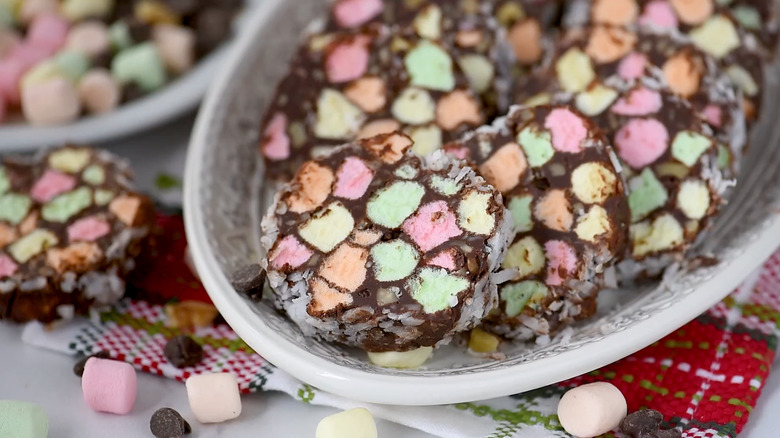
Church window cookies, sometimes known as cathedral cookies or stained-glass cookies, are one of the most visually striking retro chocolate treats out there. Their vibrant, jewel-like appearance made them especially popular in church cookbooks and potlucks, where the vaguely religious theme fit right in. Here's the real selling point: they don't require any baking at all, which makes it even more surprising that they ever fell out of fashion.
The "baking" process is quick and easy — start by melting butter with chocolate chips until you have a smooth, glossy mixture. Once it's cooled enough to handle but still pliable, fold in some pastel mini marshmallows — they have to be the colored ones if you want that true stained-glass effect — along with chopped walnuts, if you're in a nutty mood. The mixture is then shaped into a log, wrapped up, chilled until firm, and sliced into thick rounds that reveal the dazzling "windows" inside.
One of the best things about church window cookies is how customizable they are. Pecans, almonds, or dried fruit could all be tossed into the mixture, and rolling the outside in coconut flakes gives the finished slices a snowy, wintry look. They also freeze beautifully, meaning that you can make them literally months in advance — just slice off cookies whenever you're in need of a festive treat.
Rum balls
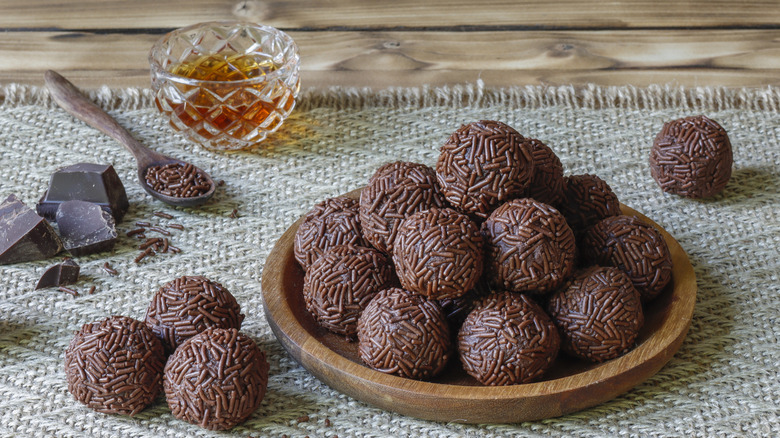
Rum balls go by many names around the world. In Britain, they're called rum truffles; in Denmark, they're known as "romkugler," where many claim they were first invented. They're very popular throughout Central Europe and the U.K., which might explain why they feel a bit old-fashioned in North America: they were most likely brought over by our ancestors ages ago.
These boozy treats are another no-bake favorite that can cleverly repurpose leftovers. Traditional rum balls start with leftover cake or stale biscuits, which are crumbled together with melted dark chocolate and rum. Once the mixture becomes thick and fudgy, it's rolled into bite-sized balls and coated in sprinkles, cocoa powder, or finely chopped nuts. American versions often replace leftover cake with crushed vanilla wafers, a shortcut that still delivers the same texture.
Rum balls are endlessly adaptable. Some recipes add dried fruit, glacé cherries, or nuts. Tasting Table's smoked orange rum ball recipe uses fresh orange zest for a festive, citrusy aroma. They freeze well when stored properly, and you can easily experiment with different spirits like spiced rum or Kentucky bourbon.
Because these treats aren't baked, the alcohol doesn't cook off, so keep them away from eager kids. In fact, the flavor gets stronger after a few days in the fridge, and soaking the nuts in rum beforehand makes them even more potent.
Spritz
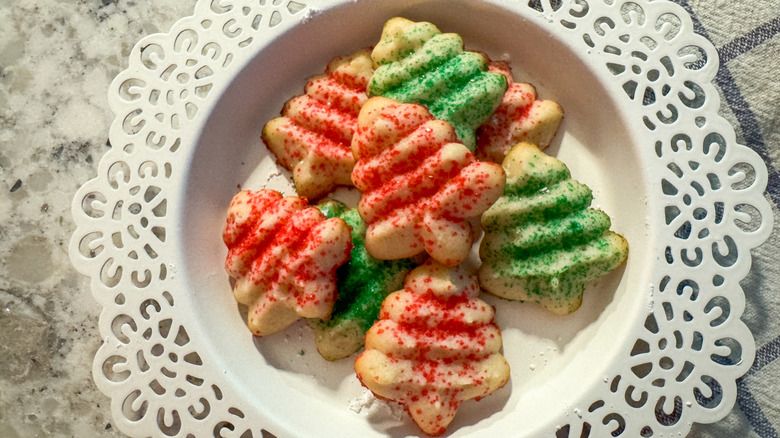
Spritz cookies are close cousins to shortbread, but their signature charm comes from their intricate shapes. Unlike shortbread, spritz cookies aren't rolled or cut but instead piped or pressed into detailed designs. That explains their name: the word "spritz" comes from the German "spritzen," meaning to spray or squirt, and these cookies are typically created by using a cookie press.
These cookie presses force the dough through patterned disks to create shapes like wreaths, trees, flowers, or stars. If you don't own a press, a sturdy piping bag fitted with large decorative tips can get the job done, though it requires a bit more muscle. Modern presses range from high-tech to simple, and once you find one you like, you can crank out dozens of spritzes in minutes.
The dough itself is a simple mix of flour, sugar, butter, and eggs blended into a soft dough that's easy to push through a narrow opening. Betty Crocker's classic versions include vanilla, chocolate, and even a buttered rum-glazed spritz, all showcasing the delicate texture and buttery richness that make these cookies a holiday staple.
Germany is often credited with inventing the cookie press, though some food historians argue that Scandinavia may have been the true origin point. Either way, spritz cookies have been delighting holiday bakers since at least the 16th century, making them a truly retro treat.
Berlinerkranser
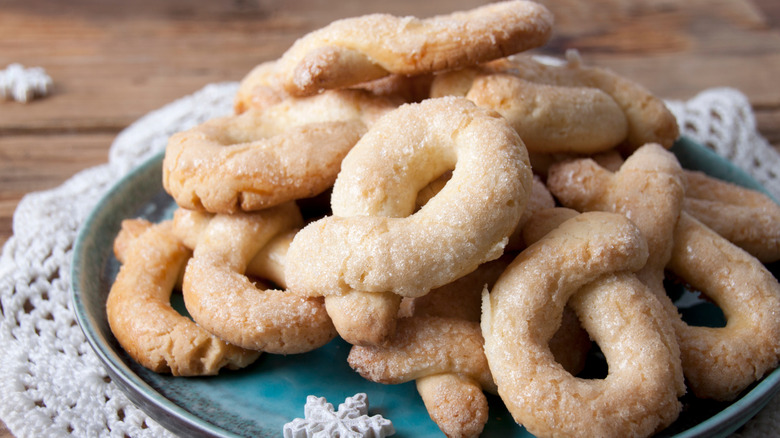
Berlinerkranser are another close relative of shortbread and spritzes, but instead of being pressed or piped, these cookies are shaped into twists that resemble tiny wreaths. Translated as "Berlin wreaths," berlinerkranser are thought to have originated with a Berlin baker in the 17th century. Over time, though, Berlinerkranser became most strongly associated with Norway. Here, they're included in the traditional "syv slags kaker," or the "seven kinds of Christmas cookies," baked every holiday season.
Traditionally, these cookies are made using both raw egg yolks and hard-boiled yolks, a technique that gives the dough a tender, sandy texture. The leftover egg whites can be used to whip up meringues, which might be another retro dessert worth revisiting. The dough is then rolled into long, pencil-thin ropes and gently crossed into a loop. The trick is getting the texture just right: the dough needs to be soft and pliable enough to bend without cracking, yet firm enough to hold its shape in the oven.
Betty Crocker's 1963 version uses a slightly different method, using only egg whites and decorating the finished cookies with red and green candies to emphasize their festive wreath-like appearance. Ultimately, it's up to you whether to use leftover yolks or whites and how to decorate your little festive wreaths.
Sand tarts
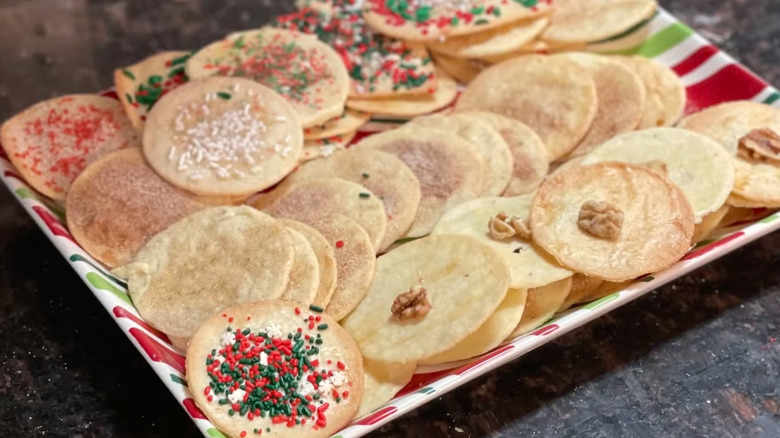
Sand tarts are one of those cookies whose name doesn't sound particularly appetizing at first, but for many, they evoke warm memories of childhood Christmases. The term can actually refer to a few different cookies depending on where you grew up, but they're all considered holiday favorites.
For those raised around the Pennsylvania Dutch, sand tarts are ultra-thin sugar cookies, often shaped into candy canes, wreaths, and other festive designs. They stand out because they don't use any leavening agents like baking soda or powder, which keeps them flat and crisp instead of puffy. The result is a delicate, crunchy cookie with a simple, buttery sweetness that pairs well with a cup of hot cocoa or coffee.
In other regions, sand tarts take a slightly different form. In Norway, "sandkaker," or "sand cookies," are made with almonds and pressed into small tins to create an intricate pattern. In Sweden, a similar cookie called "sandbakelser" often includes nuts as well, giving the cookies a richer texture. Whether you bake the PA Dutch crispy cookies or the nuttier Scandinavian variation, sand tarts are often a charming reminder of old-fashioned holiday baking.
Date-nut pinwheels
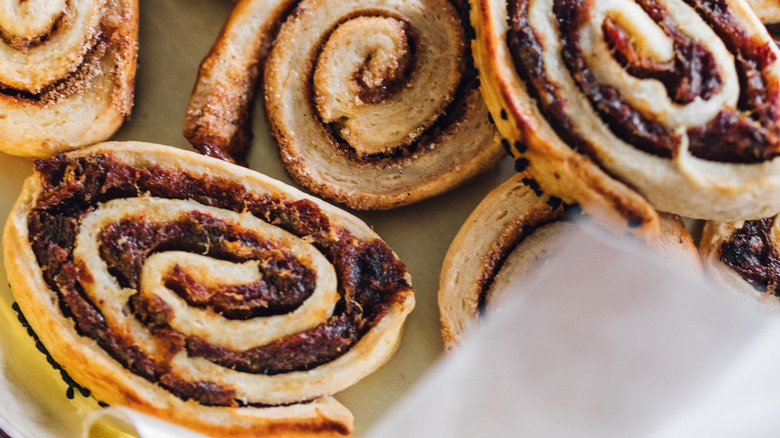
Warm, nutty, and whimsically shaped, date-nut pinwheels are a perfect addition to any holiday cookie spread. They're a type of icebox cookie (also known as refrigerator or slice-and-bake cookies), meaning the dough is prepared in advance, chilled, and then sliced and baked as needed. The icebox method was revolutionary for homemakers using early "iceboxes," the old-fashioned term for refrigerators. Chilling the dough solidifies the fats and intensifies the flavors, which is ideal for these cookies' rich filling of finely chopped dates and nuts.
Pinwheels are also a visually striking holiday choice, with their elegant spiral pattern adding charm to any cookie platter. Grandmas loved them because they could be made ahead of time: Betty Crocker notes they can be refrigerated for three to four days, or frozen for longer storage. To freeze icebox cookies, wrap them first in plastic wrap and then in aluminum foil for best results.
Dates were a particularly popular ingredient in mid-century baking, appearing frequently in Betty Crocker's 1963 cookbook. Their rise in American kitchens can be traced back to the 1940s, when dates were used to offset sugar rationing during World War II, inspiring a wave of new dessert recipes. For a cookie that's both nostalgic and delicious, date-nut pinwheels are an old-fashioned treat that still shines today.
Mincemeat hermits
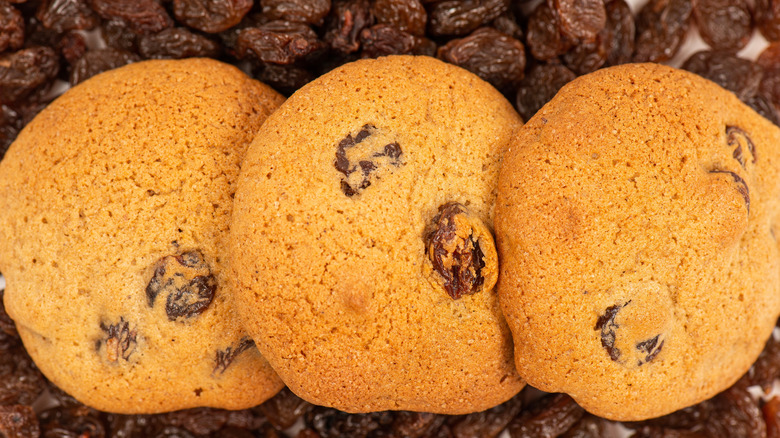
For many Americans, the name "mincemeat hermits" might sound like a creature from a fantasy novel, but these are very much cookies. The name might raise another question: is there actually meat in mincemeat? Thankfully, the answer today is no. In the 1700s, mincemeat sometimes contained meat preserved with spices, dried fruit, and alcohol, but modern versions have left the "meat" part in the past.
Today's mincemeat is essentially a mixture of dried fruits, warm spices, and a splash of brandy or rum. It's especially popular in Britain during the holidays, where jars of the stuff show up grocery shelves every winter. In the United States, though, mincemeat has largely faded from the mainstream, which is part of what makes these cookies feel so charmingly old-fashioned.
Hermits, on the other hand, are a New England invention: these are soft, spicy drop cookies dotted with raisins or other dried fruit. Betty Crocker notes that hermits date back to the 1880s and likely originated in Cape Cod, making them a truly vintage style of cookie. With a delightfully spicy, nostalgic flavor, mincemeat hermits are far tastier than its name might suggest.
Pfeffernüsse
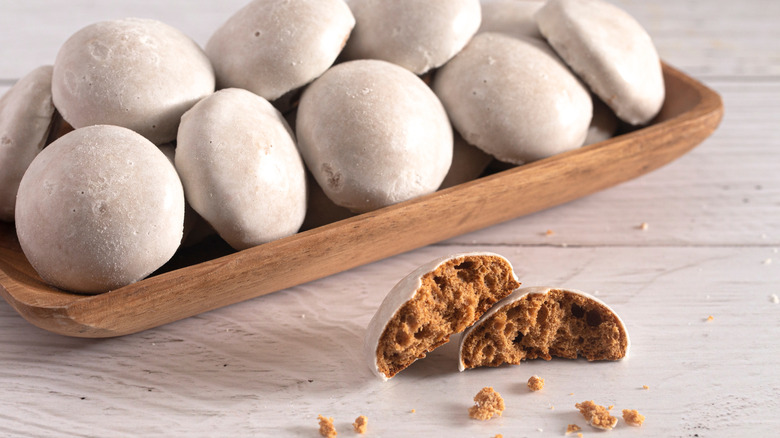
A traditional German cookie, Pfeffernüsse are a holiday staple across several European countries, including the Netherlands, Belgium, Denmark, and of course, Germany. While they might not be a household name in the U.S. today, they were once popular enough for Betty Crocker to feature both light and dark versions (the latter made with molasses) in her 1963 cookbook.
Pfeffernüsse are a type of Lebkuchen, a German gingerbread-style cookie most commonly eaten during Advent and Christmas. Recipes vary widely and can result in different textures — from dense and chewy to light and crunchy — but nearly all versions feature warm, aromatic holiday spices. Despite the name translating to "pepper nuts," early recipes didn't actually include pepper. In the Middle Ages, many exotic spices were grouped under the catch-all term "Pfeffer," which is how this cookie got its name.
The "nut" part of the name doesn't really point to an ingredient, either. Early Pfeffernüsse were hard — nearly nut-like in texture — and roughly the size of a walnut.Today, there are countless modern and regional interpretations of this classic cookie, so you can choose whichever version best suits your taste.
Wine cookies
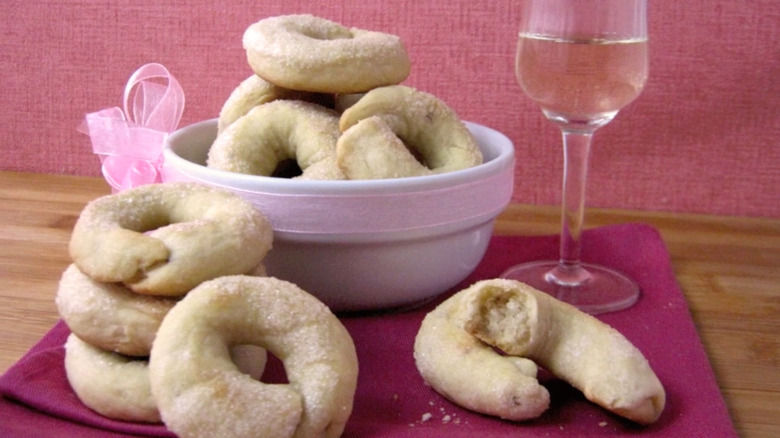
Wine cookies, also known as "ciambelline al vino," are a traditional Italian cookie made with just a few simple ingredients: flour, sugar, wine, oil, and yeast. This simple dough is shaped into rings and tossed in sugar before baking, giving them a crispy texture and a lightly caramelized exterior.
In Italian, "ciambelline" translates to "small donuts," named after their distinctive ring shape. Although they're often given as gifts during the Christmas season, they're a year-round staple in some bakeries in central Italy. They also keep well for several days when stored properly and happen to be naturally vegan, since they contain no dairy or eggs.
Ciambelline can be made with either red or white wine, each lending a slightly different flavor and color depending on your choice. Some variations even include a splash of sambuca to give it a hint of anise. While the wine provides flavor and aroma, the alcohol itself evaporates while baking, so these crisp, festive cookies are perfectly family-friendly.
Molasses jumbles
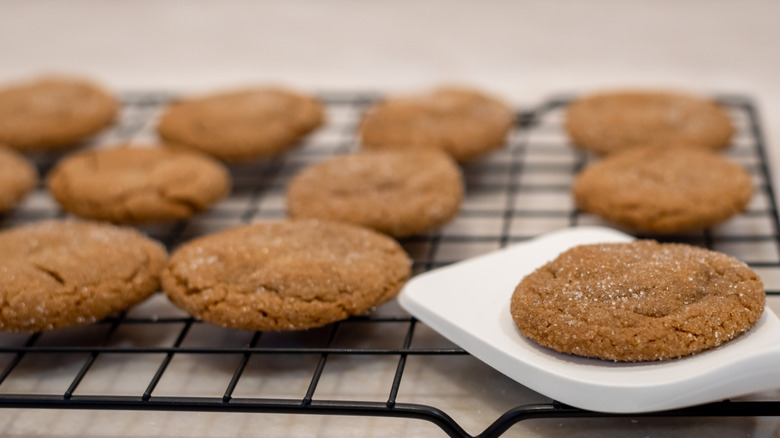
"Jumbles" is one of those old-fashioned baking terms that has mostly slipped out of modern vocabulary, but back in the olden days, they were everywhere. According to Betty Crocker, molasses jumbles were especially beloved in the 1890s, and nearly every household and community had its own take. There were jubilee jumbles, Philadelphia jumbles, coconut jumbles, and even wine jumbles. Many of these traditional recipes skip eggs entirely, which makes them an appealing option for bakers with limited ingredients.
Molasses jumbles also had a moment of renewed popularity during World War II, when sugar, butter, and eggs were heavily rationed. Because they rely on molasses for both sweetness and moisture, they were an economical choice that still packed a lot of flavor. Betty Crocker's recipe card even includes a bit of poetic encouragement: "They're easy on the budget... their molasses flavor's grand. These soft, delicious cookies are best in all the land."
With great texture and cozy flavors, molasses jumbles deserve a return to the holiday cookie plate — not just for nostalgia's sake, but because they've stood the test of time as a delectable treat.