

How To Save Your Tomato Seeds For Next Year's Garden
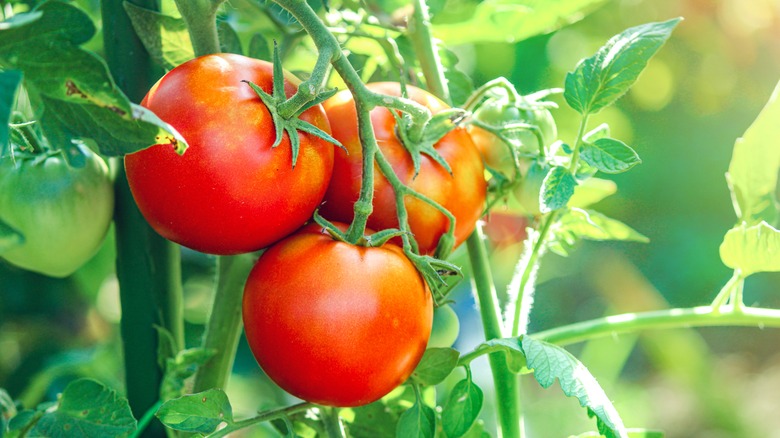
Growing your own vegetables can be a very rewarding experience, from seeing the first seedling emerge to nurturing the plants and (if you're lucky) enjoying your own produce come harvest time. The satisfaction from eating homegrown tomatoes rather than store bought can't be underestimated. Once you've had your first crop of tomatoes, you'll no longer need to buy seeds again, which is why growing your own tomatoes can be cheaper in the long run. Every seed has the potential to grow into a new plant, so the contents of a single tomato could fill even a beginner vegetable garden.
The process starts by selecting a tomato or two. Choose the best-looking and -tasting fruit, as these are the genes you want to preserve — the riper the better. Scoop out the seeds, and add them to a glass jar, followed by just enough water to cover them. Top the jar with cheesecloth to keep out dust.
This is going to sit for three to four days for what's known as fermentation. This helps to remove the clear gel sac around the seeds that prevents them from sprouting. After this time, remove the mold that forms during fermentation, and rinse the seeds until there's no pulp remaining. Place the clean seeds on a plate to dry before transferring them to envelopes or airtight containers for storage. It's important that the seeds are completely dry at this point, as any remaining moisture can cause them to germinate.
Give your tomato seeds the best chance of future germination
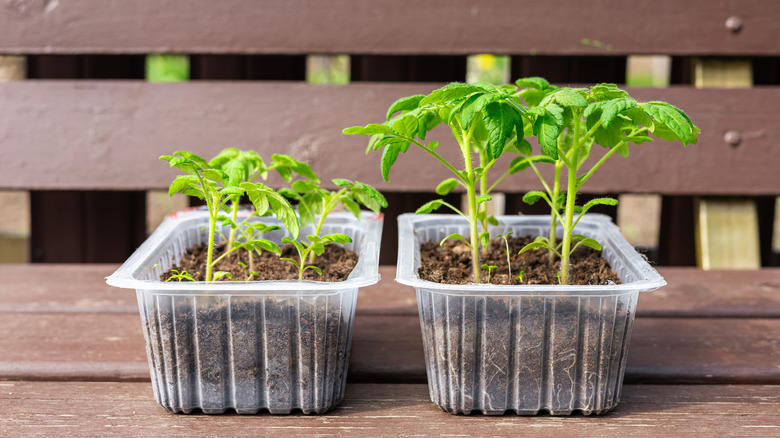
Any gardener will know that nature isn't always predictable, so it's important to give your tomato seeds the best chance of growing the following year. Part of it will come down to what kinds of tomatoes you have. Heirloom tomatoes, or open pollinated tomatoes, will produce the best results and can be grown again and again. Hybrid tomatoes, on the other hand, don't grow true to type. This means that while it's possible to save and replant the seeds, you won't get the same variety you started with. You could risk it on the chance you get a good-tasting tomato, but hybrids often revert to smaller, low-yield plants with less-tasty fruit.
Some people suggest that the fermentation step isn't necessary and that the seeds can be dried with the gel coating intact. While it's true that seeds dried this way can still grow, fermented seeds germinate more consistently. The fermentation process can also help to kill off harmful bacteria and fungi that lead to diseases.
If you've stored your seeds correctly, they can last up to six years, but you'll have the best chance of germination in the first three years. This is why it's vital that you add the date of harvest when saving seeds for recultivation. If you ever want to check the viability of the seeds, add 10 to 12 seeds to a moist paper towel, and place it in a plastic bag. After a week, you should start to see sprouts emerge, meaning the seeds are still good to grow.