

The Lettuce You Can Grow Indoors For Fresh Salads All Winter
We may receive a commission on purchases made from links.
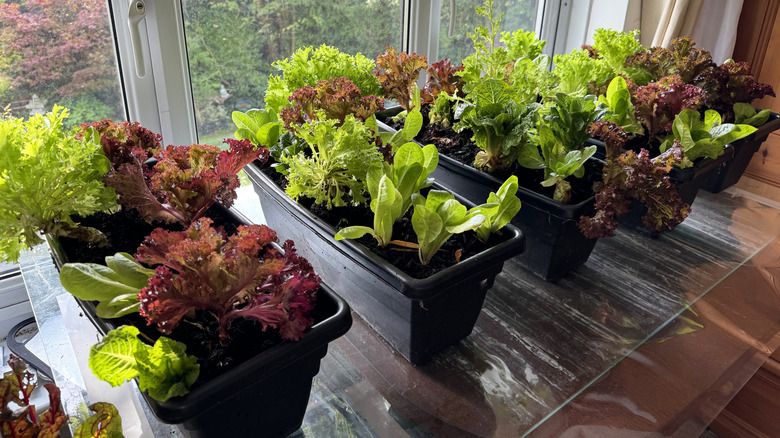
When the trees shed their leaves and the bright greens of summer fade to dull browns, the world takes on a certain persistent bleakness. These long dormant periods between growing seasons were always very difficult for me, and nothing soothed the soul like a planter full of plants in the window. Each winter I would set up a wire shelving unit against a south-facing glass door and fill the shelves with lettuces, herbs, scallions, and all manner of winter vegetables well-suited to indoor growing. In our industrialized modern age, we no longer suffer an absence of fresh produce in the winter months, but there really is nothing like growing it yourself.
If you want your little indoor garden to produce as well as it can, it's important that you plant the right types of plants. When it comes to lettuce, the best results come from the loose-leaf or low-light/temperature varieties. Seeing a bit of green growth each day lifts your spirits in a way that is hard to describe, and a salad made with fresh lettuce out of your miniature winter garden will always taste better than anything you buy at the store. The produce aisle has already taught you a bit about the different types of lettuces, though perhaps not enough to prepare you for the multitude of options you will find when you first crack a seed catalog in preparation for planting your indoor winter garden. Worry not, though; really, you can divide lettuces into two groups: leaf lettuces and head lettuces.
Leaf lettuce versus head lettuce
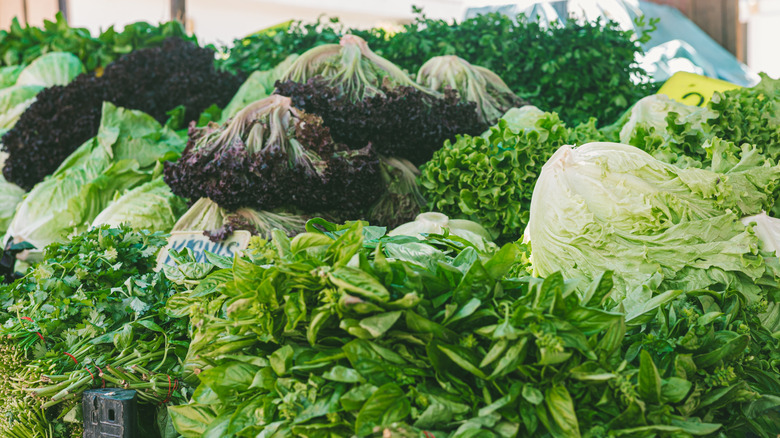
The major difference between leaf lettuces and head lettuces is the shape of the mature plant. Head lettuces are types like iceberg and romaine, varieties where the mature plant features a head of tightly packed leaves. Head lettuces are intended to be grown to maturity, and then that dense head is chopped off and sent to market in one piece, as you will recognize from the tightly wrapped iceberg lettuce heads in the produce aisle.
Leaf lettuces, on the other hand, grow more loosely. As you know, the green and red leaf lettuce you buy at the store opens up much more readily than the heads of iceberg or romaine. This relaxed growth pattern that you find in varieties like Baby Oakleaf, Black-Seeded Simpson, and Lolla Rosso makes it easy to take a few leaves off of a plant when you are making a salad or a sandwich, while leaving the rest intact to keep right on growing. With your little garden, you'll have much better luck taking a few leaves here and there, rather than expecting to grow a row of iceberg lettuce heads.
Perhaps the best move, and my personal favorite when I plant my winter salad garden, is to buy mesclun mix seeds. These little paper packets are filled with a variety of seeds meant to grow quickly and be harvested young and tender, making them perfect for the difficult conditions of an off-season indoor grow. For example, these TKE Farms Mesclun Mix Seed Packs contain several lettuces, as well as spinach, chard, and arugula, giving you a wide variety of tender greens all from the same planter.
Other factors to think about with your winter salad garden

Growing vegetables in the winter is not the easiest task. Being indoors, you won't have to worry about the temperature, but your plants will still be affected by the short days and low-angle sun. Depending on where you live, this can mean that growth will be quite slow. If you are in it mostly for the joy of seeing fresh green plants through the dark part of the year, that may be fine. But if you want to maximize the output of this winter garden, you may need to take some additional action, like adding a grow lamp over your garden. Lettuce likes full sun, so the few hours of dreary, cloudy light that it gets from your kitchen window in the heart of winter might not cut it. Running a grow lamp is a real pro tip for your countertop kitchen garden, as it will vastly improve the rates of growth.
Along those same lines, while you certainly shouldn't feel that you need to limit your winter kitchen garden to just lettuce, you should stick to compact and fast-growing vegetables. Things like green onions, radishes, and bok choy all fit well into this plan, as do herbs like parsley, basil, dill, and cilantro. If it is starting to sound like a lot of work to fill planters with potting soil, germinate the seeds, and hang a grow lamp above it all, you can always just buy an indoor garden kit to make things simpler. Whether you build the garden yourself or just grab a plug-and-play hydroponic version at the store, those little green leaves are sure to bring a zephyr of summer brightness to the darkest days of the year.