

11 Additions That Take Gravy From Basic To Brilliant, According To A Chef
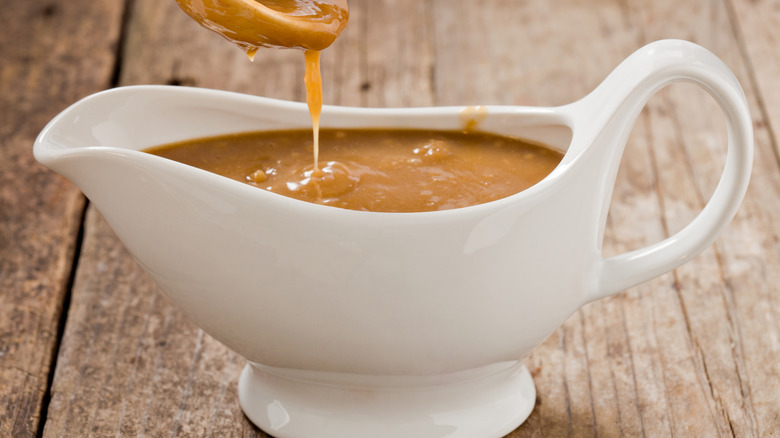
Culinary schools invest a lot of time in teaching future cooks and chefs about sauces because they're at the heart of fine cuisine. A good sauce moistens the food and (as every restaurant chef knows) can even make the plate look more beautiful. That doesn't mean you need to go through the same kind of learning process if you want to make good sauces at home. Forget about memorizing the five mother sauces and similar details, unless you just want to geek out. You can not only get by, but enjoy a reputation as a really good cook, if you learn to make a simple pan sauce and master gravy. Yup, that's right. Plain ol' gravy, which is as versatile and tasty a sauce as anyone could want.
I speak from experience when I say this. Aside from being a longtime home cook, I'm also a trained chef (career change!) and former restaurateur. I've made gravy in batches ranging from just 1 cup (at home) to 20 gallons (at work), and I've learned a few tricks along the way. Here are 10 of my favorites, ranging from traditional to unorthodox.
Start your gravy with mirepoix
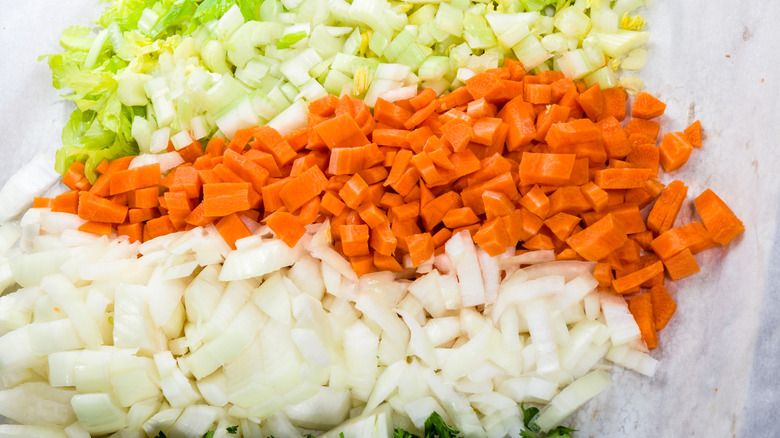
I'm going to lead off with a bit of that culinary-school training I spoke about a moment ago. If you watch cooking shows, you'll know that professionals often speak of something called mirepoix. It's a French thing, a mixture of onions, celery, and carrots (two parts onion to one each of carrot and celery) that's used to provide a savory base of flavor for other foods. You've probably seen it used on cooking shows, along with similar preparations like Italy's soffritto (similar to mirepoix, but different) and Louisiana's cherished "holy trinity."
To be clear, you're not going to drop this into your gravy; it's a preliminary step. If you're making a roast, or cooking a chicken or turkey, you'd put the mirepoix under the roast where it can brown a bit and trade flavors with the drippings (you can also roast it separately). If you're making your gravy from stock you prepared in advance, or store-bought broth, chop it small and simmer it in the stock (if you roast it first on its own, you'll get a deeper, more caramelized flavor).
In a pinch, mince the ingredients finely and saute them in a skillet until golden, then make the roux, assemble the gravy, and let it simmer at a low temperature for 10 to 15 minutes. Strain out the mirepoix before serving.
Try adding a hint of garlic
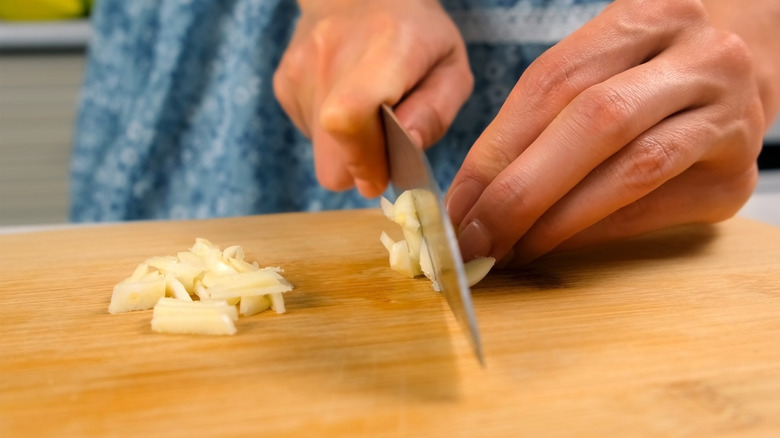
Garlic is one of the world's most universal flavorings, alongside its oniony cousins. You'd be hard-pressed to name a major cuisine where it's not loved, and (by the same token) there aren't many savory foods it can't enhance.
That makes it a slam-dunk addition when you're making gravy — whether that's beef, lamb, chicken, pork, turkey, or sausage. It's hard to go wrong by adding at least a whiff of garlic. You don't need to overthink it. Fresh, roasted, powdered, or granulated, they're all good. It's just a matter of how assertive a flavor you want in your gravy. It honestly doesn't take much, even a pinch lends a subtle savoriness. Just rubbing the pan with a sliced garlic clove can lend a hint of flavor.
The thing to remember is that garlic is easily burned, and that once it burns, it has a really unpleasant flavor. If you're using fresh garlic, add it to the pan no more than a minute before the liquids, and stir it frequently. With garlic powder or granulated garlic, add them after the liquids. And please, don't be ashamed of using garlic powder if that's what you've got. I grow my own fresh garlic, but I still use the powder as well (it doesn't deserve its bad reputation).
Enliven your gravy with a few drops of Worcestershire sauce
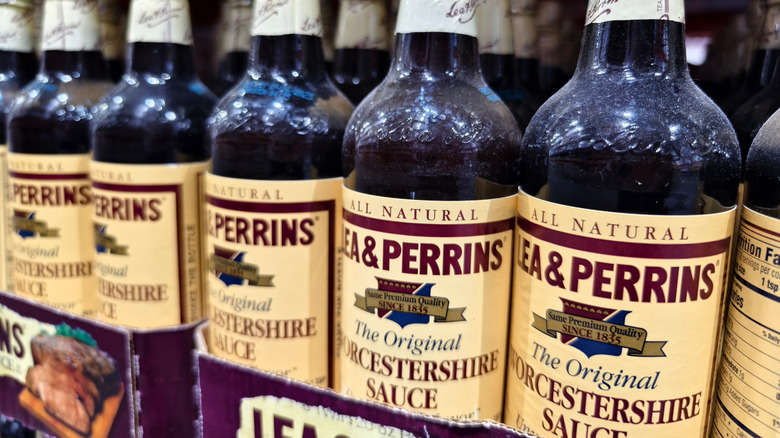
It's a common thing in cooking to taste a dish, or a sauce, or your gravy, and say to yourself, "It needs something, but I'm not sure what." Chefs learn in culinary school to play with things like acidity, peppery heat, or ingredients that pack a lot of umami (savoriness).
I tend to lean on Worcestershire sauce in those moments, because it brings all three of those elements to your gravy. At its heart, it's a fish sauce, which brings a lot of umami; it also has lots of tang from tamarind and vinegar, and that slight peppery bite that makes it essential in a Bloody Mary.
So if you keep a bottle on hand for cocktails, you're missing a bet if you don't give it some serious love in your kitchen as well. It's just what you need to brighten the flavors and cut the richness of your gravy, and Worcestershire in soups, stews, and other sauces works equally well as a "secret ingredient." It's elevated flavors in a bottle.
Flavor and brown your gravy with soy sauce
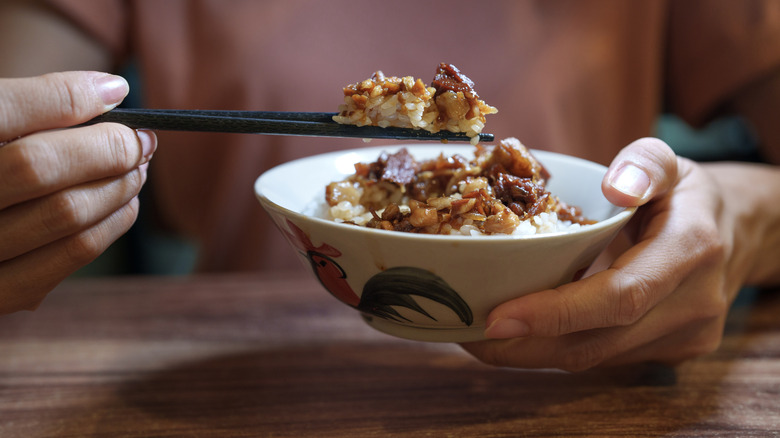
When I grew up and moved out of my parents' home, I was quite surprised to learn that most other people thought of soy sauce as purely a Chinese-restaurant thing. They dribbled a bit on their rice, and that was pretty much the only reason they kept it on hand.
It was different for me, because my father (who was renowned among our family and friends for his gravy-making) used soy sauce liberally as a flavoring, often along with Worcestershire sauce. As a kid, I didn't understand why it made his gravy so good; I just knew that it was good. Now, with decades of cooking under my belt, I get it. Soy sauce is what we now think of as an "umami bomb," making foods more savory.
It also acts as a browning agent, darkening your gravy gradually from the lightest beige to a deep brown, depending on how much you use and which type of soy sauce you've got. I personally favor the Chinese-made Pearl River Bridge, which scored well in our soy sauce ratings, over the lighter Japanese style, but you do you.
Enrich your gravy with cream

There are a lot of reasons why restaurant foods taste better, from the chef's skill to the actual physical decor of the dining room. One of them, to be blunt, is that we're a lot heavier-handed when it comes to seasoning and adding richness. And that's fair, because eating out is (or at least, often can be) a special occasion. It wouldn't necessarily be healthy for you to consume restaurant-grade levels of fat and sodium every day, but once in a while, as a treat? Why not!
That's why chefs use so much butter, and we also lean a lot on heavy cream. You may think of it primarily as whipping cream, but it brings richness to many sauces in the classic repertoire, and it works just as well when you want a rich, smooth gravy for chicken or a roast.
This isn't a complicated thing. Once your gravy has thickened up, add a dollop of heavy cream to it. If your gravy is already good, cream will take it over the top. If your gravy is kinda meh, cream will enrich it. This is really helpful if your drippings (or broth, or stock) don't have as much body and natural richness as you'd like (and it's more elegant than adding gelatin). It's worth noting that cream will mute the gravy's flavor, so you may need to tweak the seasoning (but for the same reason, it's a good way to tone things down if you've overseasoned your gravy).
Elevate your gravy with herbs
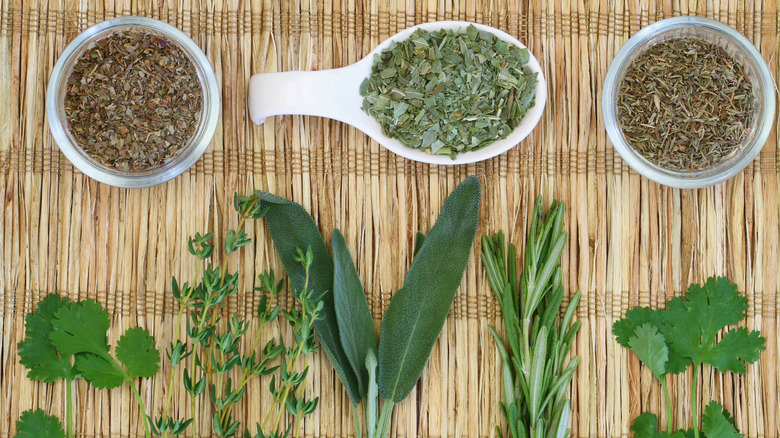
If you're already a pretty good cook and make perfectly acceptable gravy, congratulations! It's a fundamental skill to have in your back pocket, and it'll help you turn out a lot of good meals over the years. But if you're not happy with "acceptable" and want to elevate your gravy game, herbs offer a quick and easy way to do that. I have a garden full of fresh herbs as well as dried ones in jars, but you don't need a garden. Fresh herbs from the supermarket work pretty well, too, and usually come in big enough bunches that you'll have leftovers to experiment with. If you don't have fresh herbs on hand, the dried ones are also a perfectly good option as long as they're not old and tired.
Any decent list of herbs and their uses will serve as a good starting point, but mostly it's about trying things to find what works with both a given meat and your own personal taste. Thyme is pretty universal and goes with most things. Rosemary lends gravy a bold flavor that works equally well with beef, pork, turkey, or chicken (use it sparingly, though). Sage or oregano works with poultry. So experiment and have fun, but try things first on your own before you risk serving them to guests.
Use a splash of dry sherry
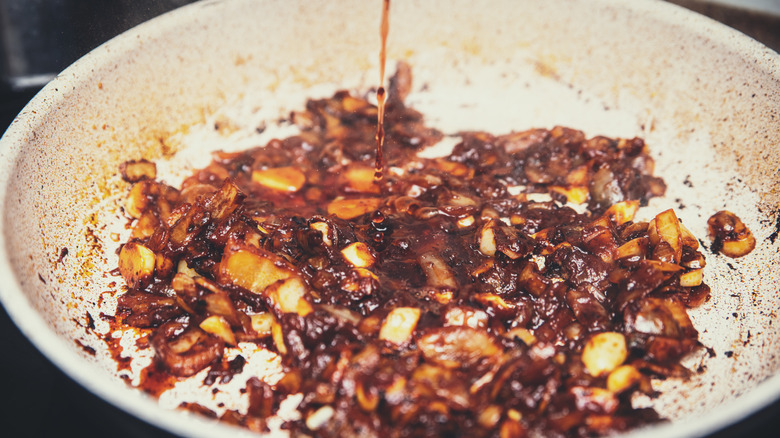
I'm a big reader, so as a young man, my context for sherry mostly consisted of elderly ladies in vintage novels, sipping sherry from small glasses while trading gossip, making cutting remarks, or solving the occasional murder. As an adult, I know it as a unique and much-loved fortified wine, and as a chef, I think of it as an under-appreciated cooking ingredient.
Sherry isn't something you'll find in every kitchen, but it's a really good and useful ingredient. It's the kind of "secret ingredient" that will separate your cooking from everyone else's. There's a whole vocabulary for the different kinds of sherry, but for kitchen use, just pick up something inexpensive that says "dry sherry" on the bottle. Adding a splash brings lots of subtle flavor and complexity to your gravy, especially if you boil it down first to concentrate it.
Sherry lasts pretty well after it's opened, but if you're not a drinker, you can just look for a bottle of cooking sherry at your supermarket. It's a lower-grade sherry wine with salt added, both as a preservative and a deterrent to drinking it (ugh!). It'll last a long time in your pantry, but you'll need to be careful not to over-salt your gravy afterwards.
Dial things up with a flavor-appropriate concentrate
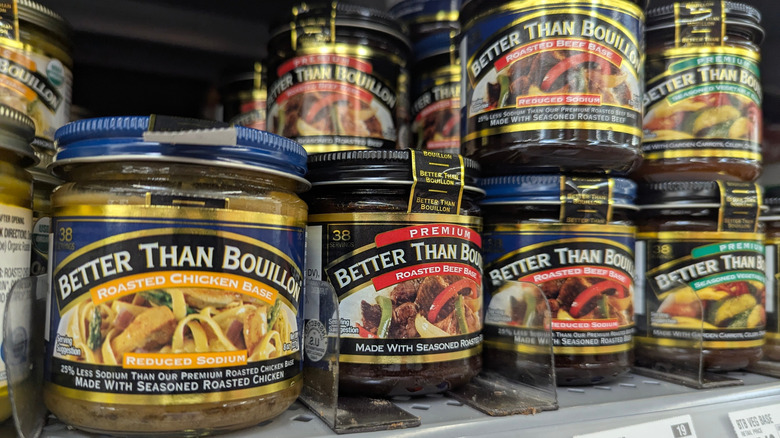
For a lot of people, gravy is the best part of a meal. So for those times when you don't have enough drippings from the meal to make a decent batch, when the broth you're using lacks flavor, or when you just plain don't have any stock or broth on hand to make gravy with, you need a backup plan.
For those occasions, I like to keep a jar or two of concentrate in my fridge. They're basically just broth, cooked all the way down to a thick paste, which concentrates the flavors (the French call this a "glace"). And yes, you can do this at home for yourself if you want to, but it takes time, so it's not something you'll do on the fly while putting a weeknight meal on the table.
My personal go-to is Better Than Bouillon, because for me it hits a sweet spot of availability, price, and quality; but other brands, ranging from More Than Gourmet to big-name supermarket brands like Knorr, all make similar products. They're a good way to punch up your gravy in a hurry, and once they're on hand, you'll have lots of creative ways to use them. If you don't want to stock multiple flavors, I'd suggest getting the vegetable kind because it adds a non-specific savoriness that can work with any meat flavor.
Improvise roasted flavors from stock, rather than the meat
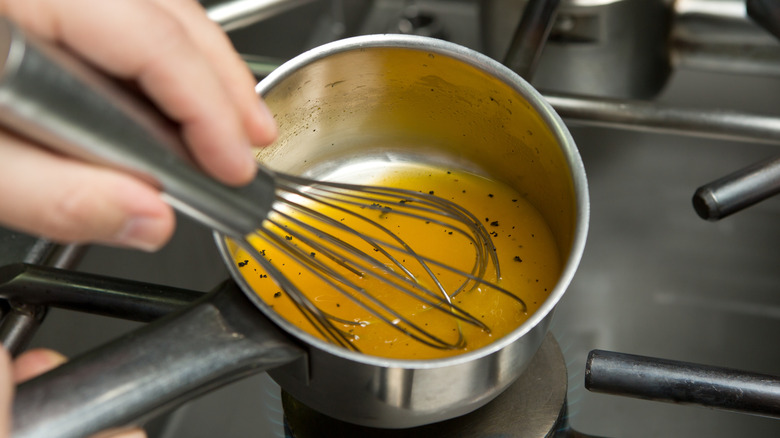
The complex roasted flavors you get from a good roast or bird add a lot to any gravy. Not only do they give you deeper, richer flavors and aromas, but those drippings will also help color your gravy naturally. It works even if, say, you roast a carcass or a batch of soup bones separately, and use that to make the broth that will eventually become your gravy.
But all of that requires some forethought and planning, and even as a former chef, I often don't have the opportunity to do that. But my late wife (herself a chef's daughter) taught me a technique that can create those flavors with whatever broth or stock you have, even if it's store-bought. It couldn't be simpler: Just spoon a small amount of the broth into a hot pan, and let it boil away until it browns onto the pan's surface. Now do it again, and again, until the bottom of the pan is well coated with browned-on stock. Then add a couple of cups of stock, all at once, and stir until all that tasty browned stuff dissolves into the broth.
At this point, you can set it aside, make your roux in a separate pan, and then whisk in the highly-flavored broth. This technique works because you're still browning all the same flavor from the meat; you're just getting the flavor indirectly from the broth rather than directly from the meat itself.
Lean into glutamate-rich ingredients
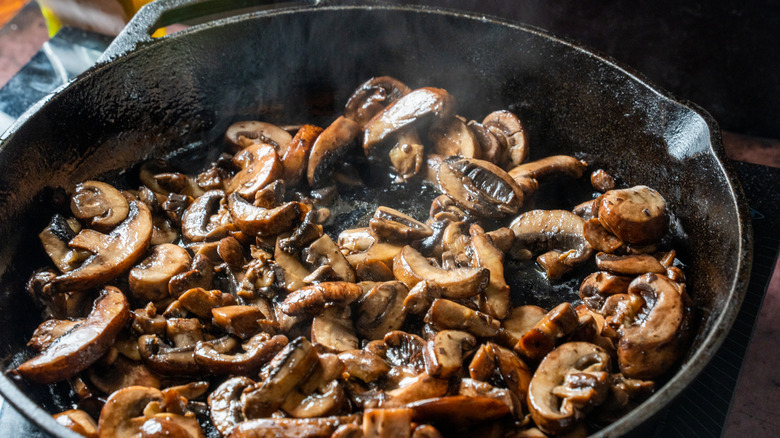
A lot of the ingredients you have in your pantry or fridge are rich in glutamates (various substances based on glutamic acid), which are naturally occurring and make your food taste savory. Some very common ingredients fall into this category, including peas, mushrooms, and tomatoes.
You'll recognize those as ingredients that get used a lot in cooking and sauce-making, and this is why. My father, for instance (who, as I've already said, was well known for his gravy-making prowess), regularly added mushrooms to his gravy. They go well with most meats, so they're an easy choice unless you're cooking for someone with an allergy. Similarly, celery is part of the classic mirepoix that I spoke about earlier. Incorporating tomatoes in everyday gravy is less practical, but I'll sometimes brown a spoonful of tomato sauce in a bit of oil (to caramelize it and fix the metallic flavor it has) when I'm making a brown gravy for beef or venison. It's often used by chefs in brown sauces and brings a subtle something.
Soy sauce and Worcestershire sauce are also high in glutamates. Of course, the simplest way to add glutamates is through a pinch of MSG, though that's a controversial option. Despite its (ironically) unsavory reputation, the evidence suggests that MSG isn't necessarily bad for you. It just means you're adding umami in a purified form.
Add aromatic bitters to your gravy

If you're a cocktail enthusiast, you probably have a bottle of bitters sitting at, or near, your bar. Bitters are an essential cocktail ingredient, and all the same characteristics that make them so useful in drinks hold good for foods as well. Most use alcohol as a base because it's a good solvent for flavors, but you can also buy non-alcoholic bitters.
You'll only need to add a few drops of bitters to your gravy to elevate it, because the flavors in bitters are very concentrated. The Angostura brand of bitters is the most widely used and easiest to find, but there are plenty of alternatives available online and in stores. You may even find unique offerings at your local bar or restaurant, because artisanal bitters have been a thing over the past several years.