

9 Old-School Bakery Favorites That Are Making A Comeback
Just like the regular day and night pattern and the seasons that come and go, most things in life are cyclical. You also might be wearing a graphic tee and cargo jeans, as the fashion from the early 2000s has come back around and is allegedly trending again.
Food trends and bakery favorites are no exceptions, and they usually appear in cyclical patterns. That's why many people are now baking bread like our ancestors did in ancient Egypt. Apparently, many have also been whipping up eggless cakes like it's the Great Depression and indulging in sticky toffee pudding like they're sitting in an early 2000s gastropub.
Below, we've listed some of the old-school bakery favorites that are making a major comeback. But be warned, by the end of the list, you're probably going to be seriously hungry and craving old-school sheet cakes and various dessert bars all at once.
Sourdough bread
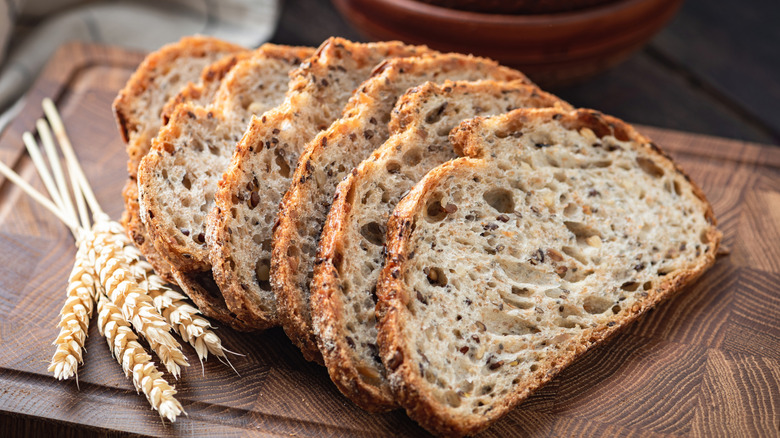
Sourdough bread is one of the oldest types of bread in existence that was consumed in ancient Egypt and Greece. It stuck around for centuries in Europe, and after French immigrants brought it to the city, it was a popular choice during the Gold Rush in San Francisco. From there it spread to Alaska and Canada. To cut a long story short, by the mid-20th century, mass-produced bread was taking off, leaving little room for sourdough. But now it's back.
In 2020, when much of the world was locked down due to COVID-19, lots of people found themselves with a lot of free time on their hands. Some turned to banana bread, others obsessed over the Netflix hit "Tiger King," and plenty turned to sourdough. It made sense: This particular type of bread can be pretty hands on. It requires a starter made of flour and water that needs regular feeding and nurturing.
Despite the level of attention required, sourdough bread has managed to stay pretty trendy in the years following the pandemic. In fact, per Grand View Research, the global sourdough market is still growing and is expected to reach a value of more than $5.3 billion by 2030. In part, the industry is likely being driven by trends like the tradwifery, but also health and wellness. Sourdough is fermented and high in fiber, which means it is associated with gut health benefits.
Pastel de nata
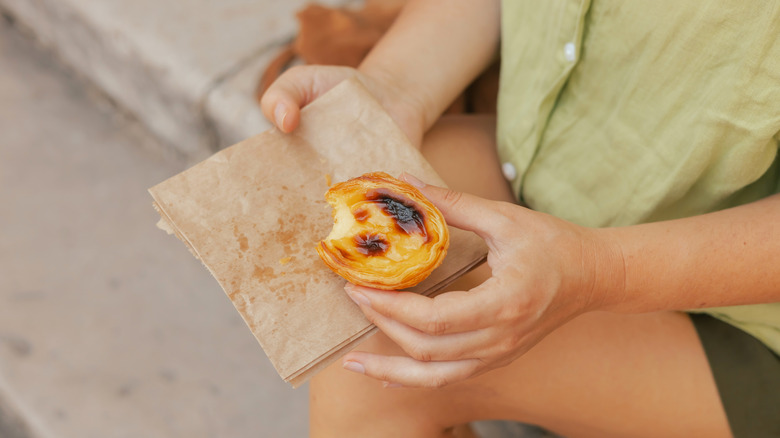
In 18th-century Portugal, monks and nuns used to find themselves with a lot of egg yolk on their hands. They used the whites to starch clothes, but they also wanted to find purpose for leftover yolks. The natural solution? Baking, of course. It was because of this that the monks at Lisbon's Jerónimos Monastery created the very first recipe for pastel de nata. The treat is basically a very creamy custard tart, encased in layers of crispy pastry. The monks had a hit recipe on their hands. They started selling the pastries to generate income for the monastery, and the treat spread across Portugal and beyond.
Pastel de nata has always been popular, but lately it's seen quite the resurgence. In the U.K., these Portuguese pastries have become a mainstay, sold in grocery stores and bakeries across the country. In the U.S., per Tastewise, just over 4,800 restaurants have them on the menu, but social conversations about the Portuguese treat have increased by nearly 30% on a yearly basis.
Eggless banana bread
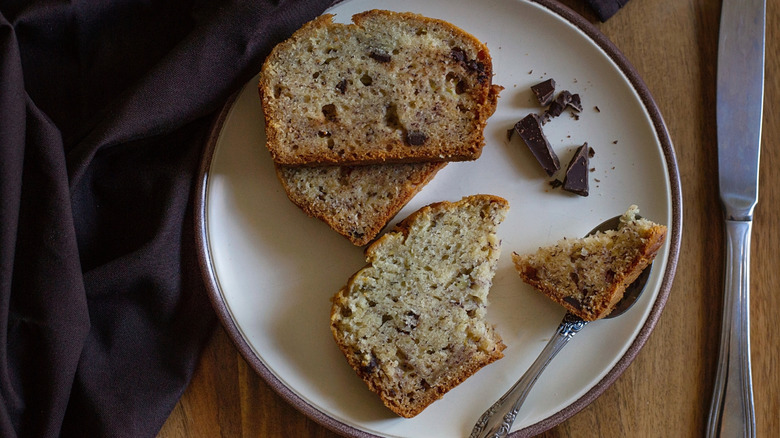
Banana bread had a major moment during the pandemic, and lately, this simple baked treat has re-entered many people's kitchens and social media feeds, albeit in a slightly different way. On TikTok, recipes for eggless banana bread have been garnering thousands of views. This is likely related to plant-based cooking and minimalist baking trend, which, as the term suggests, involves baking with as little ingredients as possible. The trend might also be related to the soaring price of eggs. After all, in 2025, egg prices hit all-time highs in the U.S.
But, you guessed it, cooking banana bread without eggs is not a new idea. This was a popular way to bake during the Great Depression, when many families had limited access to a wide range of ingredients. Eggs were generally a cheap staple at the time, but some remember shortages of the ingredient, which left people having to make do with what they had on hand.
Wacky cake
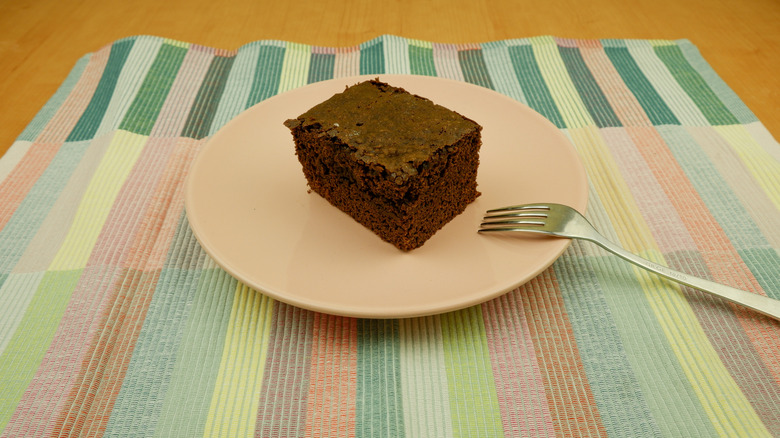
Just like during the Great Depression, people had to make do with what was available to them during the Second World War. Food was rationed in the U.S., meaning that baking staples like butter and milk weren't as widely available.
People had to get creative, and so they made wacky cake. It's basically a moist, chocolatey cake that is made without any eggs, milk, or butter. Instead, it relies on ingredients like flour, sugar, cocoa powder, baking soda, salt, vegetable oil, and cider vinegar. It's likely that families living through the Great Depression also made wacky cake, which is why it's also often referred to as Depression cake.
Many Great Depression recipes, including wacky cake, are having a bit of a resurgence right now, likely due to the ongoing cost-of-living crisis. Blog pages and social media feeds are full of new recipes for this particular cake, from classic chocolate to apple and vanilla.
Sticky toffee pudding
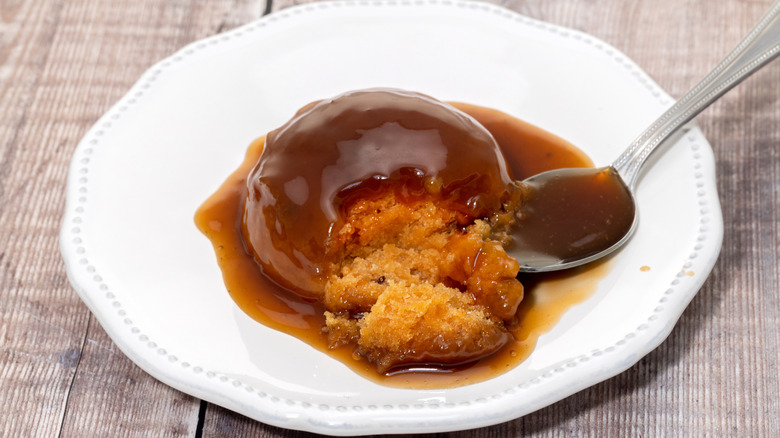
There are several theories about the origin of sticky toffee pudding. Some say it was invented in a hotel called Sharrow Bay Country House Hotel in the Lake District in the U.K. back in the late 1940s. The owner, Francis Coulson, was apparently inspired by a similar Canadian recipe, shared with him by a friend. Others claim it was actually the owners of the nearby Gait Inn in Millington that came up with the dish, while some even believe it was invented in a hotel in Scotland.
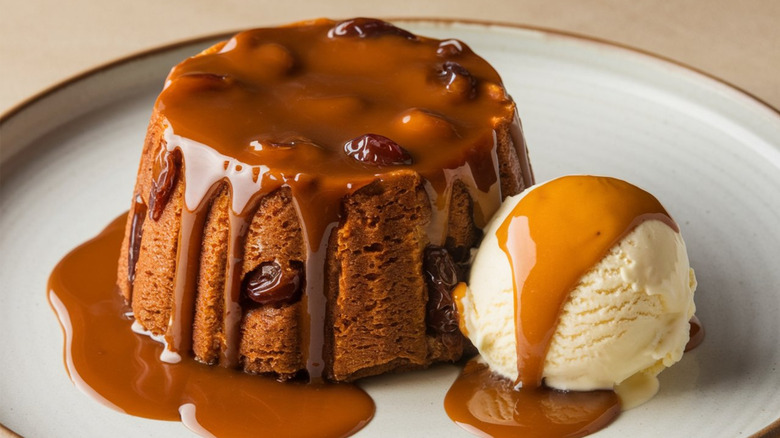
Wherever it came from, the truth is that sticky toffee pudding, which features date-laden sponge cake slathered in gooey toffee sauce, is a firm favorite of many Brits. In the 2000s, this British (or maybe Canadian) dessert became popular in the U.S., too, thanks to the rise of gastropubs. And now it seems to be back. In 2025, Aldi released a popular $5 version of the classic pudding, leading many to rediscover this decades-old dessert once again.
Dessert bars
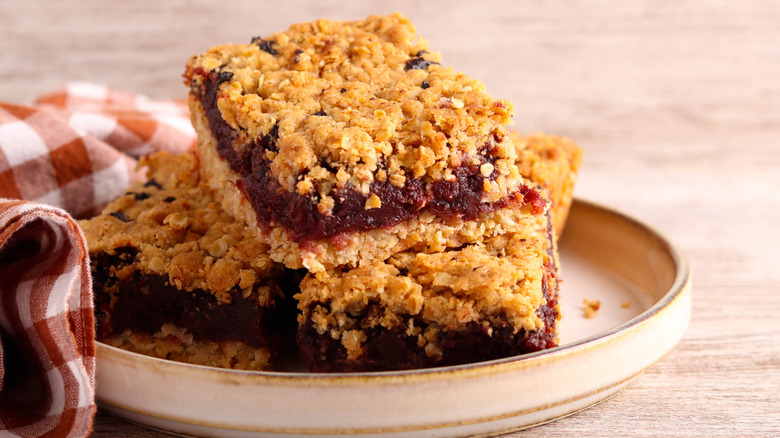
Dessert bars have long come in many different variations. Hello Dolly bars, for example, made with Graham crackers, coconut, chocolate, and nuts, were popularized in the 1960s, while matrimonial bars (also known as date squares and many other names) were invented in Canada probably at some point during the late 1800s, and then popularized during the Great Depression years.
Just like Aldi helped to remind many people about the existence of sticky toffee pudding, Costco has been on a mission to help people remember dessert bars. In September 2025, it released a new dessert bar variety pack, and it went viral. It was filled with dessert bars packed with chocolate, macaroons, pecans, caramel, and berries, and people couldn't get enough. Other social media users wanted Costco to keep making more variations of the sweet treat, suggesting ingredients like peanut butter for the next round.
Texas sheet cake
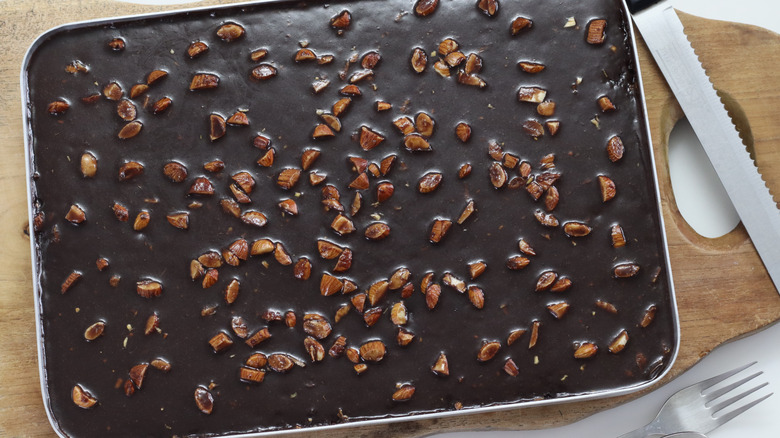
We don't know exactly when Texas sheet cake came about, but we do know it has been around for quite a while now. Some historians believe it was created by Lady Bird Johnson, former first lady and wife of president Lyndon B. Johnson, but there isn't much concrete evidence to back this up. There is, however, evidence of recipes for cakes very similar to the Texas sheet cake from the late 1800s. Anyway, the point we're getting at: This is a vintage cake. And lately, it seems to be getting popular again.
Texas sheet cakes are easy to make, as they're basically just flat chocolate cakes. They have long been a popular choice at parties and funerals as they're easy to slice and share between lots of people. Recently, a local publication reported that bakeries in Kansas City seem to be churning out more sheet cakes again, likely because they are more functional and practical than high-tiered numbers. Australian platforms have also noted a revival of sheet cakes in the last few years. Again, probably because of their ease and simplicity.
Chiffon cake
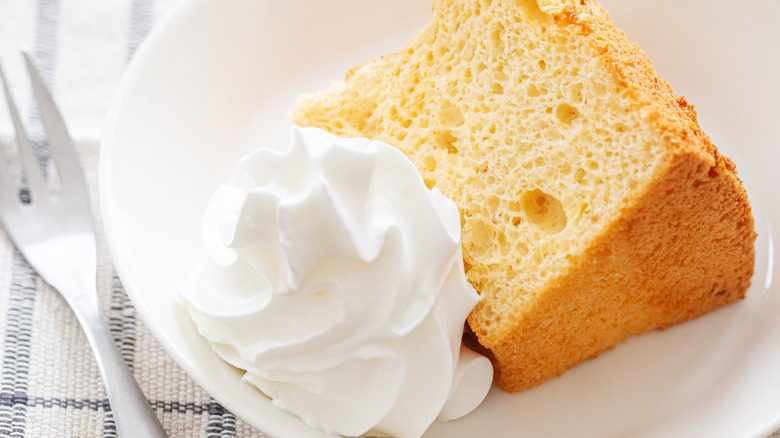
In the 1920s, former Hollywood insurance agent Harry Baker created the first chiffon cake recipe. He baked and sold the cakes at Brown Derby restaurants, but he wasn't interested in selling the actual recipe to anyone at all, at least for a few years. In the 1940s, though, he had a change of heart. General Mills managed to get Baker to divulge his recipe. Betty Crocker popularized chiffon cakes after that, and they became a nationwide hit, loved for their fluffy, moist, and light texture.
Chiffon cake was popular for a while, but then many Americans started to move on to other baking trends. The recipe stayed popular within Asian cultures, though. Now, it's having a resurgence again, largely due to the rising popularity of Asian food in general. Chiffon cake is now cool, much like Japanese matcha, Taiwanese bubble tea, and southeast Asian pandan.
Pavlova
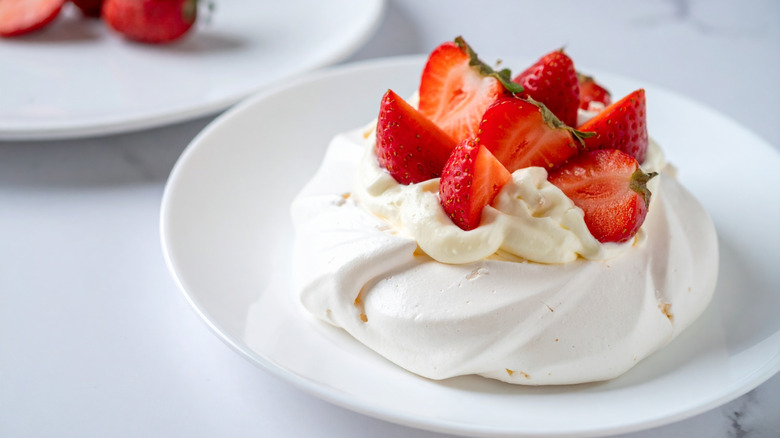
Pavlova has been a part of Australian and New Zealander culture for decades. There's a little debate over where pavlova was invented, but most agree it was either in the 1920s in New Zealand or sometime in the 1930s in Australia. The name is likely a tribute to the Russian dancer Anna Pavlova who toured both countries around this time. But similar meringue-based desserts date back even earlier, to 15th century France and England. In the 19th century, many Americans were enjoying schaum torte, which, like pavlova, is a mix of meringue, ice cream, and berries.
In the last couple of years, this vintage dessert has been seeing an upsurge in popularity and has become a new trend among pastry chefs in London and New York who bake pavlova-like desserts using broken meringue and plenty of cream and fruit. And once again, TikTok best reveals how popular pavlova is at the moment. Lately, pavlova recipe videos have racked up thousands of likes and views.