

6 Pastries Even Pros Buy Instead Of Bake
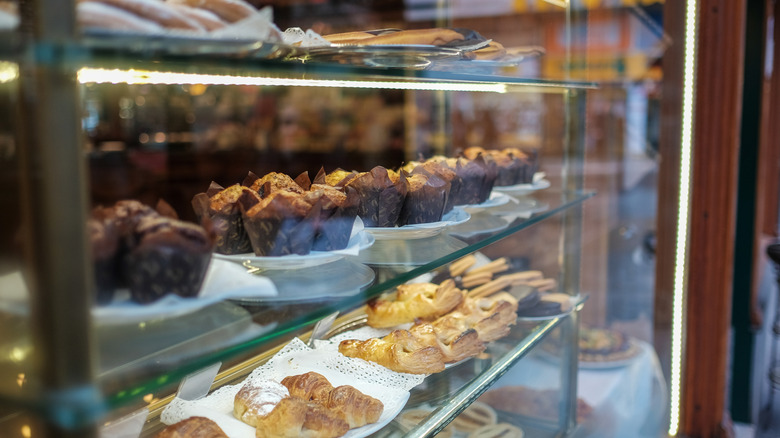
Let's face the facts: baking, especially baking pastries, can be unreasonably difficult. Even relatively simple bakes demand an incredible amount of focus and technical know-how. And if you make a mistake, it's often nearly impossible to bounce back. You can save even the worst cooking slip-ups with a splash of water, a pinch of sugar, or a squeeze of lemon. But baking is a little more science than art. If you get a measurement wrong, over-mix a dough, or miss the mark on temperature, your pastry could be irreversibly ruined, sending hours of hard work and hard-earned money down the drain.
The complexities of baking are exactly why pastry chefs go through such rigorous training. A professional baker needs to be mindful of many variables, including everything from the quantity and quality of the ingredients to the temperature and humidity level of the kitchen.
And sometimes, that much effort and risk of failure is too much, even for trained professionals. Yes, even the pros take shortcuts from time to time, choosing store-bought pastry over their own efforts. We asked five professional bakers what kind of pastries they'd rather buy than bake themselves; these are their answers.
Kouign-amann
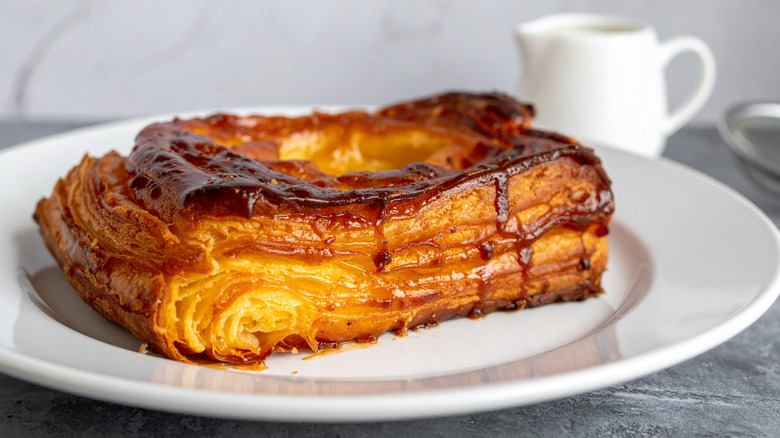
The kouign-amann is a Breton butter pastry known for its flaky layers and sugar-sweet crust. Traditionally, it consists of bread dough layered with butter and sugar, then baked into a large, round cake to be sliced and served. What you'll more often see in American bakeries, though, are technically kouignettes: smaller, muffin-sized versions of this regal-sounding pasty, often made with leftover croissant dough.
Layering dough with butter is a process called "laminating." The heat of the oven causes the water inside the butter to evaporate, creating steam that expands and pushes the layers apart. If done right, this process should produce the flaky layers in pastries like croissants, puff pastry, and, indeed, kouign-amann.
But even the best-laminated plans go awry: lamination is famously finicky. If even one thing goes wrong, a laminated pastry can fail catastrophically. Barbara Robinson, a graduate of Vancouver-based Debrulle Culinary Institute, and a certified Red Seal chef, explains, "The dough needs a strong lamination with about twenty seven tight layers, which means each time you fold it has to stay cold or the butter smears."
Besides, baking a kouign-amann is a time-consuming, resource-heavy project, which makes it all the more disappointing when it doesn't turn out right. Robinson adds, "I attempted to make about twenty in one day, but after spending five hours, only six had the proper puffiness and shine after baking ... I think a great kouign-amann takes about 1¼ pounds of butter for a small tray, so the waste hits hard if the folds fail."
Phyllo dough pastries
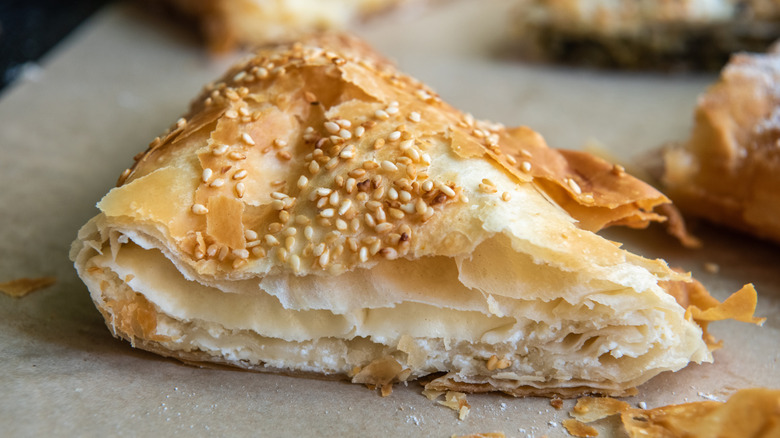
Another common method for creating a light, flaky pastry is the use of phyllo dough, an ancient recipe thought to date back to 800 BCE. Where croissant or kougin-amann dough is made as a single sheet, then layered with butter, folded, and rolled out, a phyllo pastry is made with individual thin sheets that are then laid on top of one another. It's commonly used in both sweet and savory pastries that originate from the Mediterranean, Middle East, and Balkan regions, including burek, spanakopita, and baklava.
The problem begins with the stretching. A single sheet of phyllo dough must be rolled out until it's absurdly thin, almost as flimsy as a piece of tissue paper. Then comes the layering. According to Dennis Littley, creator and namesake of Ask Chef Dennis, "Phyllo sheets dry out in seconds, tear easily, and require lots of careful handling. In a restaurant setting, you have the space and the speed to work efficiently, but at home it can turn into a stressful juggling act."
He's not joking. Similar to laminated dough, each layer of phyllo dough must be brushed with melted butter or oil to create a crispy texture and a mouthwatering golden shine. If you don't work quickly enough — as in, within a few seconds — the dough cracks, and must be discarded lest it compromise the overall integrity of the pastry. Thankfully, there's an easy shortcut for making a semi-homemade phyllo bake: check the freezer aisle for pre-made phyllo dough.
Bagels
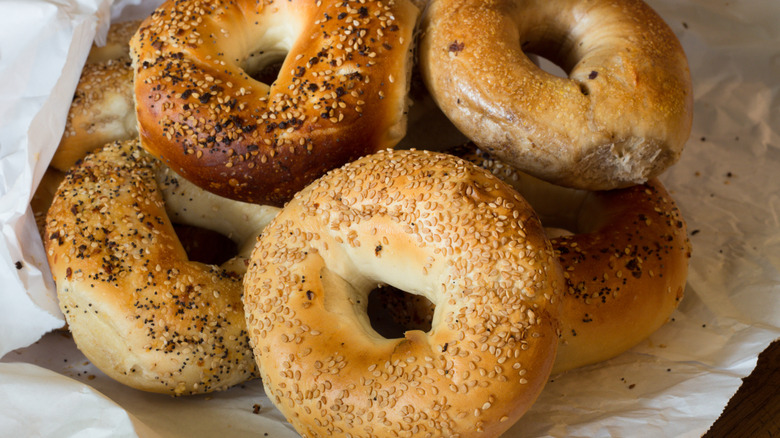
There's nothing quite like the light-catching shell, pillowy soft interior, and irresistible chew of a well-made bagel. That said, they're difficult to get right. There's a reason New Yorkers look elsewhere for breakfast when outside their home state.
You may not know this when you bite into your morning bagel, but making bagels is complicated every step of the way. Hand-rolling the perfect bagel is a skill that's difficult to master. Roll one too tightly or make the hole too small, and you'll end up with a glorified dinner roll. Afterwards, a true New York-style bagel must be fermented, often for up to 24 hours, in order to achieve a richer flavor and satisfying texture. Bagels are then boiled in a mixture of water and baking soda to lock in their shape and create their iconic hard exterior.
That's a bridge too far for Florencia Cusumano, head chef at New York restaurant and bake shop Butler. "A true New York bagel is one baked good I'd never try to make at home," she says. "The long fermentation, high-gluten dough, and kettle-boiling process are what give it that signature chew and beautiful crust with techniques that are very hard to reproduce without a bakery setup."
Unfortunately, it's notoriously tough to buy a good bagel unless you're in a region known for making them right. But in a pinch, even the frozen packaged ones can hit the spot, as long as they get a nice golden brown toast before eating.
Puff pastry
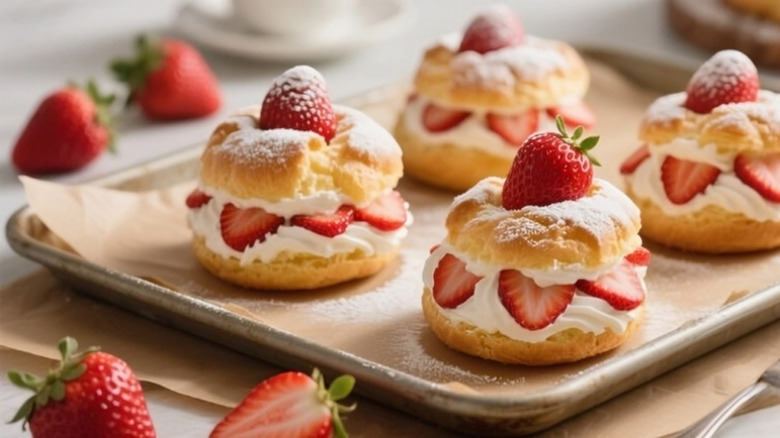
Like phyllo dough, puff pastry can be used for a lot of things: tarts, pot pies, hand pastries, pinwheels, and so much more. It's a fairly neutral-tasting pastry whose flaky, buttery layers work just as well in sweet desserts as they do savory apps or entrees. But, like a kouign-amann or croissant, it's also a laminated dough, which means lots of work in the kitchen.
Rena Awada, creator of Healthy Fitness Meals, weighed in, calling puff pastry "one of those very few baking projects where the work almost always outweighs the effort. Keeping the butter cold but workable while rolling the dough is a crucial balancing act," she says. "Even the slightest miscalculations can lead to complete layer collapse from overworking the dough and softening the butter."
To make matters worse, she points out, the temperature of the kitchen can also easily ruin the perfect puff pastry. Warm or humid kitchens can have unpredictable effects on lamination. Your butter might leak and, according to Awada, lead to a greasy pastry without air or lift.
It also takes a while to pull off: "The required rest periods between folds are also non-negotiable, which can severely hamper production flow during busy periods of the day." If you want to skip the effort, frozen puff pastry is an easy shortcut. Tasting Table ranked Dufour the best among five store-bought puff pastry brands, but any brand that uses real butter (not shortening) will do.
Croissants
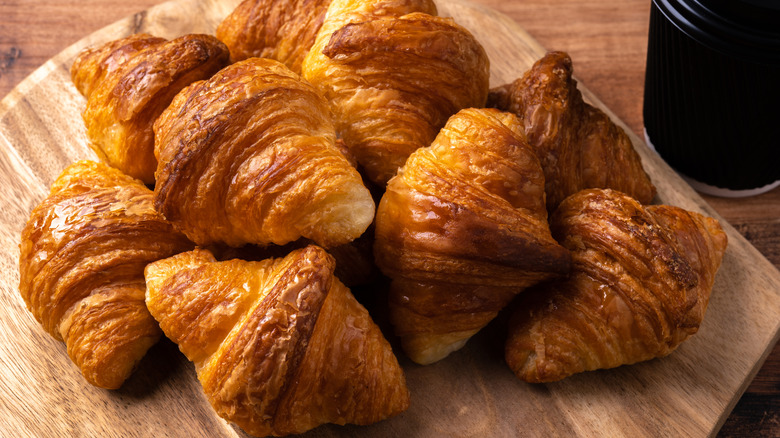
Croissants scarcely need an introduction: they're the crescent shaped, flaky layered, richly buttered pride of any good bakery. Some stuff them with chocolate, almond cream, or ham and cheese, but others prefer to let them stand on their own. Croissants are also the epitome of a difficult bake, thanks to a familiar technique called lamination.
Similar to kouign-amann and puff pastry, a good croissant demands lamination, which means repeatedly rolling out the dough, carefully layering it with butter, and unflinchingly maintaining the right conditions for both kitchen and countertop. According to Dennis Littley, "Even in a professional kitchen it's a project. You're rolling and folding chilled butter into dough over and over, and everything has to stay at the perfect temperature."
Croissants are even harder to pull off at home. While most bakeries equipped for making croissants have a system in place for temperature control, few home kitchens do. "At home, unless you have a cold workspace, a full morning to spare, and plenty of patience, the butter can melt too fast," Littley adds. "The layers will merge together quicker than you can realize, and the texture never reaches that bakery-level flake. These days, if I'm not preparing them for a special menu, I happily buy them."
Doughnuts
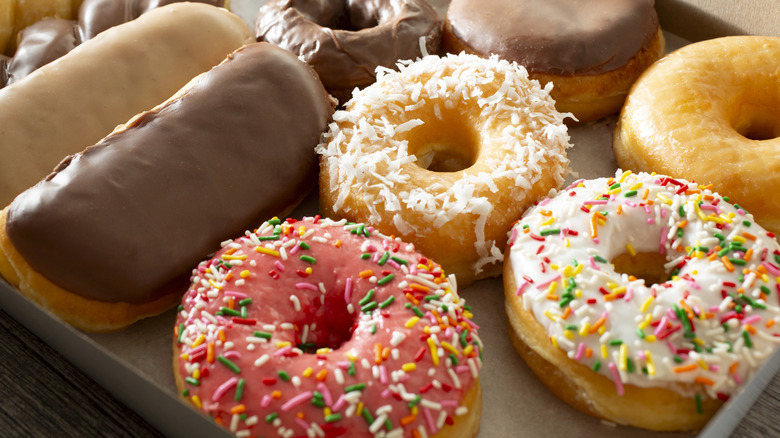
Doughnuts have fairly humble origins, so you might expect them to be easy to make. Although the concept of fried dough has existed for as much as 3,000 years, the modern doughnut didn't come about until the 18th century. Cheap and filling, doughnuts eventually became the cornerstone of a working-class breakfast, enjoyed by industrial age Americans with a strong, hot coffee at the beginning of a long day.
But just because they're often inexpensive doesn't mean they're easy to make. April Franqueza, pastry chef at High Hampton and a James Beard Award finalist, says doughnuts are one pastry she'd rather buy. "There's something that can't be beat about a fresh doughnut, and not having to deal with the dough, punching out the doughnuts, and fryer oil is worth it to me."
A good doughnut requires activating yeast, rolling out carefully, then proving to develop flavor and rise. Bakers have to cut out all the holes individually to ensure the doughnuts cook evenly and prevent the centers from getting soggy, which is a painstaking and time-consuming process.
Unlike the other pastries our experts named, doughnuts are fried, which means dealing with a lot of oil. Professional kitchens are equipped to supply, replace, and dispose of all that grease, but at home, it gets significantly more complicated. A well-fried doughnut practically melts in your mouth, and it's worth letting the pros at your local shop handle it.