

Why You Should Keep Silver Cutlery Out Of Your Dishwasher

Real silver cutlery has a lovely, old-world elegance to it, but it's also pretty vulnerable, which is why it's often stored in a velvet lined box and kept for special occasions. Even then, it needs to be polished regularly and treated with care. The conditions inside a dishwasher create a caustic environment that strips away the shine and leaves blotchy patches, literally tarnishing its beauty. If you want your silver cutlery to shine, take care and use the proper cleaning procedure.
The biggest culprit in the dishwasher is the detergent itself. Many formulas contain additives — especially acidic, citrus-derived compounds — that will accelerate tarnishing. They cling to the surface during the wash cycle, encouraging oxidation the moment the heat kicks in. Even pricey, "gentle" dishwasher pods can be too harsh. Another issue is that silver can have an electrolytic reaction to other metals, causing galvanic corrosion, especially in the presence of hot, alkaline water. Over time, the pieces will develop a mottled and bruised look. Then, there's the physics of the wash chamber. Water jets jostle utensils around, and a soft metal like silver will dent and warp in the violence of the wash cycle. Decorative work that sticks out, along with the edges of spoons and the tines of forks, will wear down, bend or otherwise degrade.
Precious heirlooms should obviously be cared for, but even if you just got a jumble bag at the flea market, it's worth protecting and caring for your silver. A mild hand-wash spares the metal from the stress that slowly erodes the brilliant finish.
The soft touch
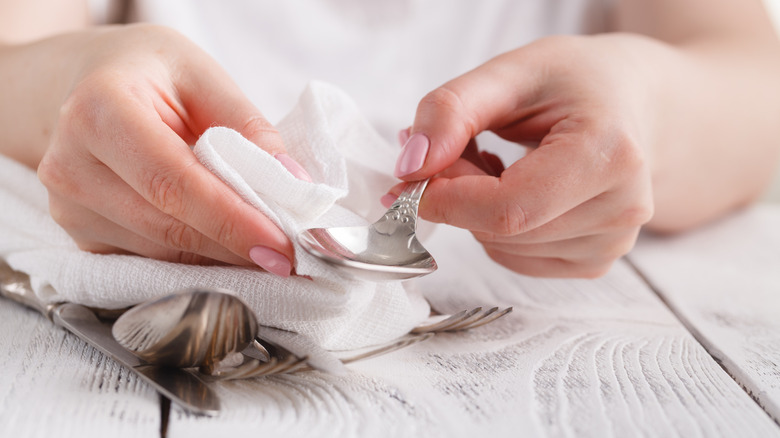
Most of what you need to care for your silver is likely already in the pantry. The safest approach is a warm-water rinse to remove surface oils, followed by a paste made from baking soda and a small splash of water. This mixture has the gently gritty texture of damp sand and works as a controlled polishing agent. Use your fingers or a soft cloth to work it into the metal; you'll notice the paste change color as it pulls the gunk off. For flatware with ornate handles or recessed patterns, a soft brush works to lift the paste from corners so it doesn't leave a chalky film. Rinse well in warm water to remove any residue and dry the surface completely with a soft, lint-free cloth. A careless drying process can undo all your polishing, because silver shows water spots easily.
If the tarnish runs deeper, line a bowl with aluminum foil and dissolve a spoonful of baking soda in very hot water. Rest the silver so it touches the foil. The magic of chemistry begins immediately, pulling the sulfur compounds off the silver and depositing them onto the foil, right before your eyes. This hands-free method brightens pieces without rubbing away material, which can be especially helpful for older flatware that's been polished many times before. When handled properly, your silver will age gracefully over many, many years.